

If you want to work according to high quality standards, ISO 9001 is sometimes not sufficient. That is why the automotive industry developed IATF 16949. With this quality standard, you develop a reliable and durable end product.
Automotive companies like to work with manufacturers that comply with IATF standards. For example, in 2009, the collaboration with DAF prompted Sentech to obtain an IATF certificate.
Certification
In 2021, IATF introduced changes to the standard. As a result, Sentech decided to continue working according to the standard, but not renew the certification.
Therefore, after twelve years, our IATF certification will expire on July 9, 2021. If customers require IATF certification again, we will discuss the possibility of recertifying.
Maintain quality with high quality standards
The core tools and processes – originating from IATF certification – have been interwoven for twelve years our method. In 5 phases, we identify risks in a timely manner and make them manageable. This is how we guarantee the quality of the end product. After not renewing the certification, we will continue to work according to these high quality standards.
Continuously developing and optimizing our processes, as well as developing our employees, remains an important theme. We do this in addition to our ISO 9001 certification, which remains in effect.
What does working according to IATF 16949 standards look like?
For industries like automotive, ISO 9001 is not sufficient. They go a step further and work with IATF 16949.
This high-quality standard also ensures a reliable and durable end product in your market. In addition, you can fully adapt the process to your quality needs.
Discover what IATF means and how you can applied on your project.
With lidar, self-driving vehicles, such as AGVs, can map their surroundings. They scan using light pulses. Despite the simplicity of this optical sensor technology, the technique remains expensive. Developers are innovating to make autonomous driving more affordable, compact, and reliable. This makes this type of transport more accessible to consumers and B2B markets.
Affordable alternatives are entering the market, such as solid-state lidar. Depending on the desired resolution, you determine whether your application requires a basic or a high-end lidar sensor. Furthermore, a sensor alone is not sufficient for autonomous driving. For reliable measurement, you need to combine multiple techniques.
How lidar works
Just as radar works based on radio waves, lidar uses light pulses. When light pulses reach objects or surfaces, detectors capture their reflection. The system calculates how long it took for the light to travel from the laser, via the object, to the sensor. This is converted into distance. All the distances together form a detailed point cloud of the surroundings.
What determines the price of autonomous vehicles?
Self-driving cars, like Google's Waymo, drive autonomously thanks to lidar. The roofs of these vehicles feature a noticeable bulge. This is where the lidar sensor is housed, which the car uses to map its surroundings. For car designers, it's a challenge to inconspicuously integrate the technology into the design.
These lidars are scanning electromechanical systems, consisting of many moving parts. This makes them difficult to produce and miniaturize, causing the price to barely decrease.
At Velodyne, you pay $75,000 for a lidar module. Even simpler technologies cost thousands of dollars. Besides this sensor technology, more is needed to make a vehicle drive autonomously. The total price quickly adds up to 100,000 euros.
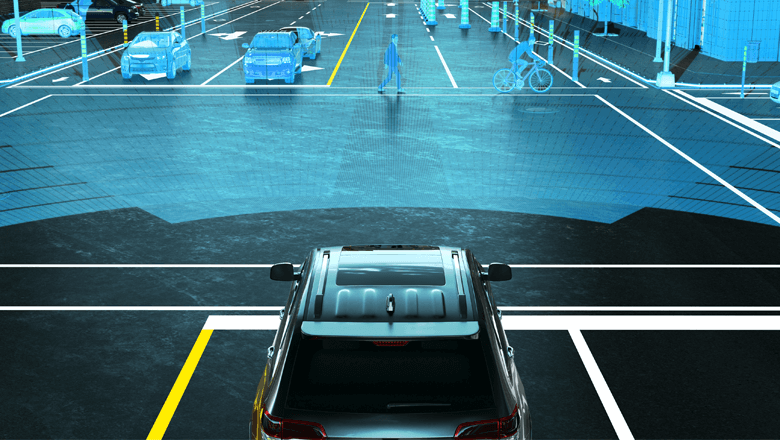
Lidar originally arose from the words ‘light’ and ‘radar’. It is now an acronym for ‘light imaging, detection and ranging’.
Affordable lidar alternative
Solid-state lidar is a smaller and more affordable alternative. Instead of scanned beams, this technique works with broad light flashes. A solid-state laser shoots pulses, which are spread via a diffuser over an angle of 9 to 120 degrees.
The range of solid-state lidar is smaller than that of scanning lidars. However, they are also significantly cheaper. At Canadian LeddarTech, the price for a flash lidar module is around a few hundred dollars. Furthermore, they are much smaller and more robust. This makes them easy and affordable to integrate into vehicles.
Compared to flash, scanning lidar offers several advantages. “If you need high resolution, you should look at high-end lidar sensors,” explains Marco Leeggangers, Operations Director at Sentech. “Furthermore, scanning lidars achieve that higher resolution across their entire 360-degree field of view.”
Adjust range and viewing angle
Lidar manufacturers are not transparent about the frequency and intensity of laser pulses. “During the design phase, you can play around with it to adjust the lidar's range or field of view,” says Olivier Gernier-Lafond of LeddarTech. “With our software, users can adjust various parameters to choose the range and update frequency. This is how we differentiate ourselves from the competition.”
Gernier-Lafond adds: “The wavelength of the laser is approximately 905 nm (nanometers). Many competitors are above 1,000 nanometers. Although lasers around 1550 nm are more powerful, optical components in our wavelength range are more affordable, robust, and reliable. This allows us to deliver cheaper lidar systems. Thanks to our advanced signal processing algorithms, we still achieve the same performance as the competition.”
Noise cancellation in rain and snow
Lidar sensor measurements must be translated into usable data: the perception platform that recognizes and classifies objects. “LeddarTech is exceptionally strong in that translation,’ says Leeggangers. ‘The Canadian signal processing software is very good at noise reduction. Even at night, in rain and snow, it delivers reliable results.’
All detection technologies have their advantages and limitations. Lidar meets in all lighting conditions very accurately the distances. Moreover, this technique can handle both stationary and moving objects perfectly. “Our off-the-shelf systems achieve an accuracy of 5 cm, with a repeatability of 6 mm,” says Vincent Racine, product manager at LeddarTech.
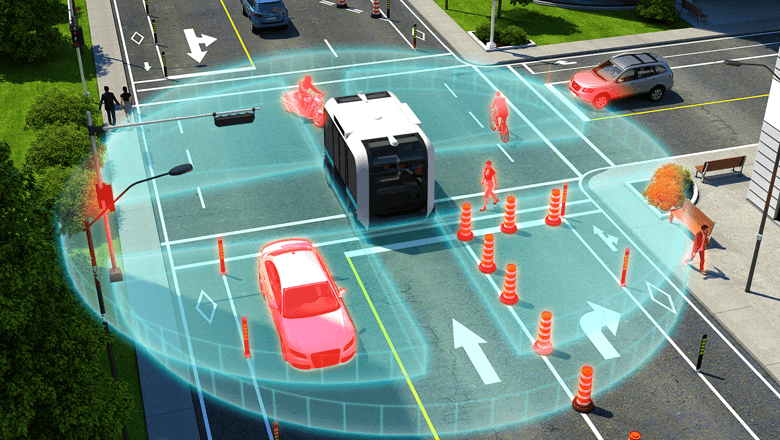
Detecting objects at a great distance
The reflectivity of an object affects detection distance, or its visible range. For example, pedestrians with 10 percent reflectivity are ‘seen’ by LeddarTech lidars up to 200 meters away. Objects with higher reflectivity, such as license plates, are detected at even greater distances. This was successfully demonstrated during CES 2019.
Besides reflectivity, the field of view also depends on the laser's intensity. The more power, the larger the field of view. There are limits to increasing laser intensity, as lasers are used in public areas and should not blind passersby.
Racine adds: “We place a high value on safety. Additionally, we comply with the strict legislation for pulsed lasers. With our software, we ensure that we achieve optimal performance within those limits.”
Combining technologies
Experts agree that you cannot build a fully autonomous vehicle without Lidar. “But it will never succeed with a single sensor type,” emphasizes Leeggangers. “Lidar must be combined with cameras, GPS, and other technologies. Only then will you get reliable measurements.”
Fields of application
Because fully autonomous cars are still mostly research objects for the time being, Leeggangers is looking ahead. “The market for autonomous vehicles is booming. Think of the Second Maasvlakte where carts drive autonomously on a closed site. You also see more and more AGVs in controlled environments like large warehouses and in agriculture.”
In many mobile applications, there are plenty of opportunities for solid-state lidar. “But you can also perfectly use the technology to detect, for example, if drivers are changing lanes in time during a lane closure.’
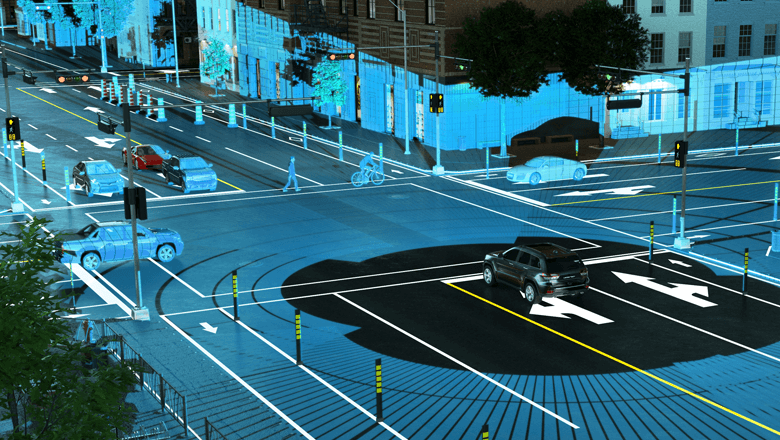
Innovating with lidar
LeddarTech is currently working on several innovations, including various 3D versions. “We started with 2D lidars. They are fine for simple collision detection, for example,” says Racine. “With 3D lidar, you can see more and recognize objects more easily. This technology is now in full development to meet the requirements of automotive and other mobility applications, such as autonomous shuttles and robotaxis.”
Long-range and high-definition 3D lidars are also planned. “Those system-on-chip devices are based on MEMS technology. Although they do have moving parts, they can still be classified as solid-state components. This is also because their dimensions and robustness make them resistant to shocks and vibrations,” according to Racine.
Collaboration for Successful Integration
A few years ago, Sentech signaled the rise of lidar technology. The market wasn't ready for high-end scanning sensors at that time. So, an alternative was sought. In 2016, they discovered LeddarTech's solid-state lidars.
“LeddarTech was looking for a partner who could provide high-level customer support, particularly during development and integration,” says Olivier Gernier-Lafond, Distribution Network Manager at LeddarTech. “We have specialized partners in Germany, France, and Asia, among other regions. The Netherlands has a dynamic market with many innovative companies that we want to connect with.”
Marco Leeggangers of Sentech adds: “Lidars are not simple systems. You always have to integrate them with other hardware and software. They produce an enormous amount of data that you have to translate into usable information with complex algorithms. Sentech can help with that. We can also advise on the position of the sensors and what images that will yield. We often draw on our experience with radar for this, because the technologies and applications are comparable.”
Explore the possibilities of lidar
Where do you start with the integration of lidar? There are various lidar technologies on the market. The speed of the vehicle and the reflectivity of surrounding objects determine the required field of vision. And therefore, which technology is needed to make your vehicle safely drive autonomously.
On March 25, 2022, Smile Invest will acquire a majority stake in Sentech. In order to achieve its growth ambitions and long-term objectives, Sentech held exploratory discussions with several financial partners last year. Following a careful selection and due diligence process, the decision was made to collaborate with Smile Invest.
Sentech was founded in 2000 by Marcel Figge and now has more than 60 employees. Sentech's sensor solutions are used worldwide in applications within the semiconductor industry, automotive, healthcare, and agromarkets. Due to the rise of innovations such as autonomous vehicles, the Internet of Things, and artificial intelligence, the sensor market is expected to continue to grow strongly in the coming years.
Commercial Director Marco Leeggangers and Operations Director Hermen Kobus will take on the day-to-day management of Sentech as a two-person executive team. Founder Marcel Figge will continue to focus on long-term strategic projects. Marcel Figge: “With Smile Invest, we’re bringing on board a partner that not only has the necessary network, capital, and technical expertise, but also aligns with our vision of creating long-term value for our customers in a transparent manner. Smile’s entry into the shareholder structure comes at a time when we are ready to take the next major step. With these new resources and expertise, we will invest in building a solid footprint outside the Netherlands and further professionalizing our operational facilities.”
Marco Leeggangers and Hermen Kobus add: “In recent years, we have been actively involved as managers in building the foundation. Now, in our new roles, we can set the direction ourselves to become a leading supplier of integrated sensor solutions in Northwestern Europe, and to make Sentech an even stronger company. This feels like a logical step for us, but it remains a new chapter, which is why we are pleased to bring in an experienced partner like Smile Invest who will help us navigate the next phase.”
Ad Notenboom and Bart Cauberghe, partners at Smile Invest: “For us, Sentech is the prime example of a Dutch high-tech gem with a unique market position. The professionalism of the organization, the quality of its solutions, and its high customer satisfaction are at a level typically seen in companies that are a few years ahead. Sentech's technically innovative profile, combined with its strong growth ambitions, aligns perfectly with our investment focus. We will support Sentech in achieving these ambitions and believe the company is perfectly equipped for both organic and inorganic growth of its activities.”
Over Smile Invest
Smile Invest (Smart Money for Innovation Leaders) is a European evergreen investment company with €350 million in capital under management, funded by 40 entrepreneurial families with a long-term focus on innovative growth companies. Smile Invest focuses on companies within three investment themes: digitalization, health, and sustainability. From offices in The Hague and Leuven, the team supports ambitious entrepreneurs and managers in achieving their growth plans.
Variohm EuroSensor has recently introduced its newest pressure sensor. This versatile pressure sensor has a pressure range of up to an incredible 4000 Bar. It is exceptionally well-suited for on- and off-road automotive and industrial applications. Sentech particularly relies on the sensor manufacturer for sensor applications involving pressure measurement.
In its half-century of existence, Variohm has grown into a leading sensor supplier for various industries. The originally British company serves automotive, aviation, agricultural, medical, and industrial companies and OEMs, among others.
A-brand excels in sensor applications for pressure measurement
Account Manager Rob Pieters: “We need partners who are open to customer-specific applications. Variohm stands for quality and delivers custom solutions upon request. When we develop a sensor solution for pressure measurement, I always look at Variohm.”
Sentech has been working with Variohm for over 10 years.
What is a pressure transducer?
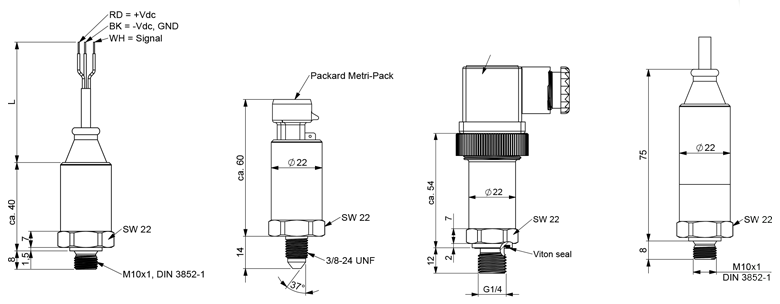
The SMO3100 pressure sensor is a pressure transducer, or a pressure transducer. In the sensor housing, a medium exerts pressure on an extremely thin and pressure-sensitive material located on the sensor chip. There, the pressure is converted into an analog electrical signal.
Benefits of SMO3100 Pressure Sensor up to 4000 bar
The newest SMO3100 series Variohm's pressure transducers are specially developed for automotive applications. According to Pieters, the E1 automotive certification is partly due to their robust stainless steel construction. The pressure transducer is based on the proven technology of the EPT3100 sensor.
“The sensor's EMC and RFI protection is excellent, so electromagnetic radiation and radio waves cannot interfere with the pressure measurement. The sensor housing is made entirely of stainless steel, without silicone oil and O-ring seals. This prevents leakage and protects the sensor against overpressure,” said the account manager.
“Moreover, the sensor has an extremely fast response time, is extremely accurate and reliable,” he adds.
The pressure sensor has a range of 600 mbar to 4000 bar and is suitable for almost all liquids and gases, as long as the medium does not corrode the stainless steel housing.
Properties:
- Wide pressure range: 600 mbar to 4000 bar
- Fast response time
- High measurement accuracy
- E1 automotive certified
- Long lifespan, up to over 10 million print cycles
- Robust stainless steel design prevents leakage
- Excellent EMC and RFI protection
- Suitable for measuring absolute pressure, relative pressure, or vacuum pressure.
Versatile application possibilities Variohm pressure transducer
Pieters finds the SMO3100 sensor series suitable for pressure measurement in diverse automotive applications. “You can use the sensor for pressure measurement of all types of liquids and gas mixtures in vehicles. This can include passenger cars, but also trucks, buses, excavators, cranes, agricultural vehicles. Basically, anything with wheels,” he explains.
He even states that the pressure sensor can be used for all extreme conditions. “For example, I'm thinking of applications in the process and food industries, and in aerospace.”
Inspiration for sensor applications for Sentech customers
Sentech closely follows the product news from its sensor partners. “Innovations and product improvements offer us inspiration for smart sensor applications with our customers,” explains Pieters.
”For pressure measurement issues, we draw on our knowledge and that of all our sensor suppliers. At Variohm, it's great that we can fine-tune the sensors to customer needs,” Pieters concludes.
Sensor knowledge is readily available
Sentech works closely with high-quality sensor suppliers, such as Variohm. Benefit from our diverse sensor expertise and the excellent agreements we have with our sensor partners.
Flamco did this by applying smart pressure sensors with an EMC filter in its Flexcon PA.
As a result, CV technicians experience less Unplanned breakdown visits!
Wearing face masks does not lead to more risk-taking behavior, and one-way traffic appears to be effective. Using a Social Distancing Sensor (SDS) also works when properly instructed. This is evident from a recent experimental behavioral study with real-time tracing by the Smart Distance Lab. Technology company Sentech is therefore launching the Social Distancing Sensor (SDS) on the market.
In the Smart Distance Lab, an initiative of the University of Amsterdam, cameras and sensors were used to measure how much distance people kept from each other. Researchers compared different interventions.
Sensor
The use of the Social Distancing Sensor leads to fewer contacts than when visitors do not wear a sensor. This tag provides direct feedback on behavior. The study also shows that this intervention must be clearly and consistently explained to visitors. People should also be able to try it out for a bit.
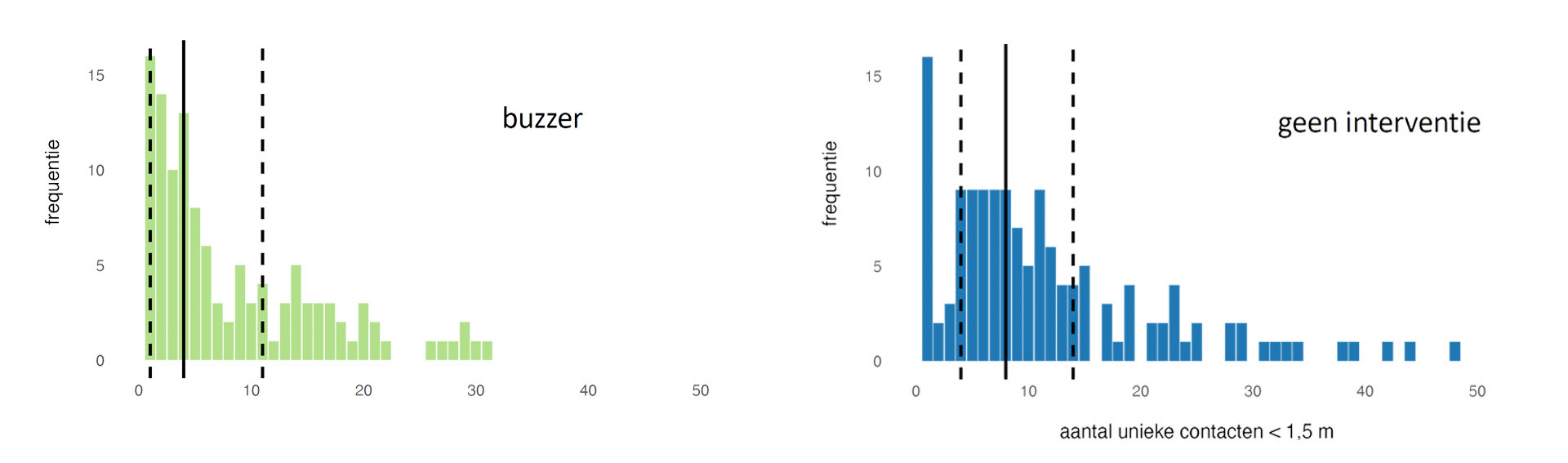
For example, the Social Distancing Sensor gives employees a warning signal if they come within 1.5 meters of a colleague with such a tag. There is a choice of different types of signals: vibration, sound, and/or light. The SDS not only makes office environments safer. Event and production locations, warehouses, and construction sites also benefit from such a solution.
Face masks and direction of travel
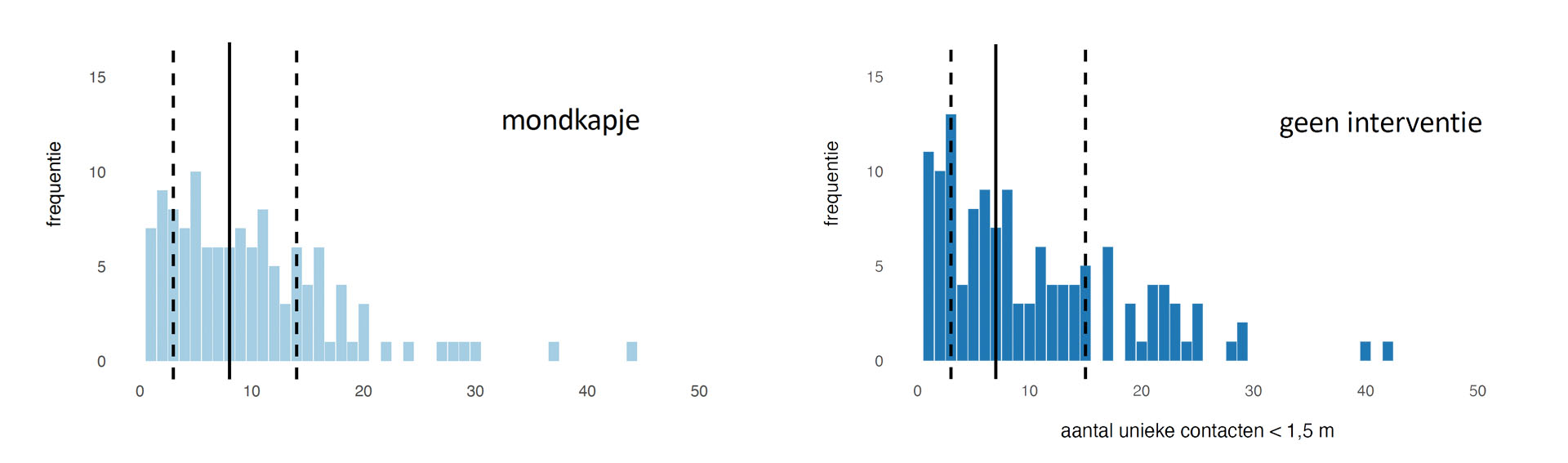
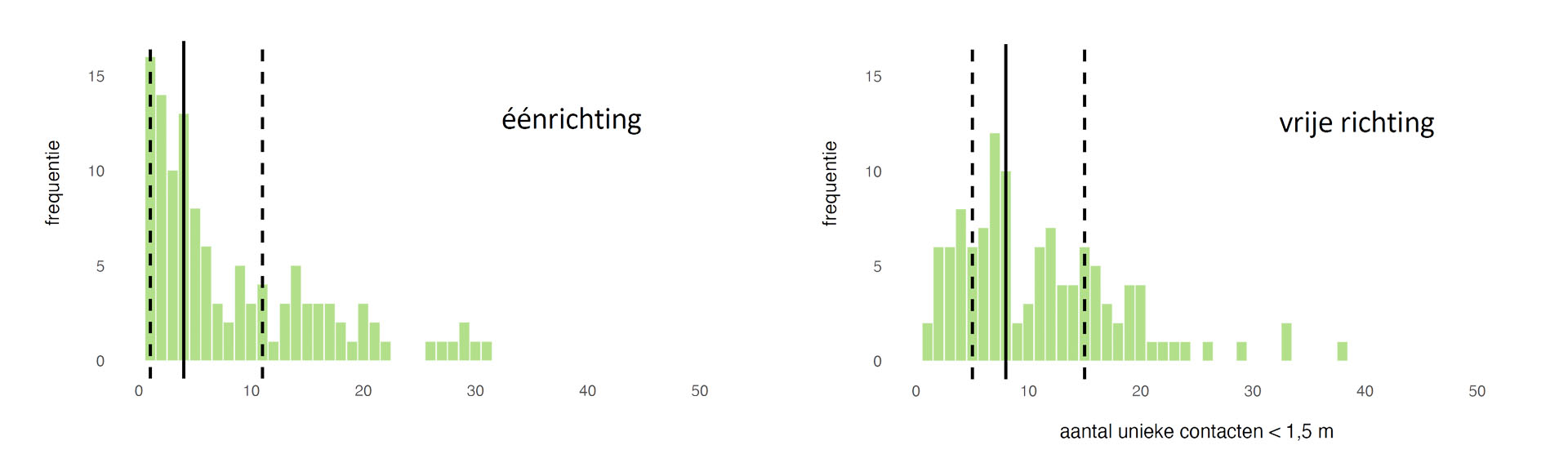
Wearing face masks does not lead to additional contacts. Visitors wearing face masks felt more protected than visitors without face masks. In addition, a one-way route leads to fewer contacts than a free-direction route. The distribution of the number of contacts that a visitor might be infected with is more favorable.
Reliability
Incidentally, there are other systems that alert users to maintain a distance of 1.5 meters from one another. The CoronaMelder app even notifies you if you’ve been near an infected person. The app uses Bluetooth to track proximity, which isn’t 100% reliable. “Whether you have a phone in your pocket also makes a difference,” Ron Roozendaal told NOS earlier. He is the Chief Information Officer at the Ministry of Health.
The CoronaMelder is now issuing around 10,000 notifications per day, even at distances greater than 1.5 meters. How reliable is the measurement then? The need for a system that is accurate is growing with the increasing number of Corona infections.
The ultra-wideband (UWB) technology is used in the Social Distancing Sensor. You can put it in your pocket or wear it around your neck, and the distance measurement is fully maintained. The measurements are much more accurate and reliable than, for example, Bluetooth. Sensor specialist Rob Pieters from Sentech: “Measurements are taken twice per second at the speed of light, with an accuracy of centimeters. You know immediately if you are too close to someone.”
Sentech is further developing its sensor software in collaboration with Focus Technologies. This will soon allow for measurements of how long people have been in contact with each other, when those contacts occurred, and where. Such time-based measurements are interesting for source and contact tracing. “For example, the GGD (Municipal Health Service) in Breda has already purchased sensors. They have many employees who work under high pressure, and maintaining a minimum distance of 1.5 meters is difficult in those situations,” says Pieters.
Best way to organize an event
“Larger events can be safe if carefully planned,” according to researchers at the Smart Distance Lab. The 1.5-meter rule needs a time duration specification. “With the specification ‘more than 20 seconds,’ we measure no contact in a corner with good airflow. This is important in communication from politicians to citizens.”
Based on the initial results, the research recommendation is that you best organize an event by applying one-way directional guidance. “You can also use a sensor that informs visitors whether they are succeeding in keeping their distance,” says the Smart Distance Lab. It is crucial to clearly explain to visitors how the Social Distancing Sensor works. They need to know what is expected of them when it activates.
“It would be fantastic if we could then link a reward to that; that the visitor with the fewest violations receives something (editor's note: a drink, an entrance ticket). We know that rewards work much better than punishments. By linking it to behavior in such a way, we can encourage social distancing,” the researchers conclude.
Frank Wijnveld, Crowd Management Expert at the Event Safety Institute, emphasizes this. He does so in this video: