

Meet Sentech and its sister companies at the Precision Fair
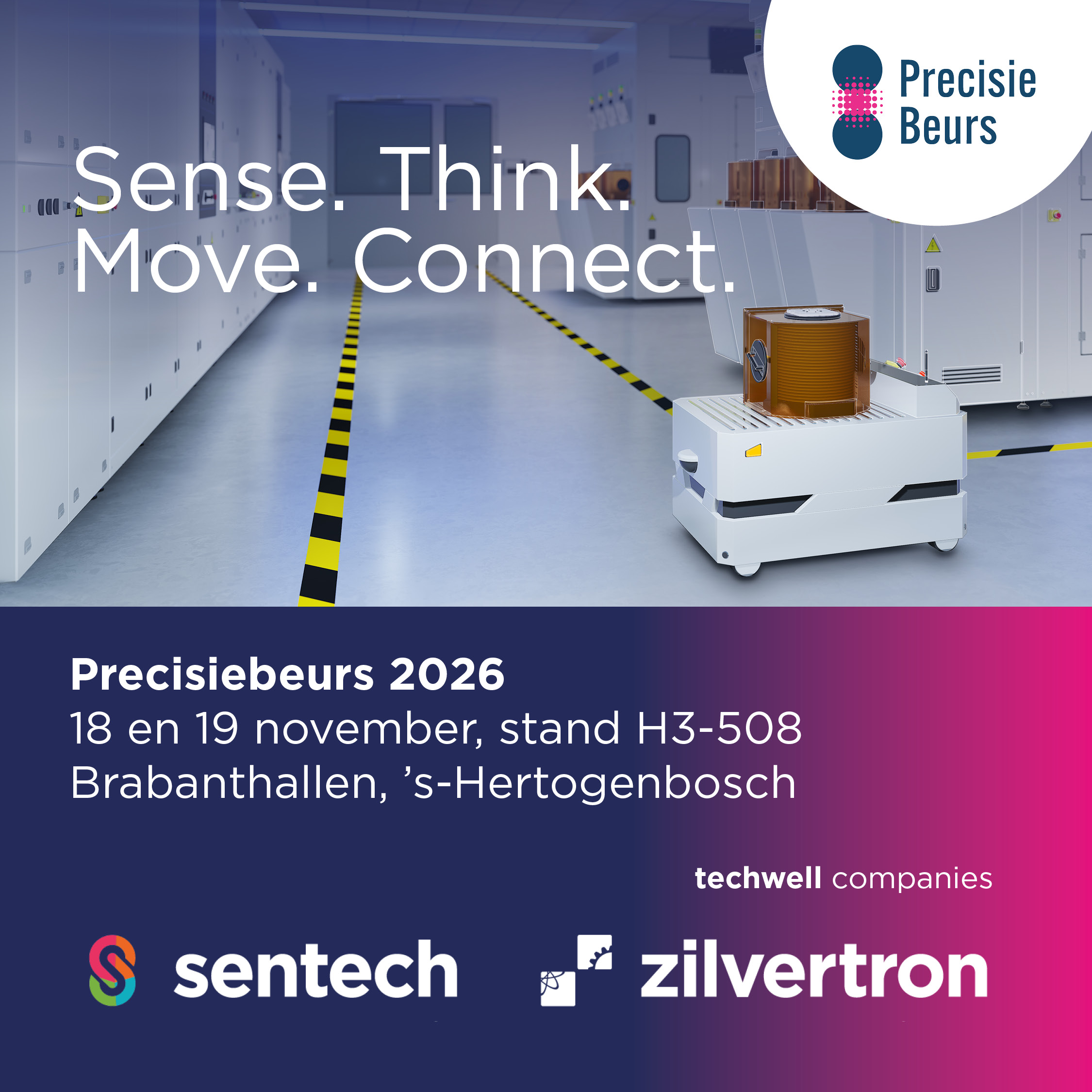
On November 18th and 19th We are back on the Precision Fair. This year for the first time, together with our sister companies Zilvertron and Conquest, as part of the Techwell Group. Will you be joining us?
Three specialists, more expertise for your application
In addition to the sensor solutions from Sentech, you can also learn about:
- Silvertron: motion & control for precise movement and control.
- Conquest: the new connectivity specialist within the Techwell Group, with high-quality cable assemblies, cable trees and electromechanical assemblies.
Under the motto Sense. Think. Move. Connect. discover how these expertise complement each other.
Are you working on a new machine or improving an existing system? Discuss your problem with our specialists and discover which sensor, motion and connectivity solutions are suitable for your application.
What can you expect to see at our stand?
On our stand we demonstrate, among other things, applications in the fields of:
→ Micro movements and precision movement
→ Very accurate positioning measurement
→ Temperature measurements for demanding applications
→ Pressure measurements
Curious to see how these technologies work in practice? Discover it at our stand during the Precision Fair!
Sign up and receive a VIP package
Register yourself No later than November 9th via the link below. Then we will prepare a VIP package for you with:
- A parking ticket worth €15.
- A voucher for free coffee or tea with something sweet.
You can pick up the package at our stand during the fair.
SIGN UP AND RECEIVE A VIP PACKAGE
Learn moreExchange data:
Precision Fair 18 and 19 November
Brabanthallen | ’s-Hertogenbosch
Stand H3-508
Come and visit us at WoTS 2026
From September 22nd to 25th, Sentech will be present at World of Industry, Technology & Science (WoTS) at Jaarbeurs Utrecht. Will you come by too?
Sensor, motion and control in one stand
This year too, we are partnering with our sister company Zilvertron on the WoTS. Sentech brings expertise in sensor selection, engineering and sensor integration; Zilvertron focuses on motion & control for precision motion.
In this way, we bring expertise to one stand. sensor, motion and control technology together and let's show where these disciplines strengthen each other in practice.
By viewing these disciplines in context, technical dependencies and risks become more visible. This allows choices regarding measurement, movement, control, and integration to be aligned early in the development process.
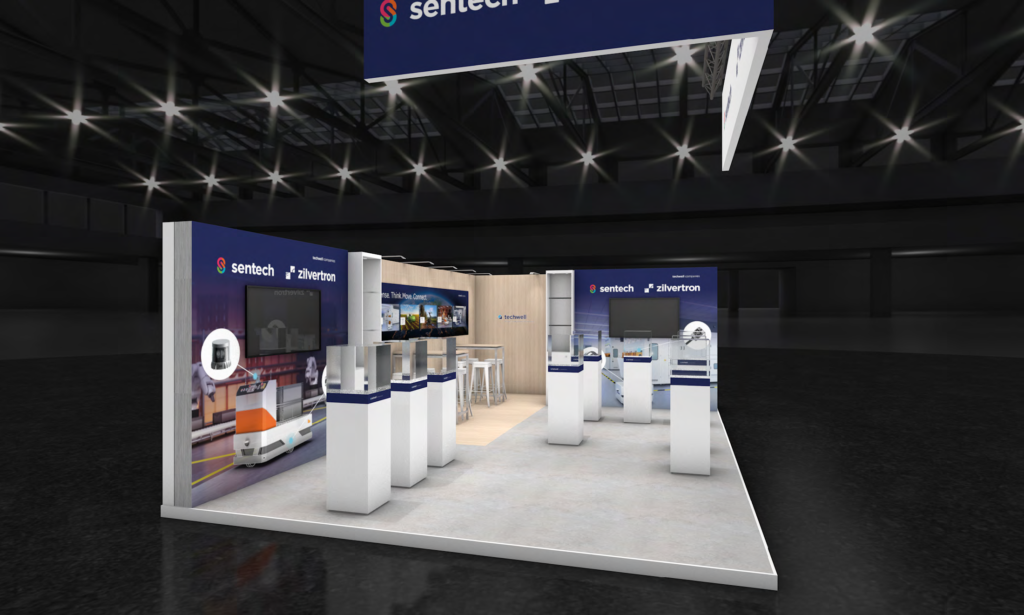
What can you expect to see at our stand?
During the WoTS we bring technology to life with various demos. For example, you can see, among other things: LiDAR, radar and encoder technology In operation. Not as separate technologies, but as examples of different ways in which a measurement problem can be solved and integrated into an application.
But we are especially interested in your application. What do you want to measure? Under what conditions should this happen? What technology should be used? And how should the sensor work in conjunction with the rest of your machine or system?
Our specialists are happy to discuss your technical challenge: from choosing the appropriate measurement principle and sensor integration to its integration with motion and control.
Curious about our demos or would you like to discuss a specific technical issue? Come and visit us at booth 8E026.
22–25 September 2026
Jaarbeurs Utrecht
Stand 8E026
Would you like to join us? Register for the WoTS for free and order your admission ticket via the link below.
REGISTER FOR FREE FOR THE WOTS
Learn moreYour sensor issue or challenge, we call our challenge. The path to the sensor solution you truly need touches three interests: cost, quality, and delivery time. These never go hand in hand. How do we find that compromise together with you? With our way of working, originating from the automotive industry, we map and manage risks. This is how we ensure the quality of your end product, balancing it against costs and lead time. A collaboration with you as a customer is essential!
As an R&D Engineer, you often already have a potential solution in mind. But is this the best fit for you? Perhaps another technique is better suited for your application, and it might even be less expensive.
Even as a buyer, you want clarity on price, delivery time, and quality. Our working method focuses on identifying and managing risks. This is how we monitor quality and ensure a predictable logistics chain.
Further on, you'll discover the 5 phases of challenging your sensor solution.
Balance of interests
Besides balancing cost, quality, and delivery time, it is also important to find a balance between the customer's interests, the supplier's interests, and Sentech's interests. Hermen Kobus, Operations Director at Sentech explains: “If interests diverge too much, it can be difficult to find common ground. You look at what you can do to understand each other. If it ultimately doesn't work, you have to be honest enough to go separate ways.”.
Even at an internal level, competing interests are at play. Kobus adds to his story: “An engineer always wants to arrive at the best solution because they think from a technical perspective. If something is good, they will still say, ‘It can be better.’ After the engineer spends many more hours developing the product, it will likely improve slightly, but also become unnecessarily more expensive.”.
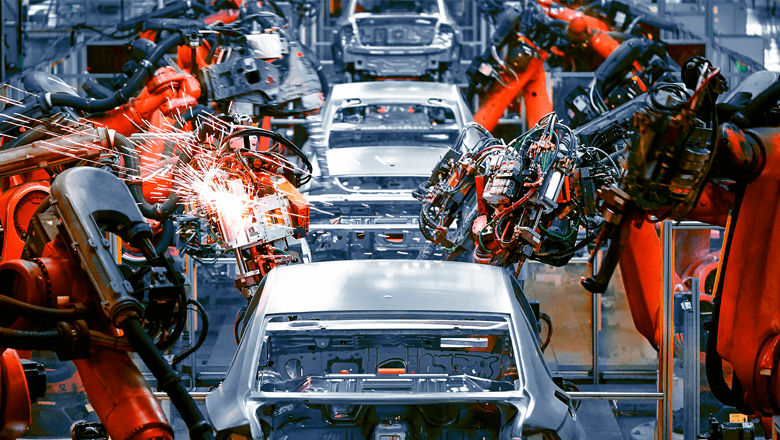
Car manufacturers like to work with companies that are IATF 16949 certified. Furthermore, this standard helps to set up work processes efficiently and effectively.
Optimal workflows
Together with you, we map out what is truly important to you. We do this with our work processes, which are based on the high quality standards of IATF 16949 (formerly ISO TS 16949). We monitor these strict standards with the APQP (Advanced Product Quality Planning) development process.
This model was developed in the automotive industry by Ford, Chrysler, and General Motors to deliver new products on time and within budget. By following the APQP phases, we identify and manage risks.
Documents in understandable language
APQP documents are inherently complex to work with. They use terms that not everyone is familiar with. We have simplified this model so that all parties can work with it efficiently. Documents and templates for the processes are written in understandable language.
Scale steps, never skip
Sometimes it is not efficient to follow all steps of APQP extensively. Depending on your expectations regarding quality, time, and price, it is possible to scale certain steps. From the perspective of ‘scale don't skip,’ we never skip steps because we always consider all risks.
“At every process step, we ask ourselves in a multidisciplinary team: ‘Are we going to do this step completely, or can we do it faster?’ Knowing that there are risks involved,” says the Operations Director. We map out the risks and weigh them against the quality standards that are important to you.
For example, if the length of a product is important, then an incoming inspection for dimensions makes sense. Kobus adds: “The moment I catch at incoming inspection that the product is too long or too short, I won't accidentally put work into it and send it to the customer. That costs money. Moreover, hours have already been spent on it. All for quality assurance. You must decide together whether the risk is high or not.”.
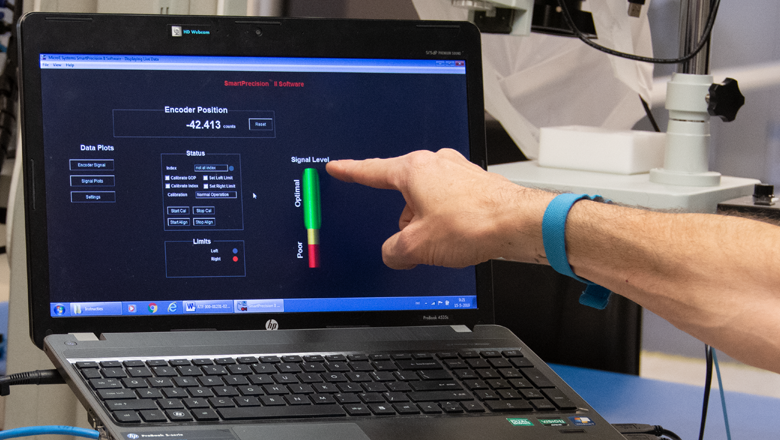
“If we know all the risks, we'll never be surprised by them.” - Hermen Kobus, Operations Director at Sentech
In 5 phases from challenge to sensor solution
Based on APQP, we go through 5 phases in a project. By following these phases, we identify risks in a timely manner and make them manageable. This way, you will receive your sensor solution at the agreed quality, price, and lead time.
Phase 0: Mapping the Problem Question
As an engineer, you come into contact with us because you need a specific sensor solution. Perhaps you already have a possible solution in mind. But is this the best solution for your problem?
By asking critical questions and probing further, our Account Team will work with you to determine what you truly need.
The importance of asking further questions
Asking critical questions and probing further are important for making risks clear. Like when the customer asks for a waterproof sensor. Waterproof has varying degrees: from rain-tight (IP X3) to pressure-tight (IP X8).
By asking further in this situation, we will know what the customer means by waterproof. The choice in this also influences the price.
Kobus gives an example where price plays a big role: “The customer says, ‘I want a pressure sensor,’ but it turns out they need a pressure switch. That might sound like a small difference. In terms of cost, there's a big difference, because a sensor can be more expensive than a switch.”.
If we deliver a product that meets all specifications but doesn't fit your application, we haven't done our job correctly.
Discuss your challenge
Phase 0 concludes with an open-up meeting with the full project team: Sales, R&D&E (Research & Development and Engineering), Supply Chain, Quality, Finance, and Production. Here, we pitch the problem statement, and the sensor experts propose a solution. We document this in the Product Initiation Document (PID).
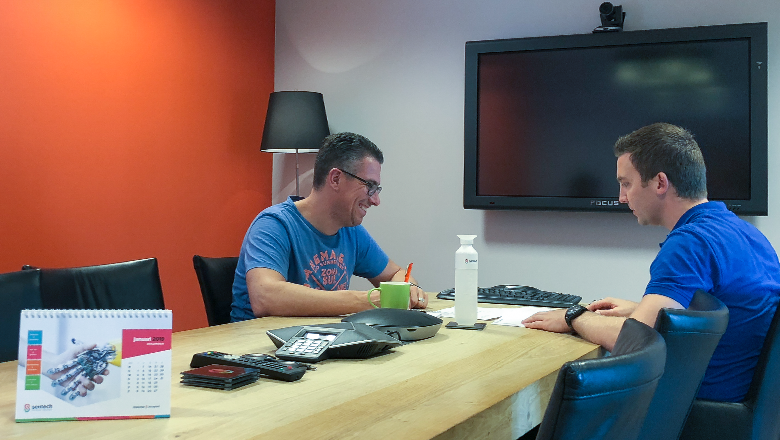
Phase 1: Feasibility and Offering
Sales transfers responsibility to RD&E. In this phase, our Project and Production Engineers investigate the feasibility and capacity of a project.
Capacity
Capacity is central to whether we can and want to make it. The Operations Director gives an example: “Are we going to make 100,000 products, with an assembly time of 20 minutes per piece? That has implications for our capacity. Maybe we need extra personnel for that.”.
Technical and financial feasibility
We also investigate the technical feasibility. The client requests certain specifications. Can we make that? Is that technically feasible? For financial feasibility, our sensor experts, together with the Account Team, examine whether we can produce the product for the discussed price.
Phase 2: Product Design and Development
Once we receive the assignment, we can provide the draft project plan. During this phase, the lead time becomes concrete: we will make it clear when which project results will be delivered, tailored to your needs. Project results range from documents and drawing packages to samples or prototypes.
Prototype
With a prototype, we show you, the (R&D) Engineer, a functionally working product. The prototype is not yet made with the final means. For example, if the final product is to be injection molded.
“This is too expensive to do for just one piece. In that case, we'll 3D-print the housing. Therefore, the material and color may differ. It gives the customer an impression of how the product will turn out in the meantime. He can do tests with it: is this what I want,” Kobus explains.
Design risk management
We address design risks with the Design Failure Mode Effects Analysis (DFMEA). We prioritize risks based on the Risk Priority Number (RPN). We always address the highest RPNs to reduce risks.
Kobus provides an example: “The component is so sensitive to vibrations that we expect it to break down in that machine when vibrations occur. If the risk is too high, we will devise an action to reduce that risk. The description of this will be included in the Control Plan.”.
Critical to quality
This phase focuses on product design. This involves drawings and the software that needs to be included. Apart from drawings, you also discuss critical dimensions. “Like with the development of a load pin. The customer uses this pin in a gearbox. Gears will slide over the pin, so the fit has a certain dimensional tolerance. The pin also must not deflect too much. Here, we describe the critical dimensions, or what is ‘critical to quality’,” adds the Operations Director.
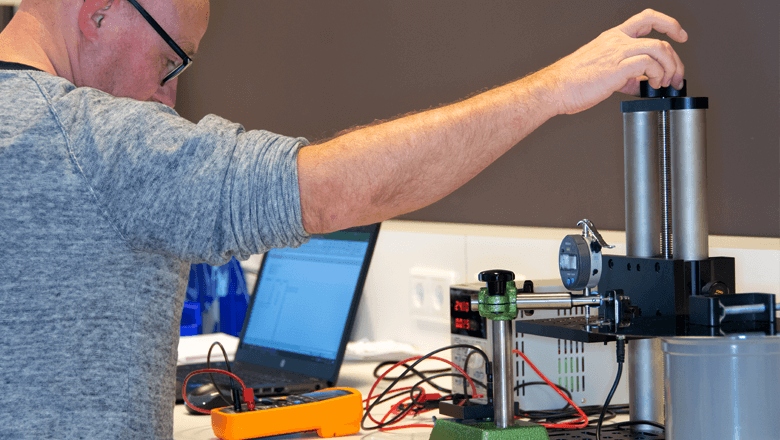
Phase 3: Process Design and Development
Now, the process of producing and assembling the series begins. We will carefully monitor the quality, as established in the previous phases. Details that are ‘critical to quality’ will receive extra attention in this process.
Process risk management
All process-related risks are captured in the Process Failure Mode Effects Analysis (PFMEA). Such as what can go wrong when components arrive at our facility in relation to the agreements with our suppliers.
Kobus sketches an example: “We took the risk of doing business with a supplier who has a delivery time of between three and five weeks. However, we need to deliver 200 sensor solutions to our end customer every two weeks. Then, in the Process FMEA, it may emerge that we need to build up a larger stock of products from that supplier. That way, we have a buffer if the supplier delivers late.”
Measurement system analysis
With Measurement System Analysis (MSA), we map out the reliability and reproducibility of our measurement systems. We control the variation of our measurement systems, so that the quality of your final product is consistent with every measurement. Even when multiple Assembly Engineers read data from the same measurement system.
“We make products here where the time of day we measure matters. It's colder in the morning than in the afternoon. So, it's sometimes important that assembly takes place at a constant temperature,’ according to Kobus.
Deployment to Production
For a successful transfer of Engineering to Production, we will create a work instruction for your sensor solution. In addition, the Project Engineer will teach the Assembly and Test Engineers how to assemble and test the product.
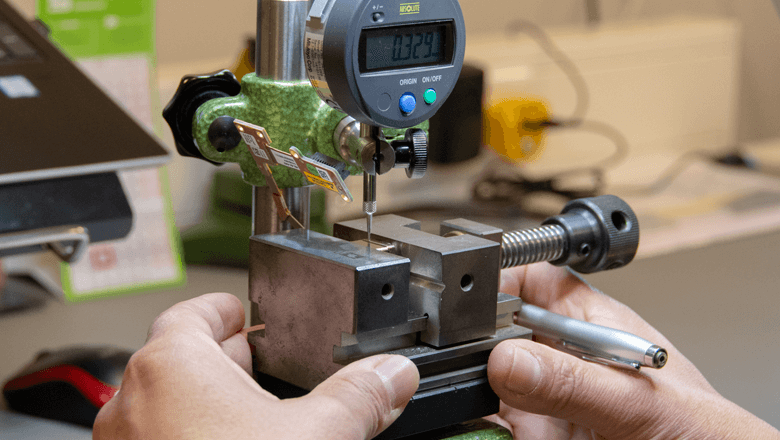
Phase 4: Product and Process Validation
Now that the people are trained, we begin the validation phase by producing a small series, for example, 20 units. With care, we ensure that your final product meets the desired quality requirements. We also test feasibility to determine the exact lead time and price.
Feasibility in time
If you need to produce 100 sensor solutions per week, you want to know if that's feasible in terms of time. The Operations Director explains: “We time exactly how long it takes us. This way, we know how many units we can produce per week and that the costs from the last calculation are covered.”.
Quality control
In Statistical Process Control (SPC), we establish quality limits: how much can quality deviate? With a control chart, we monitor quality requirements that are important for your product.
Kobus adds, “For example, if the length of a product is important, we determine how much that length can deviate. We check this with a control chart and test tool. Anything outside the norm is rejected.”.
Lessons learned meeting
We'll conclude Phase 4 with a ‘lessons learned meeting’. All involved team members will come together for this, and you as an (R&D) Engineer will also attend. We'll discuss what went well, what didn't go so well, and what we need to do differently next time.
“It happens that we've done a vibration test in phase 4, but in hindsight, it would have been better to do it in phase 2,” Kobus gives as an example. “This is how we continuously improve our work processes.”
Start series production
Now we know in detail how to create your sensor solution and what we need to consider. There is also now certainty about the lead time and price. Based on this information, we will prepare the quote for series production.
After we receive your order, the Production department will start series assembly of your sensor solution.
Supply chain control
Quality and selecting the right supplier go hand in hand. Kobus adds: “A supplier delivers quality products to me, with an agreed ppm level of 6,000. That means 6,000 parts per million are allowed to be defective. Our customer requires 30 ppm for their end product. In that case, I would rather do business with a supplier who can deliver 30 ppm, even if that supplier is slightly more expensive.”.
The tension between Sales and Engineering
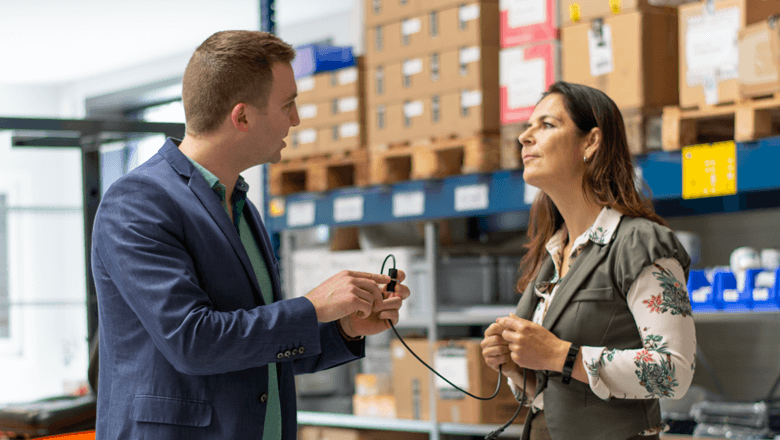
The interests of Sales and Engineering sometimes diverge in a project. Sales wants to offer flexibility to the customer, while Engineering adheres to processes to maintain quality.
When a customer requests faster product delivery, Sales puts pressure on Engineering to make it happen. Because Engineering is responsible for quality, they strictly follow the process. These process steps take time, which sometimes conflicts with Sales' interests.
Through this area of tension, the teams find a middle ground between flexibility and lead time. This allows them to efficiently develop the sensor assemblies, with attention to quality and costs.
Integrate your sensor solution successfully!
During a sensor integration project, you constantly weigh three interests: cost, quality, and delivery time. It can be challenging to make the right choices in this regard. What are the risks and consequences of my choice? Is the technology I have in mind the right solution for my application?
Scroll through our free e-book for the answers to these questions. You'll also read practical examples of common sensor issues and solutions.
Immerse yourself in the world of successful sensor integration Download the e-book directly.
Research by Rabobank Australia shows that three-quarters of Australian farmers are hesitant to use sensor technology. Rabobank calls these “barriers holding back the agricultural sector in Australia from investing.” This stands in stark contrast to Dutch farmers.
Sentech is an independent sensor supplier that contributes to precision agriculture and livestock farming with cost-effective sensor solutions.
Australia: unclear costs and benefits of sensor technology
The Rabobank study shows that 23% of Australian farmers use sensor technology. Rabobank analyst Wesley Lefroy even says: “Of those, fewer than 40% report that their profits have improved thanks to the sensors. For many non-users, the profitability of such an investment is unclear.”
According to Rob Pieter, account manager Agrotechnology at Sentech, Australian farmers underestimate the possibilities of sensor technology. “That's understandable. Because for any technology, if it's not applied correctly, it won't meet expectations. And I think that's what's happening in Australia,” Pieters explains.
Sensor integration in agricultural engineering enables precision agriculture.
Precision agriculture is widely applied and still developing in the Netherlands. Since 2015, a public-private research program called ‘On to Precision Agriculture 2.0’.
The program describes its goal as follows: “to conduct research on strategic themes within precision agriculture with more than 20 partners over the next four years, in order to accelerate its implementation and reap its benefits for growers, supply chains, and society. The partners within the research program are end-users, supplying companies, supply chain parties, and knowledge institutions.”
Dutch farmers can't do without sensors
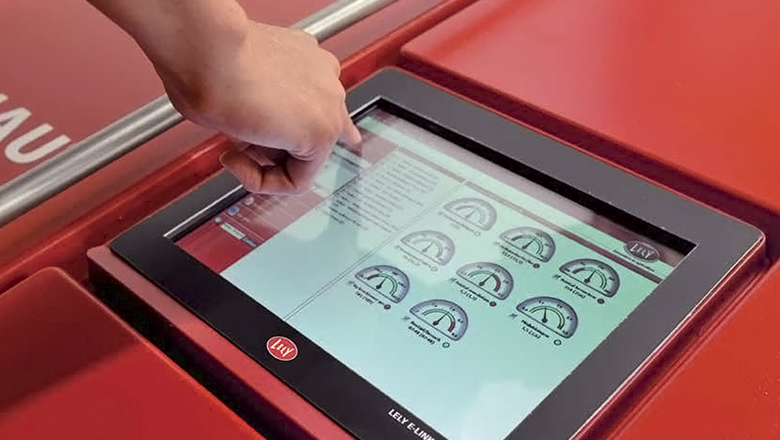
Pieters applauds this development. Pieters: “30 years ago, Dutch farmers scoffed at agrotechnology. But now, almost everything is automated or managed here, from milking cows to feeding them, and from fertilizing land to harvesting. This is only possible through the use of the right sensor for a specific purpose. They can’t do without it nowadays. It has improved their yields so much that they can compete well on high quality and yields.”
What are the benefits of using sensors in the agricultural sector?
Dutch farmers use sensors in agrotechnology for analysis and production purposes. The Precision Agriculture 2.0 program shows examples of sensor use for researching soil, climate, crops, diseases, pests, and weeds. Farmers then use the information for their cultivation planning, soil improvement, fertilization, and weed control.
Translating technical sensor specifications into customer benefits
The big advantage of precision agriculture with smart sensors is that farmers can increase crop yields and improve product quality.
Pieters: “You have to cater to the specific crops and the techniques that increase yield for those crops. It's important to translate technical specifications into benefits for the farmer. And perhaps manufacturers should offer calculation tools so farmers can determine if sensor technology is profitable for them.”
Livestock farming also benefits from sensor technology
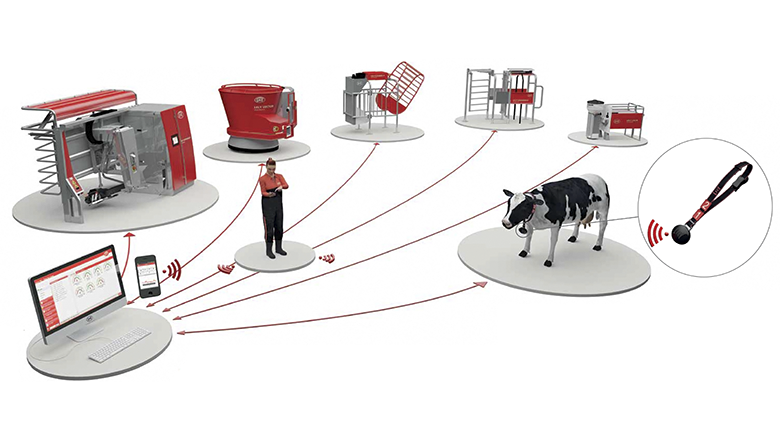
In another Rabobank publication, the Dutch bank describes the benefits of using sensors in livestock farming. According to the authors, sensor integration in farming contributes to productivity, cost reduction, and improved working conditions. Precision livestock farming leads not only to better results. It also ensures healthier animals, more sustainable operations, and more efficient production.
Independent sensor supplier
Sentech contributes to precision agriculture and livestock farming with custom sensor solutions. The sensor supplier operates independently of sensor manufacturers. According to Pieters, Sentech collaborates with manufacturers on innovations that further assist machinery manufacturers and farmers.
Pieters: “It is up to developers, like Sentech, to help manufacturers of Agrotechnical products with sensor knowledge for their sensor selection. Furthermore, we provide a business case for every sensor development. This way, we help manufacturers inform farmers more clearly about the costs and benefits of sensor technology.”
Convinced of returns
Pieters is convinced that Australian farmers will also increasingly embrace sensor technology. It turns out that it can significantly help farmers in their agrotechnology and can indeed yield returns.
Hall sensors in the Agrifac field sprayers ensure more yield of the farmland.
Sensor fusion is the ultimate form of sensor integration. Moore's Law enables the combination of diverse sensor types at the chip level within a single sensor module. While sensor manufacturers focus on perfecting their sensor technologies, Sentech independently works on the integrated sensors of the future. Read why sensor fusion enables next-generation applications.
Business development manager Marco Leeggangers responds enthusiastically to the latest sensor technologies. “Old and new techniques at the chip level are emerging. With new sensor techniques, the sensor manufacturer focuses on the further development of one technology. We see many opportunities for the integration of different sensors into one compact sensor application.”
What is sensor fusion?
When you google a Explanation of sensor fusion, the impression arises that it concerns sensor data. The term is also often equated with ‘multisensory data fusion’. Or the combining of data from different types of sensors in one system.
Leeggangers believes that is too limited a definition. “It's not just about data. True sensor fusion is combining sensor technologies in one integrated sensor module or application.” According to him, this offers many advantages. It also makes new applications possible because “more difficult detections” are feasible. In the following, you will read how fusion elevates autonomous movement to a higher level.
Diverse types of sensors examined
According to Leeggangers, Sentech regularly receives requests from startups and research centers to bring promising high-tech sensors to market. “We see various types of sensors and promising sensor technologies come through. Sentech focuses on innovation in sensor integration, not on mass production of sensors.”
Ultrasonic sensors
An ultrasonic sensor works with sound that is imperceptible to the human ear. This type of sensor is used in all sorts of detection applications. For example, for person detection, quality control, and for medical purposes.
A major advantage of ultrasonic sensor technology is the simplicity of processing detection signals. This technology is also relatively inexpensive. However, sound detection also has limitations, for example, the need for a controlled environment. The speed of sound is influenced by all sorts of factors.
Lidar and radar sensors
Lidar and radar sensors measure according to the same principle: ‘time of flight (TOF)’. The reflection of an emitted signal is received and processed by a receiver. By measuring the time between transmission and reception, the position, size, and speed of an object can be measured. Lidar works with light pulses (laser or infrared) and radar with radio waves.
Since both signals travel at the speed of light, detection is lightning fast. According to Leeggangers, sensor manufacturers are currently investing heavily in the further development of these sensor technologies, particularly to enable autonomous driving. Think of UAVs (unmanned aerial vehicles and drones) and AGVs (Automated Guided Vehicles).
Which method is preferred is a continuous discussion among users, manufacturers, and independent experts.
Leveraging the advantages of lidar and radar
“Innosent, a manufacturer of radar sensor technology, will particularly emphasize the advantages of radar. And Lidar expert Leddartech will underscore the benefits of Solid State Lidar,” explains the business developer.
Lidar scanning has more limitations in extreme weather conditions (such as snow, fog, and rain) than radar. On the other hand, radar is less capable of accurately determining the size and shape of objects. Furthermore, the resolution becomes less accurate as distances increase. Radar also requires more software filtering to remove interference.
“At Sentech, we integrate Solid State Lidar technology. The latest generation is much smaller, more robust, and more reliable due to the absence of moving parts. And radar has become significantly cheaper because it's now possible at the chip level,” says Leeggangers.
Suitable for autonomous movement
In the automotive industry, ultrasound, lidar, and radar are used separately for various autonomous driving functions. Such as lane assistance, parking assistance, cruise control, anti-collision systems, and so on.
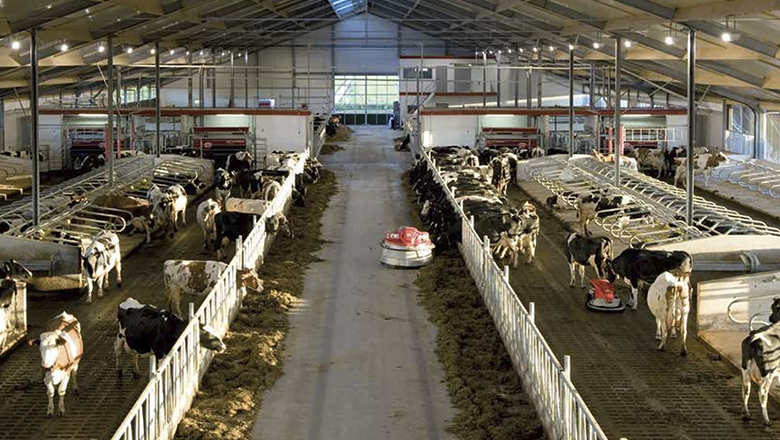
The Netherlands is at the forefront of AGVs and UAVs in the Agriculture and horticulture. With drones, farmers keep an eye on their land. Robots clean stables, milk cows, and feed livestock for farmers.
Sensor fusion for next-generation applications
Sentech uses sensor fusion as the ultimate integration tool to enable next-generation applications. According to Leeggangers, there are no bad sensors. “However, a sensor is sometimes used incorrectly, which leads the user to see it as a bad sensor,” he says.
“We look at the customer's application, think about what they want to achieve with their application. Based on that, we select the best sensor technology and integrate it. That increasingly leads us into the field of sensor fusion. The combination of two sensor techniques yields new information. That information makes the customer's application smarter and better,” explains the product developer.
Chip-level development
Transmitters, receivers, and printed circuit boards are getting smaller. “That is also necessary to enable innovative integrations,” says Leeggangers. Weight, installation space, and power are limiting factors that require small-scale sensor development.
This is where Moore's Law also applies. The number of transistors in an integrated circuit doubles every two years. And according to Leeggangers, this offers opportunities for sensor fusion. Radar and lidar sensors with chip-sized transmitters and receivers are already available.
More complex detections possible with fusion sensor
As a sensor integrator, Sentech operates independently of sensor manufacturers. “There isn't one all-encompassing technology that can accurately detect everything yet. By combining sensor techniques, we want to enable more complex detections,” says Leeggangers.
“To allow a vehicle to move fully autonomously on the road or in a business environment, you must be able to detect and process all variables in the environment. Our primary focus is now on Agrotechnology.”
For example, Sentech works closely with Lely to enable advanced barn automation. “With sensor fusion, we are driving efficiency on farms, but also animal welfare and reducing environmental impact,” he concludes.
Fully automated herd management is still a long way off. However, feeding and manure robots are already bustling around many livestock farms, determining their position with sensors. According to Leeggangers, the next step is communication between fusion sensors in machines, vehicles, on the livestock, in the barn, and in the pasture.
Combination of high-tech sensors ultimate for integration
Sensor fusion therefore appears to be the ultimate integration technology. If you also (frequently) experience detection limitations and sensor challenges, then this technique is promising.
If sensor technology were not to grow exponentially at the same pace as computing power, we would not be able to fully benefit from the possibilities that artificial intelligence offers. This is according to TUE fellow Carlo van de Weijer. Because without accurate, preferably real-time, data, the unconditioned external world is incomprehensible to AI. In that sense, the integration of sensors in the AI era we are in is many times more important than the quality of actuators.
Carlo van de Weijer also sees it happening: the hype around artificial intelligence. ‘Some startups are just saying they're doing AI to raise more money.’ The director of the Eindhoven AI Systems Institute (EAISI) at Eindhoven University of Technology compares the situation to how the internet was viewed about thirty years ago. ‘Everyone said you had to get on the internet, but nobody knew exactly how or what, so in practice not much happened. We now know how impactful that technology has been. The reason we're talking so much about AI now is because we foresee that machines will become smarter than ourselves in the foreseeable future. We need to get to work on it.’
Van de Weijer substantiates that statement with three arguments. ‘To begin with, technological development, and thus the growth of computing power, is not stopping. There is no reason whatsoever why that development would stop,’ according to Van de Weijer.
Bag with algorithms
The second reason is that the development of AI does not stop at human intelligence. ‘Our brains are limited to one skull with a clock speed a million times slower,’ Van de Weijer explains. ‘If we collaborate with machines, we are more intelligent and can postpone the moment when computers surpass human computing power. But humans have finished evolving; machines have not.’
Don't people then have an advantage because they have consciousness, character, humor, or a soul? That question leads Van de Weijer to his third argument: ‘You then enter into a philosophical discussion. Can a machine ever enjoy a piece of chocolate? We can, but isn't that also just because we've learned that chocolate gives us energy? I admit, it's not the most romantic way to view a human, but aren't we essentially more than just a bag of algorithms? If there is any difference between human consciousness and AI, I don't think it will give us an advantage anymore.’
What is intelligence?
Scientists don't entirely agree on how long it will take for AI to surpass human intelligence, also known as the singularity point. The renowned futurist Ray Kurzweil, in his book ‘The Singularity Is Nearer’ (2024), suggests we will reach that point as early as 2029. Others estimate it to be somewhere around 2055-2060. ‘In any case, very few scientists are still saying it will never happen,’ Van de Weijer notes, immediately emphasizing that AI can already have a tremendous impact much sooner. ‘We're already seeing that now.’
To properly categorize the level of artificial intelligence, we must first define intelligence. Van der Weijer likes to use the description by American psychologists Robert Sternberg and William Salter. ‘They describe intelligence as...“goal-directed adaptive behavior”In classical automation, you start with the input. You run a program on it, and then you get your output. Many things called AI are actually nothing more than that. For me, something is truly artificial intelligence only if you provide the input, define the output, and let the machine determine how to get there itself. If the output isn't satisfactory, true AI can adjust the program until the output is correct.’
Sensors crucial for AI
For Van de Weijer, there's another important reason why the attention for AI has exploded in recent years, and that's sensor technology. ‘Computing power is developing exponentially. When something develops exponentially, people always underestimate it because we are linear thinkers,’ he begins his explanation. ‘Many systems can be reduced to a sensor that measures something, computing capacity or a bit of intelligence that, based on the measured data, draws a conclusion and then gives an order to an actuator. On top of that is a feedback loop to assess whether the action actually leads to a better measurement. That's how a system iterates towards the right outcome.’
Of course, actuators are improving, Van de Weijer admits. ‘Electric motors, pistons, hydraulic systems, you name it, the performance of such components increases every year. But that development is linear, not exponential.’ That's in contrast to sensors, Van de Weijer argues: ‘They ride the wave of Moore's Law, just like available computing power. Look at cameras, lasers, lidars. That type of technology all starts very expensive but gets incredibly small very quickly. And especially much cheaper. At a certain point, it even goes on-chip. It's happening incredibly fast.’
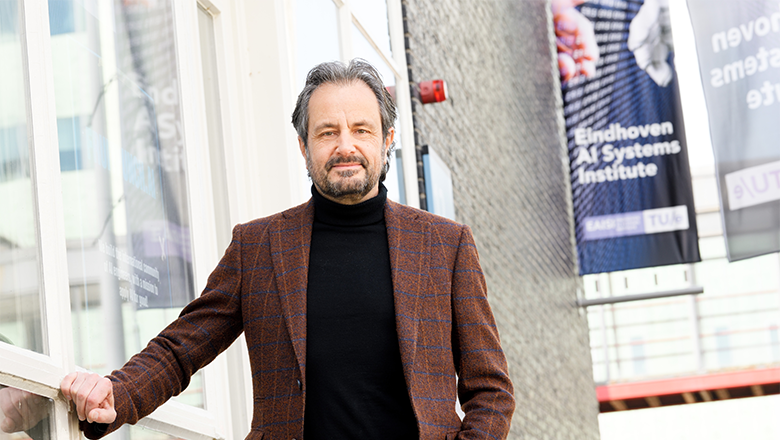
EAISI Director Carlo van de Weijer: ‘Start experimenting with AI; you will almost certainly become more productive.’ Photo: Bart van Overbeeke
Blame it on the sensors
Van de Weijer believes that the faster development of sensors compared to actuators is good news for AI. To clarify, he provides an example: ‘Try driving a car blindfolded. That won't work. However, if the steering system isn't working perfectly, you can still avoid all sorts of things. As long as you're getting the right data, there's still something you can work with. Without data, or with the wrong data, you have a serious problem.’
Sensors are therefore key players in the development of AI. With only exponentially growing computing power, it wouldn't progress nearly as fast, states Van de Weijer. But because sensor technology is also developing exponentially and sensors are being integrated more and more effectively, AI algorithms continue to receive the right – and sufficient – data, allowing intelligence to truly continue developing exponentially.
Unconditional world
Artificial intelligence sets conditions for the data it receives via sensors. But what those conditions precisely are is highly unpredictable. ‘As a sensor supplier and integrator, you will have to deal with that adequately and decisively,’ according to Van de Weijer. ‘You cannot make the world predictable. That would be nice for AI, as artificial intelligence functions best in a conditioned world. But then you would have to install traffic lights everywhere, regulate the weather, and so on, which is obviously impossible. You can only make AI work in the unconditioned, real world if you know the conditions of that world in real-time. That is the essence.’ And that requires well-integrated sensors.
Experiment
As stated, even AI evangelist Van de Weijer believes that sometimes too many rosy promises are made when it comes to AI. ‘I don't believe artificial intelligence will replace humans. But I do think that people who work with AI will replace people who don't work with AI. Because AI makes you structurally much more productive. We need that efficiency boost to continue economic growth.’
The director of EAISI is therefore not in favor of banning the use of tools like ChatGPT in schools. In fact, he urges everyone to get started with AI tools. ‘Just ask ChatGPT which tools could be interesting for your field,’ he smiles. ‘And start experimenting. You will almost certainly become more productive. Humans are distinguished from other animals because we use tools and share them with each other, further developing and improving them. Until now, these were tools that supported our arms or legs, but with AI, we have arrived at tools that help our brains. This is a development that cannot be stopped, so you might as well make the best of it. With sensors as a fundamental component.’
Discover the Six Levels of Sensory Integration: A Look into the Future
The development of AI goes hand in hand with advances in sensor technology. Sensors provide the crucial data that feeds AI algorithms, but without smart integration, we cannot fully utilize these technologies.
Would you like to learn more about the trends and challenges in sensor integration? Then read our blog about the future of sensor integration,in which our experts discuss the six levels of integration and explain how they contribute to innovation.
Lidar is increasingly being used in autonomous systems and robots. The technology makes it possible to perceive the environment in 3D and detect objects accurately. This is valuable for machines that need to navigate, recognize obstacles, or map their surroundings. By looking at applications outside the agricultural market, new ideas emerge on how sensor technology like lidar can add value to agricultural machinery.
Agricultural machinery can navigate more safely, avoid obstacles, and better understand their surroundings with the application of lidar. This also applies to situations with mud, vibrations, and varying light conditions. By learning from applications in other sectors, new ideas emerge for practical lidar applications in agriculture. We utilize robust Ouster lidars, which perform well under harsh conditions.
Challenges in the Agromarket
Sensor integration in agricultural machinery presents a number of typical challenges:
- Dust and dirt
- Strong vibrations, for example, from moving machinery
- Weather influences such as rain, sun, and temperature fluctuations
- Complex and irregular objects, such as crops, bales, or animals
- Dynamic environments, such as with people, animals, or other machines on the farm
Sensors must therefore not only be accurate, but also robust and reliable in harsh conditions. These are precisely the conditions that many autonomous systems in other sectors also have to deal with.
3 practical examples of lidar applications
Example 1: autonomous robots
Trombone develops autonomous electric street sweepers that clean streets independently. For navigation and obstacle detection, these machines use lidar sensors.
The challenges of an autonomous street sweeper overlap with autonomous applications in the agricultural sector. For example, the machine must continue to function reliably in an environment with a lot of airborne dirt, varying weather conditions, and complex objects such as curbs, vehicles, and pedestrians.
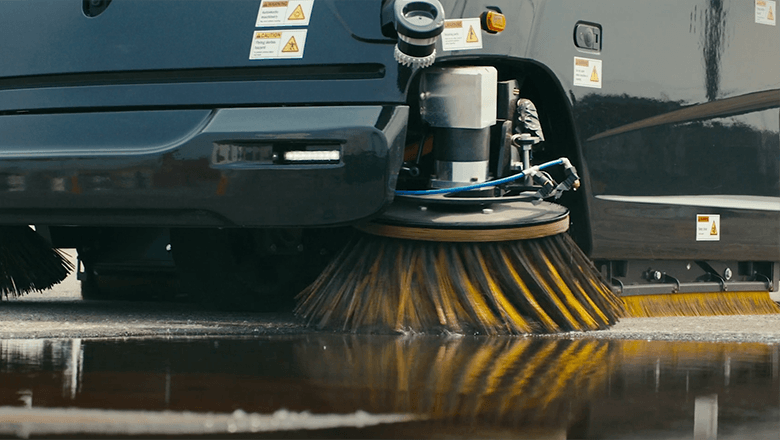
In this application, Ouster's digital lidar continuously creates a 3D image of the surroundings. This allows the machine to detect obstacles and navigate safely.
Because lidar is an active sensor with its own light source, it also works in the dark without additional lighting. In situations with dust or varying light – where cameras struggle – lidar continues to function reliably.
In autonomous agricultural applications, a machine must be able to recognize obstacles, navigate safely around objects, and remain reliably functional in dusty and dirty environments. In agriculture, this translates to, for example, the applications listed below:
- Feeder robot in a barn, that autonomously drives along fences and feeding places
- Field robot that navigates autonomously between crop rows
Example 2: Autonomous Off-Road Vehicles
Forterra is developing technology that enables defense vehicles to drive autonomously in challenging off-road environments. This includes terrain without lanes, with low visibility, bad weather, and limited GPS. Their systems ensure vehicles remain safe, stable, and reliable under these harsh conditions.
Lidar is one of the most important sensors in Forterra's solutions. It provides a continuous and accurate 3D image of the environment, all around the vehicle. With the digital lidar sensors, distances and obstacles are accurately measured. This allows these autonomous vehicles to drive safely, without lanes or fixed reference points.
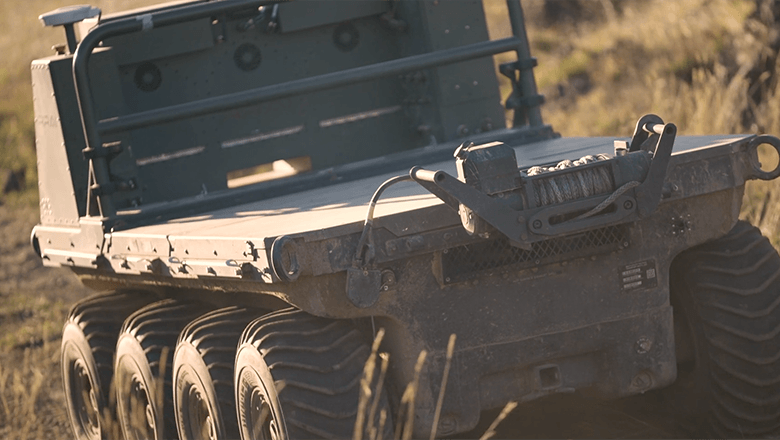
In environments where visibility and GPS are less reliable, LiDAR continues to function well. This allows vehicles to navigate safely in complex and unpredictable situations.
Similar challenges exist in agriculture, such as off-road navigation, changing weather, and pollution. Autonomous solutions help address staff shortages, for example:
- Autonomous tractors
- Unmanned field robots
- Other vehicles that operate autonomously in fields and meadows
Example 3: Mapping with Drones
Deep Forestry develops autonomous inspection drones that scan and map complex environments using lidar.
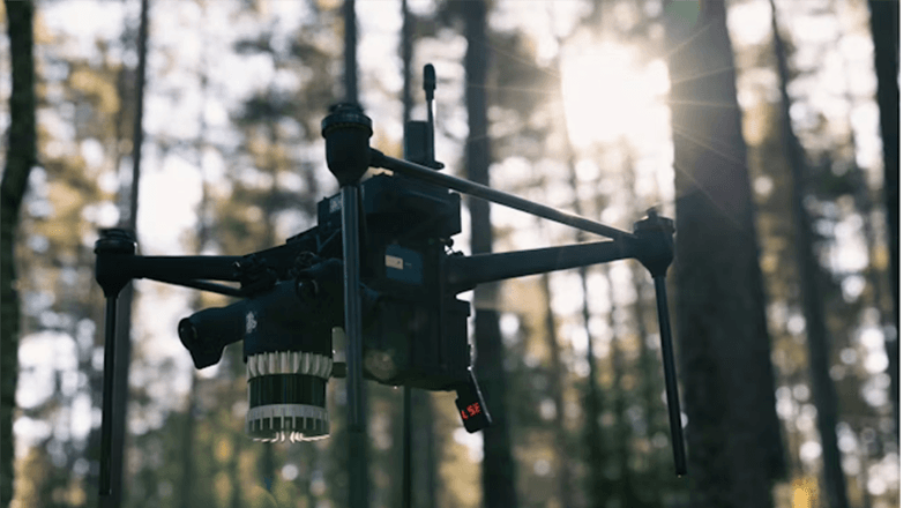
This drone uses an Ouster lidar system to create a 3D map of the forest. The system determines the distance to each tree and surface, thus generating a detailed point cloud of terrain and vegetation.
In agriculture, LiDAR can be used in a similar way as in forestry: it creates a precise 3D image of the terrain and crops, enabling analyses and smart applications, for example for precision agriculture. Examples of agricultural applications include:
- 3D mapping of fields for overview and planning
- Volume measurements of crops or harvested products
- Analysis of terrain structure and vegetation for better crop insights
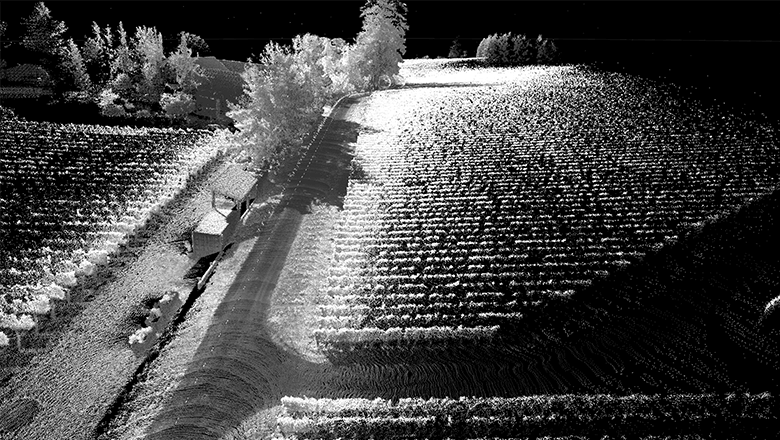
A point cloud image generated by a lidar sensor. The environment is visible as thousands of measurement points that together form a 3D image. This is what lidar ‘sees’: an accurate 3D representation based on distance and reflection. Objects such as walls, vehicles, and obstacles are visible as distinct shapes in the point cloud.
Points to consider during LiDAR integration
For OEMs looking to integrate lidar into agricultural machinery, more is needed than just placing the sensor. Lidar systems offer advantages, but success heavily depends on how they are integrated and how the data is processed. Some key considerations include:
- Mounting position
The sensor's position determines the field of view and potential blind spots. Often, lidars are placed higher on the machine for a better overview of the surroundings. - Dirt protection
Mud and water can affect the optics. Depending on the application, a protective cover, airflow, or cleaning mechanism may be necessary. - Vibrations
Agricultural machinery often produces strong vibrations. Stable mounting and vibration damping help maintain measurement accuracy. - Data processing
Lidar generates large amounts of data. For real-time applications, such as navigation, this data needs to be processed quickly by the right software.
Practical Lidar Integration with Ouster and Sentech
For the integration of digital lidar sensors Shall we work together? with our partner Ouster. Their sensors are the common thread in the practical examples from this blog.
Together, we bring technology into practice: Ouster with the hardware, and Sentech with local support and integration knowledge in the Netherlands. This is how we make the leap from sensor to working solution for machine builders.
Practical Lidar Integration with Ouster and Sentech
For the integration of digital lidar sensors, we are collaborating with our partner Ouster. Their sensors play a central role in all practical examples in this blog.
Together, we turn technology into practical applications: Ouster provides the hardware, and Sentech offers local support and integration expertise in the Netherlands. This way, we help machine builders bridge the gap between sensor and a working solution.
Besides ultrasound and radar, lidar is also increasingly being used for distance measurements and navigation applications in the agricultural sector. Lidar stands for light detection and ranging. Similar to radar, this technology also benefits from extensive miniaturization and integration down to the chip level.
While ultrasound works with sound and radar with radio waves, lidar works with light pulses. The large number of lasers on a chip creates a 3D point cloud of reflections with such high resolution and precision that the environment around the sensor can be mapped to the millimeter.
Lidar in navigation applications
Lidar is regularly used in navigation applications and functions as the eyes of an Automated Guided Vehicle (AGV), such as an autonomous agricultural vehicle. Based on all the reflections measured back by the rotating sensor system, an agricultural vehicle, for example, gets a detailed image of its surroundings, allowing it to navigate across the field and avoid obstacles.
Because lidar is incredibly fast and can also measure while in motion, the technology is suitable for accurately monitoring growth in an orchard with an AGV; useful when pruning automatically. Or, hang a lidar under a drone and map the crops from above. Although lidar's light pulses penetrate crops less effectively than radar waves, the point cloud with 5 million data points per second offers a lot of detail for measuring the ground and crop height.
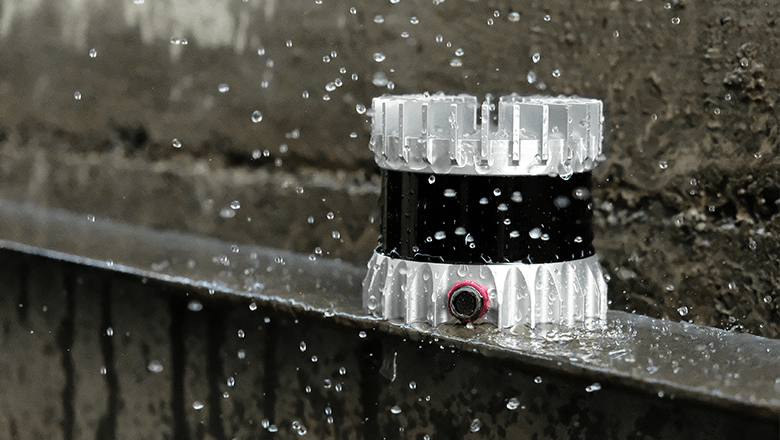
Lidar OS1 from Our technology partner Ouster provides reliable distance measurements, even under rainy and challenging conditions
If you want to measure very accurately
Lidar is much more accurate than radar and suitable for detecting objects, terrain, or crop heights down to the millimeter. It is very resistant to challenging weather conditions, dust and dirt, and very low and very high temperatures. However, lidar is quite expensive compared to radar and ultrasonic.
Examples of lidar applications
- Navigation of autonomous agricultural vehicles
- Mapping crop growth with 3D mapping
Would you like to see more concrete examples of how lidar can be applied in agriculture? In this blog we discuss three practical examples, from autonomous off-road vehicles to drone mapping. You will read how sensor technology in other sectors can offer inspiration for smart agro applications.
The integration of radar presents technical and regulatory challenges. What should be considered?
Legislation and regulations
When integrating a radar sensor, it's important to pay close attention to the frequency band in which it operates. Because radar is an electromagnetic RF signal, it can cause interference with other signals, such as the 5G Wi-Fi band. Radar is therefore subject to all sorts of restrictions, which often differ per country or region.
In England, for example, radar sensors are not allowed to operate in the 24 GHz band because it is reserved for the police, who use it for speed enforcement. And in the US, 60 GHz is permitted, but only if the signals travel vertically, as otherwise it could interfere with data communication. Therefore, it is allowed on a spray boom because the signal is directed at the ground. However, it is not allowed if such a construction can fold its arms and the signal is transmitted horizontally. System builders who want to sell their products worldwide will therefore have to comply with all regulations.
Recognize reflections
Beyond legislation and regulations, integrating radar sensors is not always technically straightforward. Unlike the sound waves of an ultrasonic sensor, the RF radio signal from a radar has high penetration power. This allows a radar sensor to see through objects and detect objects behind them, which is often very useful, but it also means it receives multiple reflections. Furthermore, some materials are permeable to radar, resulting in a weak reflection. The challenge lies in selecting the correct reflection(s) from all these signals. A skilled radar specialist can help OEMs with proper target selection.
Need help with radar integration?
Integrating radar is challenging: from regulations to recognizing reflections. Those who do it well will get the most out of the sensor and avoid surprises in practice.
Our radar specialists know exactly what to look for and can guide you through every step of the integration. Contact us and discover how we can efficiently and reliably integrate radar into your application together.
Ultrasound is a great choice in many applications, but there are situations where radar offers real added value. Whether for distance measurements, object detection, or level determination, radar is reliable and versatile.
The technology works in almost all weather conditions, has a large measuring range, and consumes little energy. This makes radar a smart choice for mechanical engineers looking for sustainable and efficient sensor solutions. Below you can read why radar is increasingly being used in the agricultural sector.
When you want to measure under certain weather conditions and pollution
One of the biggest advantages of radar is its robustness in various weather conditions. Rain, snow, and fog have little impact on its performance. Dirt also has hardly any effect because radar signals have a high penetration power; they simply see through it. This means that such a sensor can be placed behind a protective cover, if necessary. For example, if a robot is equipped with a radar sensor to orient itself in a stable, a user can more easily wipe away accumulated dirt.
2. If you want to see through crops (or other objects)
The penetrating power of radar offers significant advantages. For example, a radar sensor can measure through obstacles such as crops, making it suitable for measuring the distance to the ground, for instance. This is only possible with radar. An additional advantage in this case is that a radar sensor can also register speeds. This makes it possible to accurately monitor movements and anticipate them.
3. If you want to measure long distances
Radar has an enormously large range. Radar signals can easily cover kilometers. Everyone knows the radar systems with which, for example, airplanes or boats can be detected at great distances, but smaller radar solutions also cover large distances.
In addition, radar is suitable for measuring short distances. This has everything to do with the speed of radar signals: at the speed of light, the radar receives a reflected signal. It's so fast that the system has to react extremely quickly to track the signals. This means you have to compromise a bit on accuracy at very short distances. But with a precision of 2 to 3 millimeters, radar is often suitable even then.
4. If you consider longevity important
A radar sensor has no moving parts. Because of this, it is not susceptible to wear and tear and lasts a long time.
5. If you want a battery that lasts for years
The absence of moving parts also leads to low power consumption. This means a battery-powered radar system in, for example, a feed silo can easily last ten years.
Integrate radar: where are you?
Radar offers many benefits, but its integration requires attention. Consider technical choices, sensor placement, and regulations you must comply with. Those who go through these steps thoroughly will get the most out of the technology.
Discover in this blog what to consider and how to smoothly implement radar in your agro-application. Read on and make your project a success.
Sentech works technology-independently. The customer's needs determine which sensor technology is the best fit. Therefore, we carefully select our technology partners based on quality, roadmap, and continuity.
With this step, we combine our integration knowledge with Baumer's technology. This way, we support machine builders, OEMs, and high-tech companies in the Benelux in developing their systems faster, smarter, and more reliably.
Baumer meets this standard. We have added Baumer to our technology portfolio, an internationally respected manufacturer of sensors, encoders, and measuring systems for automation and mechanical engineering. From now on, we can deploy Baumer technology wherever it offers the best solution for your application.
What this means for our customers?
Baumer expands our technological playing field. With Baumer, we can offer a better choice, tailored to your application, the environment, and lifecycle requirements. Our approach doesn't change: we start with the application, select the best technology, and build the solution entirely in-house: from engineering and (custom) assembly to validation and continuous supply.
By aligning component selection and integration technically from the start, you prevent unnecessary test cycles and redesign. This saves time in your development process and helps keep your schedule achievable.
What Baumer adds
Baumer is known for high-quality sensor technology for demanding environments, from positioning and detection to precise measurement. We apply this technology where it fits: as part of a broader solution, tailored to your system.

Egbert Stellinga, Product Manager, Sentech
With Baumer, we are expanding our technological playing field. Not because we want to carry a new brand, but because Baumer is the best choice for our customers in certain applications. This fits perfectly with how we work: customer demand determines the technology.
Are you considering Baumer for your machine design?
Are you working on a new machine or optimizing an existing application? Then we'd love to help you determine if Baumer is the right choice, and how we can best integrate it into your system.
Feel free contact us.
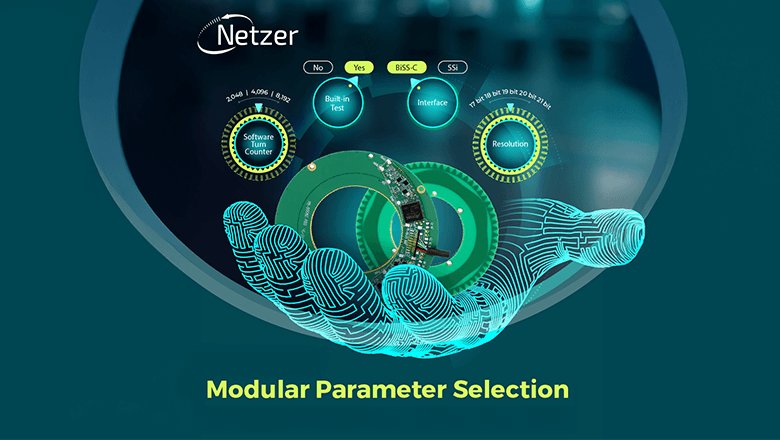
Development starts with the right choices, and that can begin right at the workbench. The EVL Evaluation Encoder from Netzer is a configurable development tool that gives engineers insight into performance, protocols, and integration early in the process. This allows you to easily test if an encoder fits your system before you build further.
The EVL is a practical development tool designed for rapid system integration and early-stage optimization. For example, the resolution and protocol (BISS-C or SSI) are configurable. The EVL works with a software-based multi-turn counter and built-in tests (BIT). This gives you direct insight into performance and integration, right from your workbench.
This makes the EVL suitable for robotics, aerospace actuators, and industrial automation, among other applications.
Complete and immediately deployable
The EVL is delivered in the familiar VL encoder housing (Ø13–247 mm), including a pre-assembled cable and D-sub connector. With the Encoder Explorer software, you have access to all parameters and diagnostics, such as:
- Limits View to illustrate limit values
- Map View for protocol behavior and integration effects
Want to learn more or get started?
Would you like to know if the EVL encoder is suitable for your application, or discuss integration into your prototype right away? Contact us. We will help you with configuration, choices in the development process, and smooth integration of the EVL into your system.