

In the future, sensors will only become smarter and measure more accurately. Sensor technology is the foundation within machine applications. For an (R&D) Engineer, without the right sensor knowledge, a successful implementation of new sensor technologies becomes a real challenge! What can you expect from sensors in the future? Our list of 21 technological trends in sensor applications will give you a complete picture.
For your problem, it is becoming increasingly unclear which type of sensor is suitable for your specific situation. You are encountering challenges and issues at the component level, where you could use some help. This article discusses, among other things, where smart sensors are heading, sensor data fusion, and the most important development goals.
Why is the demand for smart sensors growing?
Our need for new insights is growing, and with these insights comes greater ability to steer. By being more proactive, processes can become more effective and efficient. Thus, you achieve more with less effort. In essence, everyone always strives for efficiency.
Previously, we didn't focus on measuring things and saving costs. This became possible because we transitioned from a world primarily using mechanical measurement principles to a digital era with sensor technology. As a result, more is also directly expected of us and our machines.
Digitalization has a positive effect on, among other things, the cost aspect, quality, and lead time of production. We want to produce more in less time. This leaves us with more time to do other things. And that's why the demand for intelligent sensors is growing.
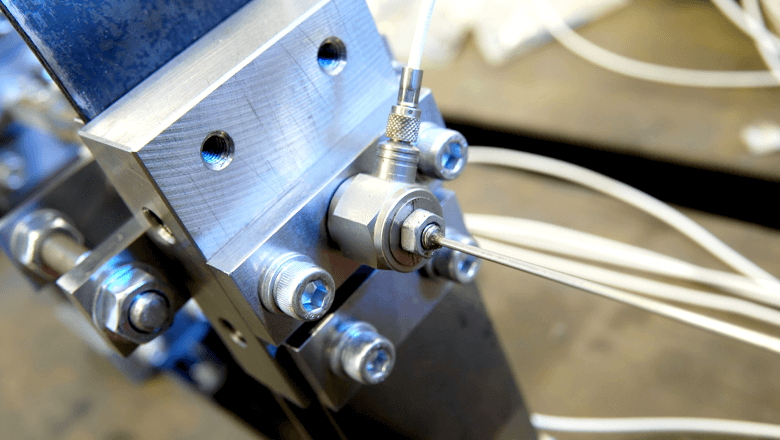
The demand for smart sensors is growing as we measure more and more.
Key Development Goals for Sensor Technology
As a development party, supplier, or customer of sensor technology, you weigh different interests. Think about costs, quality, and lead time. This influences the choice to, for example, opt for lower quality because it is cheaper and perhaps available tomorrow.
Kobus: “When it comes to innovation, we realize that we’re depleting the Earth and its resources. The balance of interests is different for everyone, especially when you know that your choice will lead to complete depletion within two or a hundred years. Sustainability is already a key goal in sensor development and innovation, but in the future, 100% will be a central theme.”
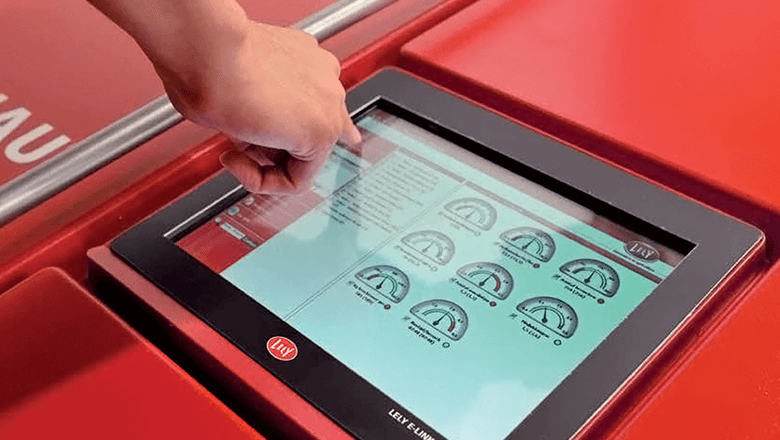
Lely helps farmers with smart machines in agriculture to make food production more efficient.
Efficiency and sustainability
The balance between sustainability and economic gain is always present in an innovation process. You can choose to make a large agricultural machine heavy and incredibly durable. However, this would require more fuel (and thus more money) to move it across land than a lighter machine.
If you make the same agricultural machine ‘of lesser quality,’ it burdens the environment more but may cost less to produce. At the same time, a shorter lifespan creates more room for faster innovation. With a very durable machine, long-term innovation is not possible or necessary.
The consideration mentioned naturally always involves costs versus benefits. Sustainability is therefore, in multiple facets, an advantage in the development of a new machine with smart sensors.
Expertise lies with the expert
Everyone knows about the existence of sensors in the future, but the awareness of which quantity they measure is becoming smaller and smaller. A company like Sentech adds value at this point because the underlying knowledge resides with the sensor experts.
The customer is assisted in choosing the right sensor technology for them and how to integrate it properly. Because knowledge will soon be scarce, a situation could arise, for example, where someone tries to measure length with a pressure sensor.
This might seem like a strange example, but the deeper know-how is missing, and this changes the added value of a sensor expert.
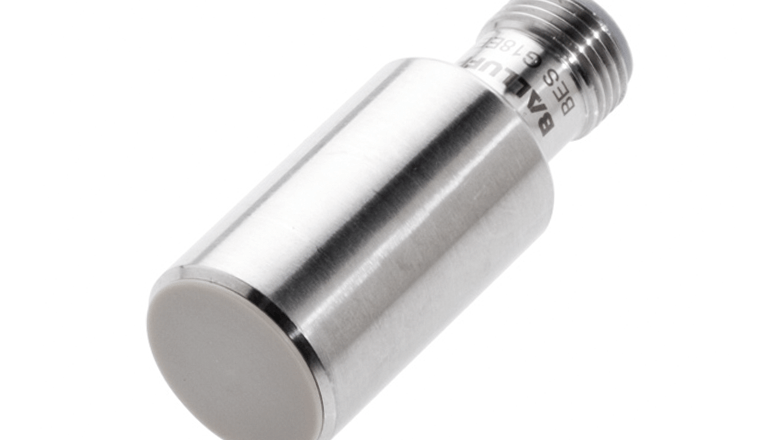
Balluff IP69K sensor
The basis for new applications for sensors
The drive to improve a customer's machine is the foundation for developing new sensor applications. What is important to the customer, what specifically can help them further, and do they see this themselves, or does a sensor expert add value to it? This requires continuous learning and innovation with new technologies. Are you already aware of the sensor trends for the coming years?
Innovation is accelerating, partly due to the arrival of‘sensor fusion’. Here, you integrate various sensors into one compact sensor application. The combination of two sensor techniques yields more new information to make applications smarter and more efficient. You are performing ‘sensor data fusion.’.
Sensor fusion as a person
The most suitable example of sensor data fusion is you as a person. You bring together different quantities and are then able to predict and anticipate in an efficient way. For that, you need all the senses in your body. In the future, sensors will also be able to work independently in this way. A machine will then be self-learning. Artificial intelligence with deep learning algorithms is the outcome of this.
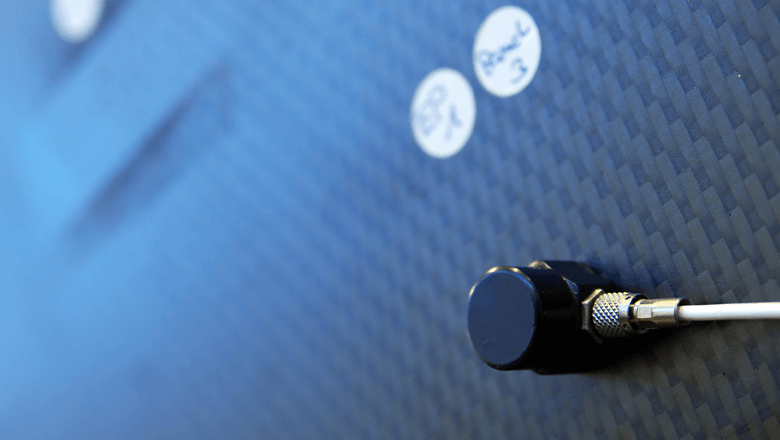
Sensor fusion makes applications more compact and smarter. Prediction based on sensor data and algorithms is taking off.
Making large amounts of data available via sensors, analyzing it quickly, and establishing connections (between application areas) is the strength of modern applications. Smart devices discover many more possibilities and models in this process than humans can.
If sensors can function together as a brain, then people and job roles will be quickly replaced in the future. This is also about efficiency and cost savings. New developments are implemented at high speed out of our human needs, and sometimes also necessity. Thus, the circle is complete again through sensor fusion.
Hesitant to share data
Making large amounts of data available is key to future sensor developments. This data is not just for yourself, but you share it (after consultation) with partners, each with their own specialization. Only through collaboration can you enable new revenue models and improve your machine.
The biggest hurdle is right at the point of disclosing (sensor fusion) data. Data is power, your money, your trade secret. By sharing data with a partner, you are giving away value. So the question of what you get in return will be a daily concern. Sensor innovation and the data released with it therefore create not only new opportunities but also collaboration challenges.
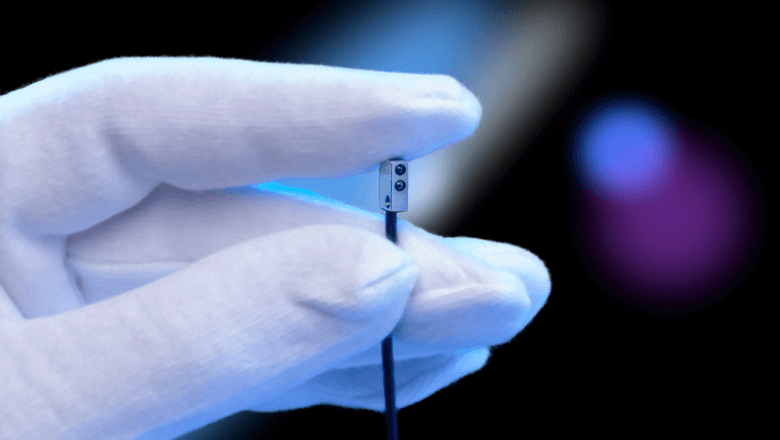
Such a sensor that measures light reflections can work wirelessly in the future.
The development process of wireless systems will continue until battery capacity becomes sufficiently powerful and chips are truly small enough to use less power. Battery usage efficiency will therefore improve. All of this combined will make wireless sensors a success.
The innovation wheel is only spinning faster
You see that in the future, there won't be one specific benefit coming from sensors, but a combination of benefits, focused on an application area. The realization of ‘this gain’ is growing for everyone, and at the same time, it's squeezing the margin on products and services.
So we're not only becoming more aware of the possibilities of technological advancement, but also of the associated costs and lead times. As we've started measuring everything and will do even more in the future, this ‘innovation wheel’ will spin even faster and our needs will grow. Sensors will replace our own senses in this process.
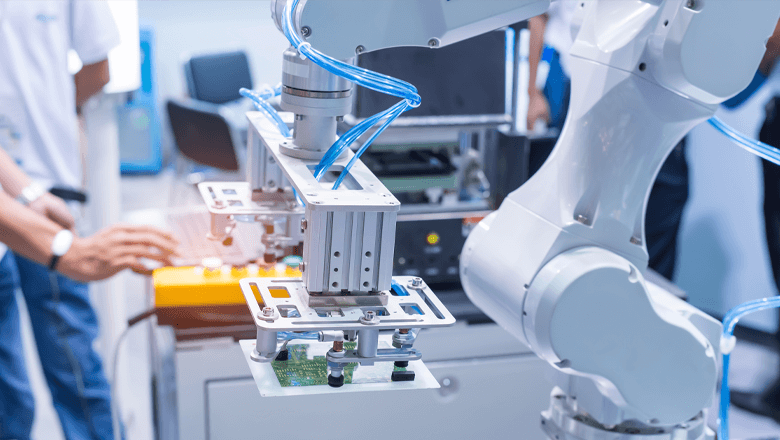
Active sensor innovation from a Research and Development driven department makes new sensor technologies for machines available faster.
21 sensor trends in future applications
Slimmer, more accurate, faster, wireless, more secure, self-learning, smaller, standardized… There are many sensor developments underway that all revolve around these points.
As an R&D Engineer, you can expect the task of keeping up with all developments and possibilities to become more challenging in the coming years. This list of 21 intelligent sensor applications will help you align your expectations with your projects.
Door sensor innovation, but also by increasingly rapid development of sensor fusion at the chip level:
- Predictive maintenance on machines and devices is becoming increasingly efficient, easier, cheaper, and improves uptime. The maintenance of the future with sensors will be performed on demand instead of according to schedules.
- Is safety also increased here, because unsafe situations are easy to predict?.
- Becomes autonomous sensor technology Possible. Wireless connection over long distances with integrated power supply.
- Can sensors work self-learning, lifelong, without maintenance, adjustments, or calibration?.
- The possibilities and application areas of robotic technology are increasing rapidly.
- New and old chip-level techniques are emerging. As transmitters, receivers, and printed circuit boards become smaller, more is possible with sensor fusion.
- Are more complex detections possible: compensation of techniques.
- Sensors will increasingly offer insights that change our behavior. As a result, we will place different demands on air quality, travel, car maintenance, lifestyle, insurance, energy consumption, etc.
- Is fully automated herd management possible? Precision agriculture would then also be within reach.
- Improve farmers' yields so that they can compete effectively on high quality and outputs. Sensors are increasingly being used to investigate soil quality, climate, crops, diseases, pests, and weeds.
- Will the (production) costs for farmers decrease and will working conditions in the fields and stables improve?.
- Do new lidar systems really give autonomous vehicles ‘eyesight.’.
- Are soccer balls equipped with sensor technology.
- Are we dealing with synthetic sensors?.
- Are cities becoming smarter, and can we complete the ecosystem? Consider addressing waterlogging, air quality, blue-green algae, parking, safe playgrounds, ensuring monumental trees survive, and improving soil conditions.
- Components take over the role of human senses. Data is collected more reliably and continuously. Smart software and algorithms convert the data into useful information.
- We are increasingly making decisions ourselves based on self-collected sensor information. We leave nothing to chance anymore.
- We encounter sensor technology in every aspect of our lives.
- Shall we deploy more sensors for a better environment, better energy management, and green office buildings?.
- Sensors are well-integrated measurement modules that are easy to use and quick to adapt to the respective application.
- Are sensors becoming true ‘smart sensors’: intelligent measuring units that monitor themselves, send status diagnoses to the operating system, and create a reliable network of measurement and calibration data.
Were you aware of all these developments? Is anything missing from the list, from your experience? Let us know!
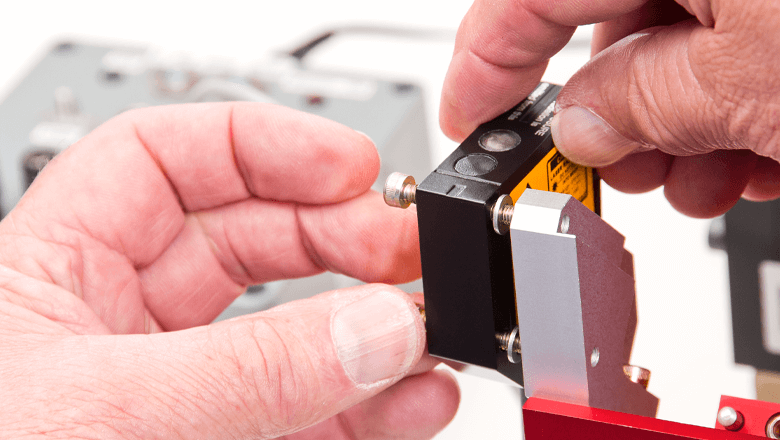
The added value of a sensor expert lies, among other things, in selecting the sensor technology that best suits you. They produce sensor solutions specifically for integration, which will improve your machine.
On to the successful implementation of sensor technology!
A successful implementation of new sensor technologies can be a real challenge. You want to make your machines smarter. So how do you use data to improve efficiency? And what awaits you as an engineer of the future?
In our free e-book, you'll find the answers to these questions, including practical examples of common sensor challenges and solutions.
Challenge yourself and take the time for it this download.
Lidar is increasingly being used in autonomous systems and robots. The technology makes it possible to perceive the environment in 3D and detect objects accurately. This is valuable for machines that need to navigate, recognize obstacles, or map their surroundings. By looking at applications outside the agricultural market, new ideas emerge on how sensor technology like lidar can add value to agricultural machinery.
Agricultural machinery can navigate more safely, avoid obstacles, and better understand their surroundings with the application of lidar. This also applies to situations with mud, vibrations, and varying light conditions. By learning from applications in other sectors, new ideas emerge for practical lidar applications in agriculture. We utilize robust Ouster lidars, which perform well under harsh conditions.
Challenges in the Agromarket
Sensor integration in agricultural machinery presents a number of typical challenges:
- Dust and dirt
- Strong vibrations, for example, from moving machinery
- Weather influences such as rain, sun, and temperature fluctuations
- Complex and irregular objects, such as crops, bales, or animals
- Dynamic environments, such as with people, animals, or other machines on the farm
Sensors must therefore not only be accurate, but also robust and reliable in harsh conditions. These are precisely the conditions that many autonomous systems in other sectors also have to deal with.
3 practical examples of lidar applications
Example 1: autonomous robots
Trombone develops autonomous electric street sweepers that clean streets independently. For navigation and obstacle detection, these machines use lidar sensors.
The challenges of an autonomous street sweeper overlap with autonomous applications in the agricultural sector. For example, the machine must continue to function reliably in an environment with a lot of airborne dirt, varying weather conditions, and complex objects such as curbs, vehicles, and pedestrians.
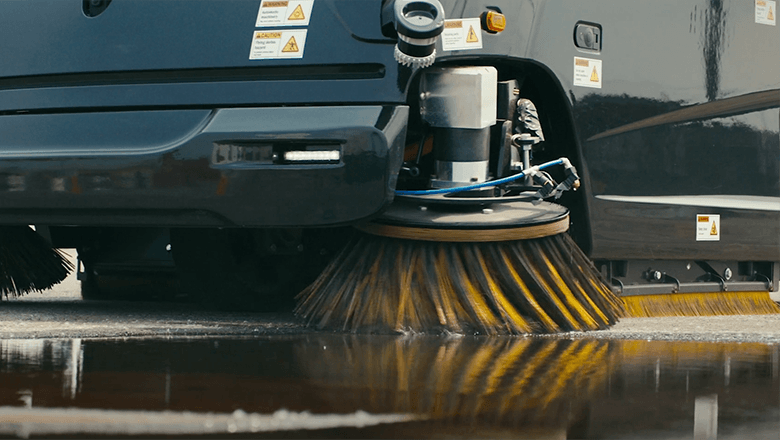
In this application, Ouster's digital lidar continuously creates a 3D image of the surroundings. This allows the machine to detect obstacles and navigate safely.
Because lidar is an active sensor with its own light source, it also works in the dark without additional lighting. In situations with dust or varying light – where cameras struggle – lidar continues to function reliably.
In autonomous agricultural applications, a machine must be able to recognize obstacles, navigate safely around objects, and remain reliably functional in dusty and dirty environments. In agriculture, this translates to, for example, the applications listed below:
- Feeder robot in a barn, that autonomously drives along fences and feeding places
- Field robot that navigates autonomously between crop rows
Example 2: Autonomous Off-Road Vehicles
Forterra is developing technology that enables defense vehicles to drive autonomously in challenging off-road environments. This includes terrain without lanes, with low visibility, bad weather, and limited GPS. Their systems ensure vehicles remain safe, stable, and reliable under these harsh conditions.
Lidar is one of the most important sensors in Forterra's solutions. It provides a continuous and accurate 3D image of the environment, all around the vehicle. With the digital lidar sensors, distances and obstacles are accurately measured. This allows these autonomous vehicles to drive safely, without lanes or fixed reference points.
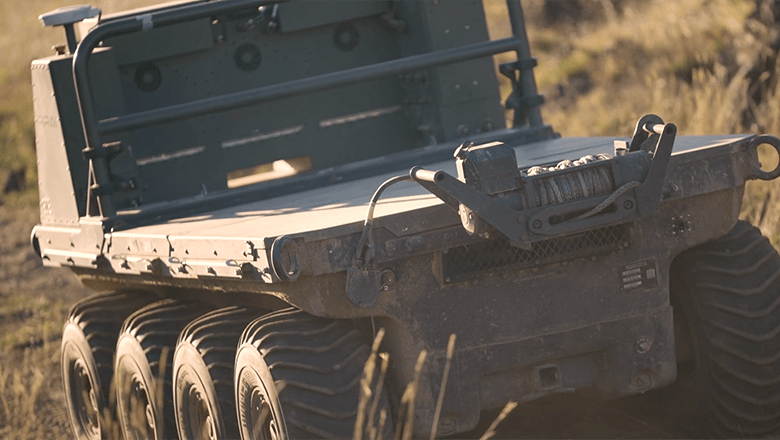
In environments where visibility and GPS are less reliable, LiDAR continues to function well. This allows vehicles to navigate safely in complex and unpredictable situations.
Similar challenges exist in agriculture, such as off-road navigation, changing weather, and pollution. Autonomous solutions help address staff shortages, for example:
- Autonomous tractors
- Unmanned field robots
- Other vehicles that operate autonomously in fields and meadows
Example 3: Mapping with Drones
Deep Forestry develops autonomous inspection drones that scan and map complex environments using lidar.
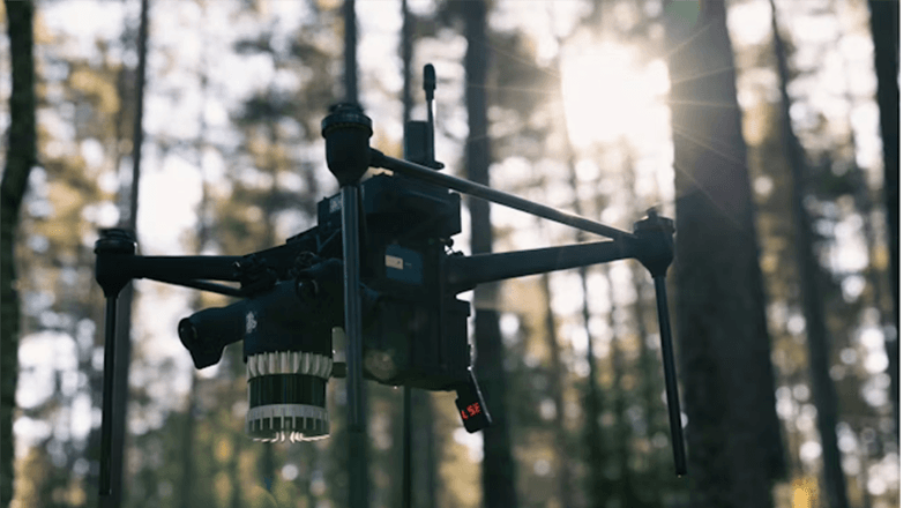
This drone uses an Ouster lidar system to create a 3D map of the forest. The system determines the distance to each tree and surface, thus generating a detailed point cloud of terrain and vegetation.
In agriculture, LiDAR can be used in a similar way as in forestry: it creates a precise 3D image of the terrain and crops, enabling analyses and smart applications, for example for precision agriculture. Examples of agricultural applications include:
- 3D mapping of fields for overview and planning
- Volume measurements of crops or harvested products
- Analysis of terrain structure and vegetation for better crop insights
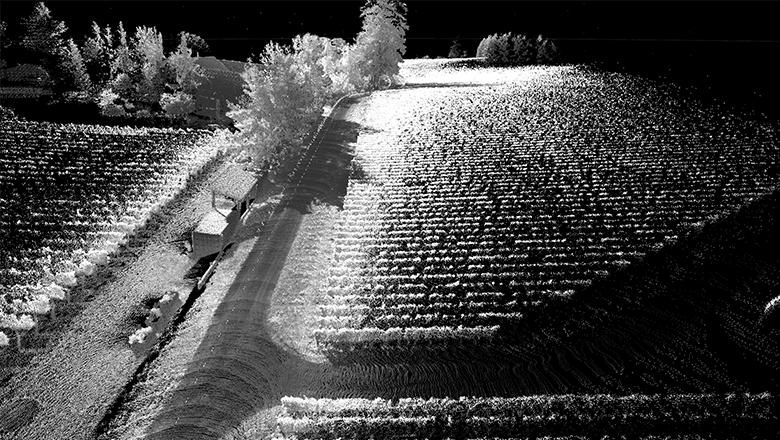
A point cloud image generated by a lidar sensor. The environment is visible as thousands of measurement points that together form a 3D image. This is what lidar ‘sees’: an accurate 3D representation based on distance and reflection. Objects such as walls, vehicles, and obstacles are visible as distinct shapes in the point cloud.
Points to consider during LiDAR integration
For OEMs looking to integrate lidar into agricultural machinery, more is needed than just placing the sensor. Lidar systems offer advantages, but success heavily depends on how they are integrated and how the data is processed. Some key considerations include:
- Mounting position
The sensor's position determines the field of view and potential blind spots. Often, lidars are placed higher on the machine for a better overview of the surroundings. - Dirt protection
Mud and water can affect the optics. Depending on the application, a protective cover, airflow, or cleaning mechanism may be necessary. - Vibrations
Agricultural machinery often produces strong vibrations. Stable mounting and vibration damping help maintain measurement accuracy. - Data processing
Lidar generates large amounts of data. For real-time applications, such as navigation, this data needs to be processed quickly by the right software.
Practical Lidar Integration with Ouster and Sentech
For the integration of digital lidar sensors Shall we work together? with our partner Ouster. Their sensors are the common thread in the practical examples from this blog.
Together, we bring technology into practice: Ouster with the hardware, and Sentech with local support and integration knowledge in the Netherlands. This is how we make the leap from sensor to working solution for machine builders.
Practical Lidar Integration with Ouster and Sentech
For the integration of digital lidar sensors, we are collaborating with our partner Ouster. Their sensors play a central role in all practical examples in this blog.
Together, we turn technology into practical applications: Ouster provides the hardware, and Sentech offers local support and integration expertise in the Netherlands. This way, we help machine builders bridge the gap between sensor and a working solution.
Besides ultrasound and radar, lidar is also increasingly being used for distance measurements and navigation applications in the agricultural sector. Lidar stands for light detection and ranging. Similar to radar, this technology also benefits from extensive miniaturization and integration down to the chip level.
While ultrasound works with sound and radar with radio waves, lidar works with light pulses. The large number of lasers on a chip creates a 3D point cloud of reflections with such high resolution and precision that the environment around the sensor can be mapped to the millimeter.
Lidar in navigation applications
Lidar is regularly used in navigation applications and functions as the eyes of an Automated Guided Vehicle (AGV), such as an autonomous agricultural vehicle. Based on all the reflections measured back by the rotating sensor system, an agricultural vehicle, for example, gets a detailed image of its surroundings, allowing it to navigate across the field and avoid obstacles.
Because lidar is incredibly fast and can also measure while in motion, the technology is suitable for accurately monitoring growth in an orchard with an AGV; useful when pruning automatically. Or, hang a lidar under a drone and map the crops from above. Although lidar's light pulses penetrate crops less effectively than radar waves, the point cloud with 5 million data points per second offers a lot of detail for measuring the ground and crop height.
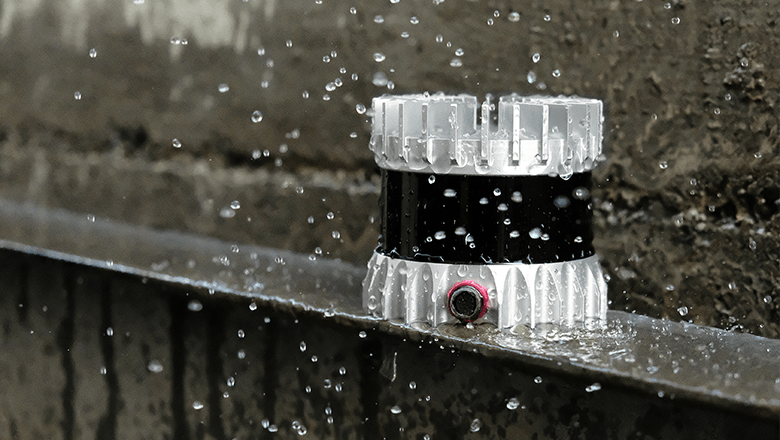
Lidar OS1 from Our technology partner Ouster provides reliable distance measurements, even under rainy and challenging conditions
If you want to measure very accurately
Lidar is much more accurate than radar and suitable for detecting objects, terrain, or crop heights down to the millimeter. It is very resistant to challenging weather conditions, dust and dirt, and very low and very high temperatures. However, lidar is quite expensive compared to radar and ultrasonic.
Examples of lidar applications
- Navigation of autonomous agricultural vehicles
- Mapping crop growth with 3D mapping
Would you like to see more concrete examples of how lidar can be applied in agriculture? In this blog we discuss three practical examples, from autonomous off-road vehicles to drone mapping. You will read how sensor technology in other sectors can offer inspiration for smart agro applications.
The integration of radar presents technical and regulatory challenges. What should be considered?
Legislation and regulations
When integrating a radar sensor, it's important to pay close attention to the frequency band in which it operates. Because radar is an electromagnetic RF signal, it can cause interference with other signals, such as the 5G Wi-Fi band. Radar is therefore subject to all sorts of restrictions, which often differ per country or region.
In England, for example, radar sensors are not allowed to operate in the 24 GHz band because it is reserved for the police, who use it for speed enforcement. And in the US, 60 GHz is permitted, but only if the signals travel vertically, as otherwise it could interfere with data communication. Therefore, it is allowed on a spray boom because the signal is directed at the ground. However, it is not allowed if such a construction can fold its arms and the signal is transmitted horizontally. System builders who want to sell their products worldwide will therefore have to comply with all regulations.
Recognize reflections
Beyond legislation and regulations, integrating radar sensors is not always technically straightforward. Unlike the sound waves of an ultrasonic sensor, the RF radio signal from a radar has high penetration power. This allows a radar sensor to see through objects and detect objects behind them, which is often very useful, but it also means it receives multiple reflections. Furthermore, some materials are permeable to radar, resulting in a weak reflection. The challenge lies in selecting the correct reflection(s) from all these signals. A skilled radar specialist can help OEMs with proper target selection.
Need help with radar integration?
Integrating radar is challenging: from regulations to recognizing reflections. Those who do it well will get the most out of the sensor and avoid surprises in practice.
Our radar specialists know exactly what to look for and can guide you through every step of the integration. Contact us and discover how we can efficiently and reliably integrate radar into your application together.
Ultrasound is a great choice in many applications, but there are situations where radar offers real added value. Whether for distance measurements, object detection, or level determination, radar is reliable and versatile.
The technology works in almost all weather conditions, has a large measuring range, and consumes little energy. This makes radar a smart choice for mechanical engineers looking for sustainable and efficient sensor solutions. Below you can read why radar is increasingly being used in the agricultural sector.
When you want to measure under certain weather conditions and pollution
One of the biggest advantages of radar is its robustness in various weather conditions. Rain, snow, and fog have little impact on its performance. Dirt also has hardly any effect because radar signals have a high penetration power; they simply see through it. This means that such a sensor can be placed behind a protective cover, if necessary. For example, if a robot is equipped with a radar sensor to orient itself in a stable, a user can more easily wipe away accumulated dirt.
2. If you want to see through crops (or other objects)
The penetrating power of radar offers significant advantages. For example, a radar sensor can measure through obstacles such as crops, making it suitable for measuring the distance to the ground, for instance. This is only possible with radar. An additional advantage in this case is that a radar sensor can also register speeds. This makes it possible to accurately monitor movements and anticipate them.
3. If you want to measure long distances
Radar has an enormously large range. Radar signals can easily cover kilometers. Everyone knows the radar systems with which, for example, airplanes or boats can be detected at great distances, but smaller radar solutions also cover large distances.
In addition, radar is suitable for measuring short distances. This has everything to do with the speed of radar signals: at the speed of light, the radar receives a reflected signal. It's so fast that the system has to react extremely quickly to track the signals. This means you have to compromise a bit on accuracy at very short distances. But with a precision of 2 to 3 millimeters, radar is often suitable even then.
4. If you consider longevity important
A radar sensor has no moving parts. Because of this, it is not susceptible to wear and tear and lasts a long time.
5. If you want a battery that lasts for years
The absence of moving parts also leads to low power consumption. This means a battery-powered radar system in, for example, a feed silo can easily last ten years.
Integrate radar: where are you?
Radar offers many benefits, but its integration requires attention. Consider technical choices, sensor placement, and regulations you must comply with. Those who go through these steps thoroughly will get the most out of the technology.
Discover in this blog what to consider and how to smoothly implement radar in your agro-application. Read on and make your project a success.
Lidar has matured as an optical sensor technology. Although the principle is simple, it took decades to make the technology accessible to consumer and B2B markets. Thanks to chip technology, it has become an affordable technique for detection and ranging. Manufacturers of lidar technology are making the self-driving car possible. In this article, you will learn all the ins and outs of this versatile sensor technology.
Lidar has its origins in aerospace. Laser technology has long been used in aircraft for altitude measurement relative to the underlying terrain. In addition to car manufacturers, other industries are also embracing the advantages of these sensors for autonomous movement applications. For example, lidar is used in Automated Guided Vehicles (AGVs) and Autonomous Mobile Robots (AMRs).
Ad Mulders, account manager at Sentech, sees a lot of activity in the various markets. “Nowadays, lidar sensors are produced more efficiently and in larger volumes. This makes them more affordable for integration into applications.”
Mulders thinks further ahead. “We focus on integrating lidar and radar into one compact sensor module. With sensor fusion, you leverage the advantages of both detection techniques.”
History of Lidar
Lidar originated shortly after the invention of the laser, in the 1960s. During the Apollo 15 mission, it was used to map the lunar surface in detail. The term was originally a portmanteau of the words LIght and raDAR. It has since evolved into an acronym for LIght Detection And Ranging, or Laser Imaging Detection And Ranging.
Until recently, optical technology was primarily used for atmospheric and meteorological research, and applied in aerospace. As the technology has become increasingly sophisticated and inexpensive, other industries have also embraced it for autonomous motion applications.
Lidar is a remote sensing method that uses light in the form of a pulsed laser to measure variable distances to the Earth. It can be used to make digital representations of physical surfaces and objects.
The principle of lidar is simple. The optical measuring technique is used in two ways. As time-of-flight lidar, to determine the distance to an object; and as Doppler lidar, to determine the speed of objects. The operation is similar to radar, which works with radio waves. Light has a much smaller wavelength, allowing lidar to detect and scan smaller objects.
The emitted light is reflected by the target. The time between transmission and reception is used for distance measurement.
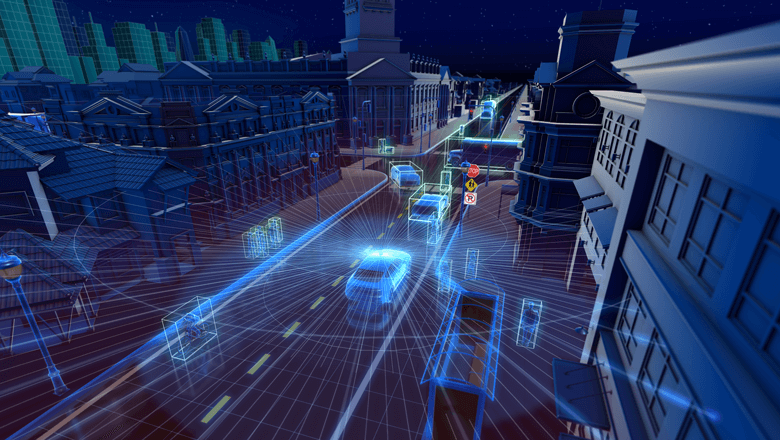
Furthermore, the target changes the properties of the emitted light, depending on its material composition and speed. This provides a lidar instrument with information that can be used, among other things, to determine the composition and speed of the object.
Lidar uses infrared, visible, or ultraviolet light to scan objects. It can detect a wide range of materials and objects. These include metallic and non-metallic objects, aerosols, clouds, chemicals, rain, stones, and even a single molecule.
The wavelengths of the light sources vary depending on the target. The spectrum extends from 10 micrometers (infrared) to approximately 250 nanometers (ultraviolet). The emitted light is reflected by scattering.
Distance measurement with lidar
The time-of-flight principle is used to determine the distance between the lidar instrument and an object. A transmitter emits light pulses. A receiver measures the duration between the transmission and reception of reflected photons.
According to the formula: d = (c × t) / (2 × n). ‘D’ stands for distance in meters, ‘c’ for the speed of light in a vacuum, ’t’ for the duration in seconds, and ‘n’ for the refractive index of air.
Speed determination with lidar
With lidar, it is also possible to determine the speed of a moving object. The instrument uses the Doppler effect. The physical phenomenon arises when a source (or receiver) of waves moves relative to a medium.
For light sources, the following formula applies: v=(T1/T2-1) × c/n. ‘T’ stands for the wave periods.
More information about the target
More recently, there are advanced lidar applications for atmospheric research. The change in the composition of reflected light provides information about the target. These applications measure air pollution, for example, based on the absorption of light by molecules. This type is also known as DIAL (Differential Absorption Lidar).
How does lidar work?
Broadly, lidar can be divided into two detection methods: incoherent or direct energy detection, and coherent detection. Incoherent systems measure changes in wave height (amplitude) in the reflected light. Coherent systems measure differences in wavelength (phase) and are suitable for speed measurement.
Light Pulse Systems
There are two systems for generating light pulses: micro-pulse systems and high-energy systems.
Micropulse systems generate intermittent energy beams. They have emerged thanks to advancements in laser technology combined with the ever-increasing processing power of microprocessors. These systems use significantly less energy, making them safe for humans and animals.
The powerful high-energy systems use much more energy and are primarily used for atmospheric research.
Lidar sensor components
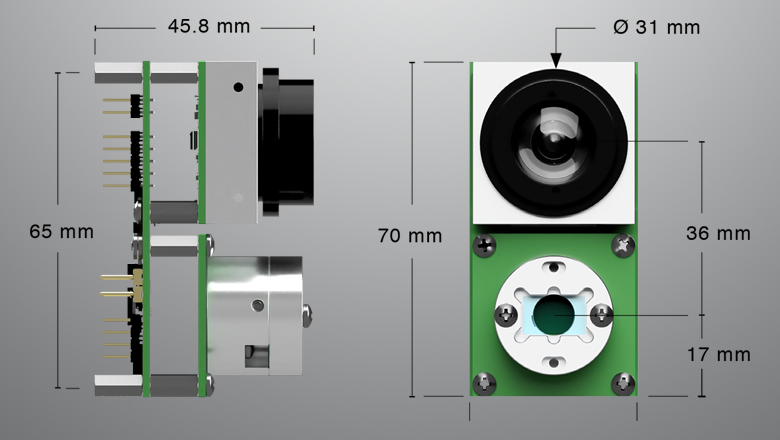
A lidar sensor essentially consists of four parts.
- Light source
This could be a laser, LED, or VCSEL diode, which emits light in pulses. - Scanner in optics
These components guide the light outwards—for instance, via an oscillating mirror and/or (aspherical) lens. A lens bundles the reflected light to a photodetector. - Photodetector in electronics
Depending on the measurement objective, the light is captured by a photodetector, for example, a solid-state photodiode. Electronics process the image data digitally. - Position and navigation system
Mobile lidar systems need a GPS system to determine the exact position and orientation of the sensor.
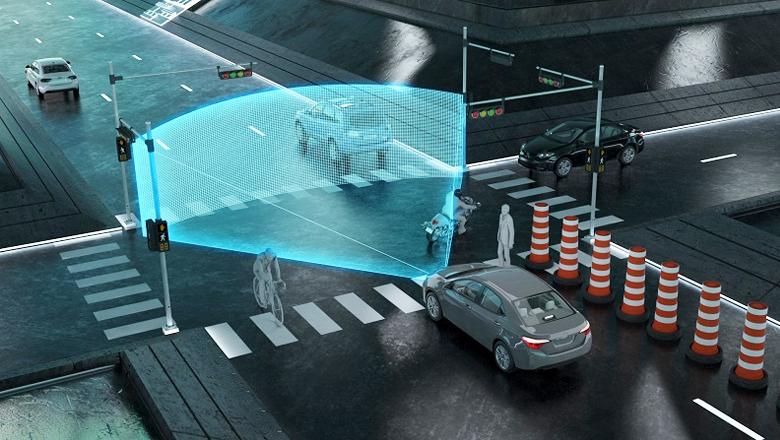
The different lidar systems have a similar output in common. This is a 3D point cloud that can be projected onto a map or a moving image. The sensor thus generates a detailed image of its surroundings, but can also provide additional information about those surroundings.
There are also lidar systems that are purely intended for detection and distance measurement. Manufacturers such as Velodyne and Leddartech have perfected and refined this specialty, making them suitable for lidar drones, AGVs, and self-driving cars. More on the collaboration between Sentech and Leddartech later.
Lidar sensor applications
Lidar owes its popularity to the accuracy and high resolution with which scientists have been able to map the world, underwater, on the surface, and in the air. Until recently, it was still an expensive matter and was mainly used for research, and commercially only in aerospace.
Due to cost reduction and technological advancements – especially in miniaturization, reliability, and durability – lidar has also become accessible for a wide range of commercial applications. For example, in autonomous vehicles and robots.
Agriculture: detection and autonomous motion functions
Agriculture can use lidar in various ways. As a measuring instrument in drones to topographically map land and combine the data with crop yields. This way, you can determine which areas require extra attention. Or for autonomously moving vehicles (AGVs) in and around stables and fields, detecting objects and obstacles in their environment.
Biology and conservation
Lidar helps governments, scientists, and non-governmental organizations map and protect natural areas. For example, by measuring tree height, biomass, and biodiversity.
Meteorology and air quality
Meteorological lidar applications first emerged after the invention of the laser. Decades of further development have led to advanced systems that measure a wide spectrum of meteorological conditions. They can, among other things, map clouds, measure wind speeds, study aerosols, and determine air composition.
This helps lidar to study the climate and greenhouse gases, air pollution, fires, humidity, and other air components.
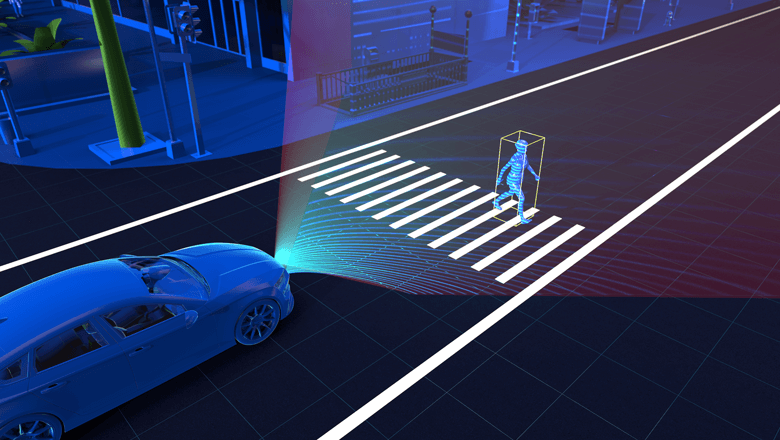
Autonomous driving with lidar
Various car manufacturers, Google, and Intel are currently developing self-driving cars. According to account manager Ad, each manufacturer or developer has its own preference for technological tools.
“This is how Tesla uses radar, while Google combines lidar and radar. Intel, on the other hand, relies entirely on camera technology. What all manufacturers have in common is that they combine visual (camera) images with sensor information.”
“The combination is necessary to ensure safety and reliability under all circumstances. If one technology fails due to a malfunction, the other technology will still detect and intervene to switch to a safe mode,” said the account manager.
In this industry, lidar is used for object detection and distance measurement around the vehicle. Mulders: “This includes vehicles in the broadest sense of the word. Lidar is also used in self-driving forklifts in warehouses, agricultural machinery, and so on.”
Lidar evolution – smaller and cheaper
The high cost and size of lidar systems were a barrier to commercial application in self-driving vehicles. According to the renowned weekly magazine The Economist a commercial lidar system in 2016 could still cost around $50,000.
This has changed. Various sensor manufacturers, such as Velodyne, Infineon, and LeddarTech, are currently developing and producing smaller and much cheaper lidar sensors. Thanks to advanced and increasingly affordable chip technology.
All sensory components (laser, optics, and processing) can therefore be fabricated at the chip level. Aspheric lenses eliminate the need for moving mirrors to spread the light widely.
Lidar sensor manufacturers
Infineon is working on a miniature system: MEMS lidar, which contains a micro-electro-mechanical (MEMS) mirror. This advanced mini-mirror was invented by the Dutch company Innolucence. A MEMS lidar sensor – with a range of 250 meters and a scanning capacity of 5000 measurement points per second – is expected to cost no more than $250.
Velodyne announced a compact solid-state lidar sensor for autonomous vehicles in early 2021. LeddarTech is at the forefront of solid-state lidar technology and has already launched a compact lidar system on the market: LeddarVU. The complete sensor weighs only 107 grams.
LeddarTech: Leader in Solid-State Lidar
Sentech applies LeddarTech's solid-state lidar in autonomous mobility applications for various clients. “For example, in the field of agri-tech,” says Ad. “We use LeddarTech's sensor technology for agricultural AGVs.”
According to the account manager, the Canadian sensor manufacturer is at the forefront of solid-state lidar. “A major technical advantage is the absence of moving parts. This makes the sensor more robust and suitable for extreme conditions.”
“Another big advantage for us is that this manufacturer supplies modules, allowing us to develop custom sensor applications,” says Mulders.
In a white paper on lidar technology, LeddarTech describes how it approaches detection and ranging in an innovative way.
Sensor fusion – advantages of combining lidar and radar
Radar can detect at greater distances and can see through barriers. “That's why radar is interesting for agricultural vehicles because it can detect the soil through crops,” explains Ad.
In contrast, lidar offers a wider field of view and greater resolution, and can better determine the size and shape of objects.
Mulders: “That's why at Sentech, we work on sensor fusion will combine lidar and radar in one integrated sensor application. This way, we can leverage the advantages of both sensor technologies, so that their individual disadvantages are nullified.”
More about self-driving vehicles
Lidar is in the spotlight as a technology for self-driving vehicles. Sentech is also busy with further development, together with Velodyne, LeddarTech, and other sensor manufacturers.
Do you want to know how sensor technology enables autonomous driving? rapids brings?
In the defense sector, the field is not a forgiving environment. From sand and dust to rain and extreme heat, only robust sensor technologies like lidar, radar, and high-quality encoders provide accurate and reliable measurements, enabling vehicles and drones to perform their tasks safely and dependably.
Lidar, radar, and encoders each offer unique advantages depending on the application, from autonomous navigation and distance measurements to angle and position measurement. Below, we discuss the features and applications of these technologies in defense applications.
Lidar: Measuring Distances for Autonomous Movement
Lidar uses laser pulses to measure distances to objects. The technology creates a 3D point cloud of the environment, enabling autonomous navigation. Lidar systems are widely used in autonomous aerial, maritime, and ground vehicles, such as mine detection robots.
Lidar is very accurate and performs well in varying light and weather conditions. There are rotating variants with a 360-degree view and compact solid-state lidars without moving parts, making them more resistant to wear and tear.
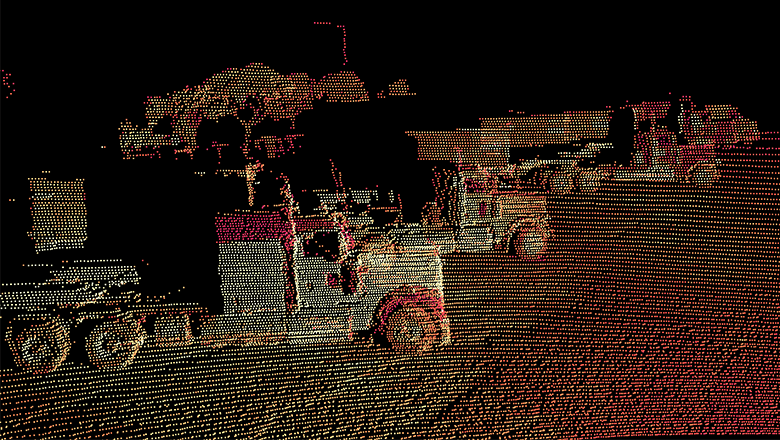
A 3D point cloud says more than a thousand words. This is the output of lidar.
Radar: measuring distances and levels
Radar sensors measure distance, speed, and level using radio waves. Thanks to the high penetration power of radar signals, radars can see through plastics. This makes the modules easy to install and usable in harsh and rough conditions. Weather influences and contamination do not affect the measurement results.
Radar sensors are very well suited for defense applications and the specific challenges of that sector. They are used not only for speed and distance measurements, but also for level measurements in silos and tanks, for example.
Encoders: position and angle measurement
Encoders measure the position, speed, and direction of a moving object. They are available in various technologies. For position and angle measurements, inductive and capacitive encoders are most suitable. They measure contactlessly, are insensitive to contamination, and meet the EMC requirements of the defense market.
Inductive encoders work with electromagnetic induction and are particularly robust. Capacitive variants measure with high resolution and are easily shielded within a housing – ideal for harsh environments.
In many high-tech applications, regular air is more of a hindrance than a help. This is why the semiconductor industry, precision instrumentation, and lab automation operate in vacuum environments. In these spaces, there are virtually no air particles left. This prevents contamination and interference, but also places extreme demands on components like sensors that must function there. In this blog, we dive into the world of sensors in a vacuum: what makes measuring in such an environment so challenging, and what are the solutions?
In a normal environment, atmospheric pressure typically hovers around 1000 millibars (or 100 kilopascals). This is the value displayed on a barometer, which experts use to predict the weather. For many (high-tech) applications, it is necessary to work in a specially conditioned vacuum environment. Consider the semiconductor industry, where the EUV light used is absorbed by the air. Or high-precision positioning measurements, for which disturbances from air currents and turbulence must be minimized to an absolute minimum.
Floating dust particles and molecules can be a contaminating and even hindering factor in those types of applications, which – especially when they start to accumulate – can make the process impossible.
There are many gradations between atmospheric pressure and the – theoretically achievable – perfect vacuum of 0 Pa. Whether it's the semiconductor industry, (medical) instruments, lab automation, or nanomaterials, each application area has its own specific requirements regarding the necessary vacuum level, the degree of contamination that is still permissible, and the molecules that are most critical. For vacuum technology specialists, it is very common to work with vacuum environments up to approximately 3 Pa.
An environment with minimal air pressure is not easy to achieve and therefore places high demands on all objects and materials that you want to place in such a vacuum chamber. This also applies to the desired sensors. And they are almost always needed. Consider a pressure sensor to determine how high the vacuum in the chamber actually is, a temperature sensor or distance measurements to monitor the process, or encoders to regulate movements in the vacuum. In this blog, we will discuss the challenges and solutions, and show you the possibilities.
Sensors in vacuum environments: challenges and solutions
Measuring in vacuum environments presents unique challenges. Materials can outgas, heat has nowhere to dissipate, and not every component can withstand the vacuum. Nevertheless, sensors must continue to perform reliably under these conditions. What challenges and solutions do you encounter with sensors in vacuum environments?
Exhaust gases
One of the major challenges is that all materials ‘outgas’ in a vacuum. Through evaporation or sublimation, they release small amounts of gas in a vacuum environment that can barely or not at all be pumped out, thus contaminating the vacuum chamber. This is easy to imagine with contaminants such as residual moisture, sealants, or lubricants, or if the wrong glues and epoxies are used. However, many hard materials such as metals or glass also emit small amounts of gas in a vacuum.
The first step is obviously to choose sensors and materials that are least affected by outgassing, for example, because they can be pre-treated well. A good selection is essential. For instance, it helps to make sensor heads out of ceramic. For potting, Tra-Con Bipax is a commonly used material, for example. Potting is used for finishing components and for filling empty spaces in a system that would otherwise be difficult to vacuum.
The second step in minimizing outgassing is to thoroughly clean all components before they enter the vacuum. Because the less contamination introduced, the higher the achievable vacuum level will be. This means a sharply organized production process and, of course, just really good cleaning with the right cleaning agents. But it goes further. The construction of a system is also important. Deep corners or a profile on a part may be convenient in production, or aesthetically interesting, but they are places where contaminants can accumulate. Therefore, always think carefully about how essential and functional design choices are, as they can affect a vacuum environment.
Bake-out oven
Ultra cleanliness is naturally achieved by thoroughly pre-treating all components before they enter the vacuum chamber. This can be done, among other things, by carrying out the outgassing process beforehand in a so-called bake-out oven. The heat causes all ‘loose’ particles to evaporate and sublimate, so you won't have any issues with them when that component or module is later placed in a vacuum. At Sentech, we have a bake-out oven. to be able to deliver our sensor modules ultra-clean.
The duration and temperature for a component in a bake-out oven depend on the vacuum requirements for its intended use. However, there are limits to how high the temperature can be raised. All sensors have a maximum temperature they can withstand. And since the process also becomes more expensive the longer the oven is on or the higher the temperature, it's important to always find the right balance.
The production process must be checked on a sample basis. For this step, this is done using residual gas analysis (RGA). Because we don't want to judge our own work, we have this carried out externally by a qualified party. These kinds of checks are necessary throughout the entire chain. If it turns out afterward that a mistake was made somewhere and the contamination level is too high, it is very complicated to determine the root cause. By continuously validating and monitoring, we can catch any potential problems early on.
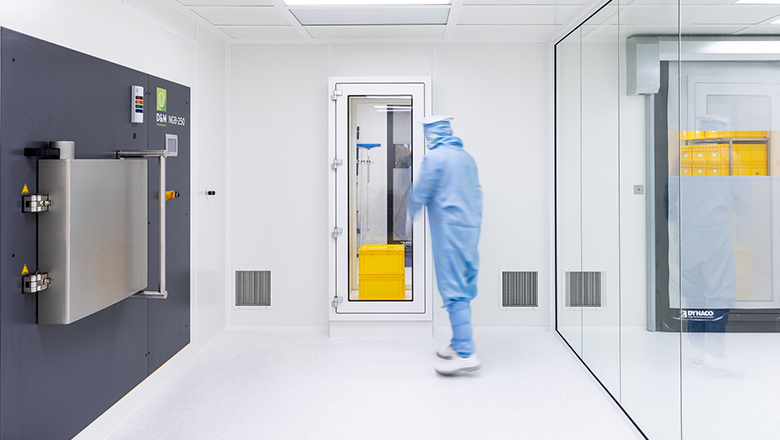
Bake-out is a process in which materials are heated to remove gases, moisture, solvents, or other contaminants.
Temperature and cooling
A disadvantage of a vacuum is that there is literally nothing to dissipate any heat from the process or from the (electronics) components. Cooling by means of air convection is therefore not an option. This means you have to think carefully about temperature management. If a system heats up, temperature drift can negatively affect a sensor measurement; heat generation comes at the expense of accuracy. Therefore, opt for sensors with low power consumption, so that heating is minimized. Because here too, the cliché applies: prevention is better than cure.
If it is absolutely necessary, and the design allows for it, there is the option to add active cooling. For example, by dissipating heat through water pipes. However, such a solution immediately makes a design considerably more complex.
Vacuum-resistant components
It's obvious, but all components, electronic parts, and sensors used in a vacuum chamber must also withstand the vacuum. Communication and experience are incredibly important in this regard, as vacuum compatibility is a property that is generally not listed on a spec sheet. As a module builder or system supplier, you must constantly remain in dialogue with manufacturers and clients. It's a chain of responsibility. And because it is also a field that continues to evolve, everyone learns from each other, and suppliers, specialists, and end-users raise vacuum developments to a higher level as partners.
Signal transmission
The measurement signal from a sensor needs to be processed. Especially for accurate measurements, it's important that the processing is also accurate. It is advisable to place the processing unit outside the vacuum chamber, as the required electronics generate more heat than is desirable in that environment, and moreover, take up valuable space.
There are quite a few so-called feed-through solutions available that can ensure signal transmission from inside to outside the vacuum chamber. It doesn't matter which sensor technology is chosen – optical, inductive, capacitive. Of course, it is also important to select cables that are suitable for vacuum use.
7 tips for sensors in vacuum
- Choose materials that are easy to clean and emit as few fumes as possible.;
- Do not change the construction method so that there are no hidden nooks and crannies.;
- Use low-power components, as heat dissipation is a challenge.;
- Place the signal processing outside the vacuum chamber;
- Use suitable cable feedthroughs for the transition from a vacuum to an atmospheric environment.;
- Test modules under realistic conditions, so that no one is surprised in the end.;
- Collaborate with a vacuum integration specialist; together you know more.
Assistance with your sensor integration in vacuum
Sensor integration in vacuum requires more than just the right component. It demands the right material selection, thoughtful design, thorough validation, and, depending on your application, the right sensor technology. These are disciplines we have in-house at Sentech: from application analysis and engineering to production, validation, and continuous supply.
Do you want to brainstorm about sensor integration in your vacuum application? Fill out the contact form and we will contact you as soon as possible.
To help our customers faster, we at Sentech have taken an important step: we now perform the bake-out of sensors ourselves. For sensor solutions that require bake-out, we reduce the lead time by at least two weeks by performing this process step internally.
What is bake-out?
Bake-out is a process in which materials are heated to remove gases, moisture, solvents, or other contaminants. This is done in a vacuum-controlled environment. The goal is to remove these substances from the material before use or assembly, so they do not cause problems later, such as performance degradation or molecular contamination.
For applications in vacuum environments, such as the semiconductor industry, this cleaning is important. Residual gases can not only disrupt the required vacuum but also cause reactions that affect the operation of systems or contaminate sensitive components.
Cleanroom-level purity
Our cleaning processes meet stringent standards for outgassing rates of water (H₂O), volatile and non-volatile hydrocarbons (CXHY v and CXHY nv). With this, we achieve the same level of cleanliness as renowned market standards, including GSA-07-2220 ‘Grade 2: Vacuum cleanliness’ from the semiconductor market.
One-stop-shop for sensor integration
Sentech has long offered bake-out as a service to customers. Previously, we outsourced this process to external partners. With the arrival of our own bake-out oven, we can perform this service in-house. This works much more efficiently. We not only have more control over quality and planning but also shorten the lead time by at least two weeks. This way, we ensure a more efficient process towards your final product.
Flexible bake-out service
When integrating a sensor into an application, it's about more than just the right sensor technology. Processes such as bake-out are also important for meeting the environmental requirements of vacuum applications.
We standardly offer bake-out as part of the overall production process for sensor integration in the semiconductor and aerospace industries. Do you only need a reliable bake-out of individual components? We're happy to help with that too! We'll consider the right approach for your situation: which parts require bake-out, which parameters are important, and how it fits into your production process.
Are you curious about the possibilities for your application? Fill in the contact form and we will contact you shortly.
The radar sensor measures distances, movements, and speed. By reflecting a high-frequency signal off an object, the sensor calculates the distance to the object. The transmitted signal is reflected by, among other things, buildings and liquids. This makes this distance sensor suitable for applications such as liquid level measurements, distance measurements in traffic, and object detection.
Unlike distance sensors such as ultrasonic and laser, radar can measure through materials like plastic. This allows for the invisible integration of the radar sensor into your application. Furthermore, this robust technology is insensitive to wind and moisture.
How do radar sensors work?
Radar works based on time of flight: the sensor measures how long a signal has been traveling. The integrated antenna of the radar sensor transmits a high-frequency signal (62 GHz), which is the transmission signal. A lower frequency (10 MHz) is also modulated within this signal. When the signal is reflected by an object, the sensor receives the signal back. The sensor measures the phase shift between the two frequencies. The time difference between transmission and reception determines the distance between the object and the sensor.
Frequencies create opportunities
Every frequency has unique properties. Depending on the frequency's height, you will have a different type of reflection or none at all. For example, with a 5 GHz radar, you can very effectively detect rain clouds at very large distances. That frequency reflects very well off moisture crystals. If you use a 60 GHz radar, for instance, it will not recognize rain clouds and will go right through them. However, an airplane or another object will reflect the signal.
Unlike radio signals from broadcast stations, radar sensor signals are reflected by buildings and liquids. This is because radar frequencies are higher. The higher the frequency, the less impenetrable a wall becomes, for example.
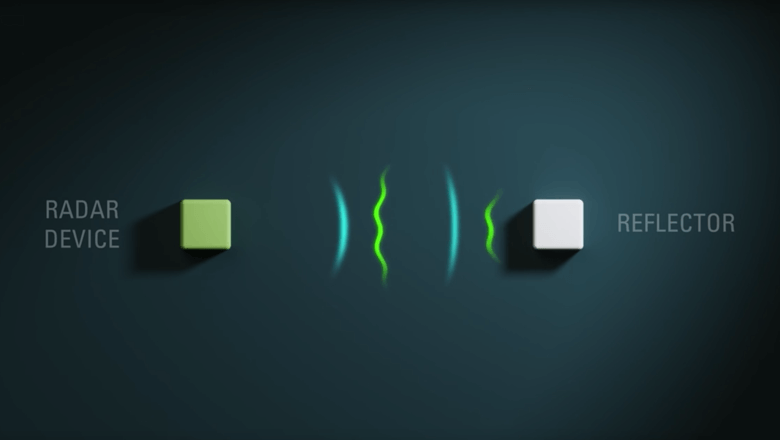
Radar is an abbreviation for Radio Detection and Ranging. This means finding and measuring (objects) using radio signals.
The alternative to ultrasound and laser
Besides radar, you can also measure distances using ultrasound and lasers. Each technology has its own advantages and disadvantages. For example, ultrasound sound signals cannot measure through materials like plastic and crops. Light signals from lasers are also hindered by these materials. Additionally, sound is sensitive to displacement by wind.
Unlike sound and light signals, radar signals can measure through most materials. Only metal objects cause the signal to be dampened. Thanks to these properties, radar is suitable for agricultural machinery, for measuring the distance to the ground, without crops affecting the measurement results.
Applications
You will find radar in both indoor and outdoor applications. The radar sensor is used for distance measurement, both at long ranges and at heights. Because every frequency has different properties, radar is suitable for a wide range of applications.
Liquid level gauge
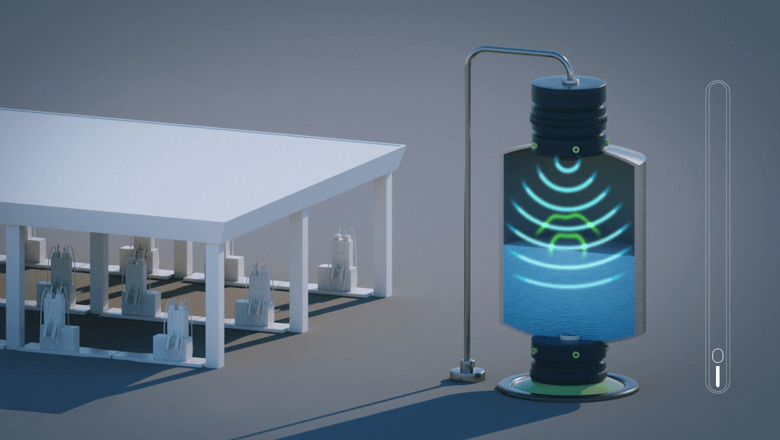
At the correct frequency, radar can measure the liquid level in a tank. The transmitted signal travels through the air to the liquid surface, which reflects the signal back. The sensor ensures reliable measurement, even under harsh conditions such as vapor and high temperatures.
Distance Measurement in Traffic
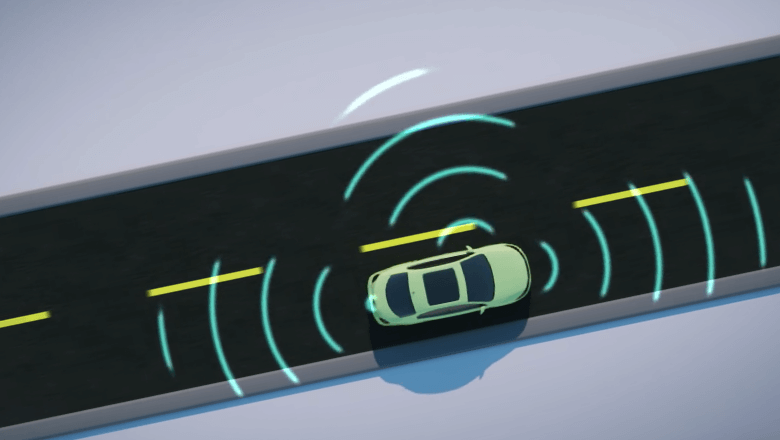
Radar is also used for distance measurements in traffic, such as adaptive cruise control in cars. Because the technology is reflected by metal at almost all frequencies, radar ensures a safe traffic situation.
Distance Measurement for Agricultural Machinery
In the agricultural sector, we also see radar making a return. For example, in the Agrifac spray booms. Here, radar sensors measure two distances: the distance between the spray boom and the ground, and the distance between the spray boom and the crop. The sensor also measures plant density.
5 benefits of the radar sensor
The properties of radar determine whether this sensor is a solution for your application. Here are 5 reasons to choose radar.
- Seamlessly integrate
Because radio signals can pass through plastic, the sensor can easily be hidden behind a plastic plate. This way, the technology does not detract from the design of your application. - Robust
Because radar is so easy to conceal behind materials, the sensor is not visible. This makes it robust and prevents vandalism. Furthermore, this integration protects the sensor from environmental factors such as moisture and dirt. - Suitable for demanding conditions
Compared to ultrasonic and laser sensors, radar sensors are less sensitive to rain, snow, heat, dust, steam, and dirt. Furthermore, measurements are reliable in strong winds because the transmitted signal does not blow away. - Many materials are measurable
Each frequency level has a different reflection and penetration on materials. If you want to measure a material or not, you can adjust the frequency accordingly. - Secure technology
The radar used by Sentech operates on a one-chip radar. This is a radar built on an Integrated Circuit (IC), or chip. Because of this small chip, you can transmit with minimal power. This makes this technology very safe for people and animals.
Challenges in radar integration
The radar's measurement range is 180 degrees. If the measurement range is too large for your application, it can lead to unreliable measurements. Sometimes you want to measure directly in front of the sensor and focus the transmission signal. In these cases, you place a dome over the radar sensor. Due to the time-of-flight difference between the different plastics, the transmission signal is focused to one point, similar to a directional antenna.
More measuring with sensor fusion
Combining multiple sensor technologies in one application. That's sensor fusion. This utilizes the benefits of both sensor types. Furthermore, the technologies eliminate each other's disadvantages.
This is how radar and lidar are combined to allow vehicles to drive autonomously, such as AGVs. Using two sensor types is necessary to ensure the safety of autonomous driving.
How do you integrate radar into your application?
If your application requires a distance sensor, the radar sensor can be an option. This robust technology can be invisibly integrated into your design. Moreover, the measurement results are reliable even in conditions such as wind, rain, dust, and high temperatures.
Whether it's liquid level measurement, distance measurement, or object detection, there's a good chance radar will fit your application.
Sensortrends: smart design and efficient purchasing (video podcast)

The demands on machines are constantly increasing. From extreme precision in high-tech applications to robustness in agricultural applications: sensors must continue to perform under ever more challenging conditions. How can engineers and purchasers ensure they make the right choices in both design and procurement? In this podcast, we dive into the world of sensor integration, with insights you can directly apply in your development and purchasing processes.
Our sensor experts discuss the challenges in sensor integration and share practical experiences. All from their own perspectives: sales, engineering, and R&D. They address concrete issues such as choosing the right housing, integrating rotation encoders in dirty environments, and ensuring long-term availability.
But it's about more than just technology. Good communication between engineering and procurement is essential for future-proof sensor integrations. How do you align technical requirements with costs, availability, and lifespan? And how do you respond to trends like digital twinning, chip integration, and the rise of radar and lidar?
What you can expect
In this podcast, you'll hear concrete practical examples, honest insights, and clear advice about:
- Balancing Precision vs. Robustness
- Managing changes in components
- The balance between innovation and security of supply
In short: an episode full of useful insights for anyone involved in designing or purchasing machines with sensor technology.
Watch or listen to the video podcast ‘sensor trends: smarter design and efficient purchasing’

Sentech has entered into a collaboration with lidar specialist Velodyne. This American company delivers smart lidar solutions. You can find this technology in AGVs, driver assistance, delivery, robotics, navigation, and mapping, among other applications.
Velodyne is a market leader and is globally known for its portfolio of groundbreaking lidar sensors. Her product line consists of a broad package of sensor solutions. These include the cost-effective Puck, the versatile Ultra Puck, the autonomy-enhancing Alpha Prime, and driver assistance software, Vella. In 2022 and 2023, the package will be expanded with solid-state 3D solutions, Velarray and Velabit.
How does lidar work?
Lidar stands for ‘LIght Detection And Ranging’. This technology uses laser beams to create a point cloud — a 3D representation — of the environment. Lidar delivers strong performance in a wide variety of lighting and weather conditions.
A lidar sensor emits pulses of invisible light that reflect off objects in the surroundings. How does the sensor calculate the distance? The sensor uses the time each pulse takes to return to the sensor for this. This is also known as the time-of-flight principle. This process is repeated millions of times per second. This creates an accurate real-time 3D map of the surroundings.
Lidar technology possibilities
Lidar is the only technology that accurately maps the environment and protects the privacy of that environment. Furthermore, the technology is suitable for environments with weather conditions such as rain with its IP69 rating. 3D solid state is available from 2022/2023.
Why partnership
The reasons why Velodyne chose a partnership with Sentech are clear, according to Maria Solovieva, Director of Sales EMEA at Velodyne Lidar. ‘Sentech has an excellent reputation in the market and an extensive customer base in our industry. Their expertise in sensor technologies is impressive. Sentech helps customers integrate the sensor into their application. They even support them in modifying this sensor to save time in the production process. In short; they are an ideal and reliable partner for us.’