

Your sensor issue or challenge, we call our challenge. The path to the sensor solution you truly need touches three interests: cost, quality, and delivery time. These never go hand in hand. How do we find that compromise together with you? With our way of working, originating from the automotive industry, we map and manage risks. This is how we ensure the quality of your end product, balancing it against costs and lead time. A collaboration with you as a customer is essential!
As an R&D Engineer, you often already have a potential solution in mind. But is this the best fit for you? Perhaps another technique is better suited for your application, and it might even be less expensive.
Even as a buyer, you want clarity on price, delivery time, and quality. Our working method focuses on identifying and managing risks. This is how we monitor quality and ensure a predictable logistics chain.
Further on, you'll discover the 5 phases of challenging your sensor solution.
Balance of interests
Besides balancing cost, quality, and delivery time, it is also important to find a balance between the customer's interests, the supplier's interests, and Sentech's interests. Hermen Kobus, Operations Director at Sentech explains: “If interests diverge too much, it can be difficult to find common ground. You look at what you can do to understand each other. If it ultimately doesn't work, you have to be honest enough to go separate ways.”.
Even at an internal level, competing interests are at play. Kobus adds to his story: “An engineer always wants to arrive at the best solution because they think from a technical perspective. If something is good, they will still say, ‘It can be better.’ After the engineer spends many more hours developing the product, it will likely improve slightly, but also become unnecessarily more expensive.”.
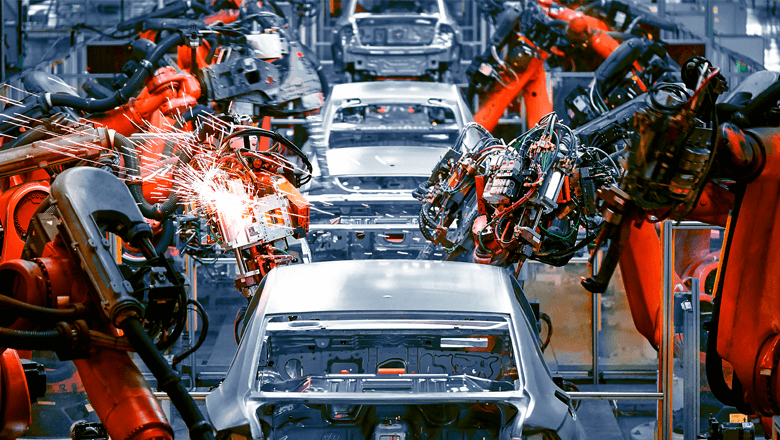
Car manufacturers like to work with companies that are IATF 16949 certified. Furthermore, this standard helps to set up work processes efficiently and effectively.
Optimal workflows
Together with you, we map out what is truly important to you. We do this with our work processes, which are based on the high quality standards of IATF 16949 (formerly ISO TS 16949). We monitor these strict standards with the APQP (Advanced Product Quality Planning) development process.
This model was developed in the automotive industry by Ford, Chrysler, and General Motors to deliver new products on time and within budget. By following the APQP phases, we identify and manage risks.
Documents in understandable language
APQP documents are inherently complex to work with. They use terms that not everyone is familiar with. We have simplified this model so that all parties can work with it efficiently. Documents and templates for the processes are written in understandable language.
Scale steps, never skip
Sometimes it is not efficient to follow all steps of APQP extensively. Depending on your expectations regarding quality, time, and price, it is possible to scale certain steps. From the perspective of ‘scale don't skip,’ we never skip steps because we always consider all risks.
“At every process step, we ask ourselves in a multidisciplinary team: ‘Are we going to do this step completely, or can we do it faster?’ Knowing that there are risks involved,” says the Operations Director. We map out the risks and weigh them against the quality standards that are important to you.
For example, if the length of a product is important, then an incoming inspection for dimensions makes sense. Kobus adds: “The moment I catch at incoming inspection that the product is too long or too short, I won't accidentally put work into it and send it to the customer. That costs money. Moreover, hours have already been spent on it. All for quality assurance. You must decide together whether the risk is high or not.”.
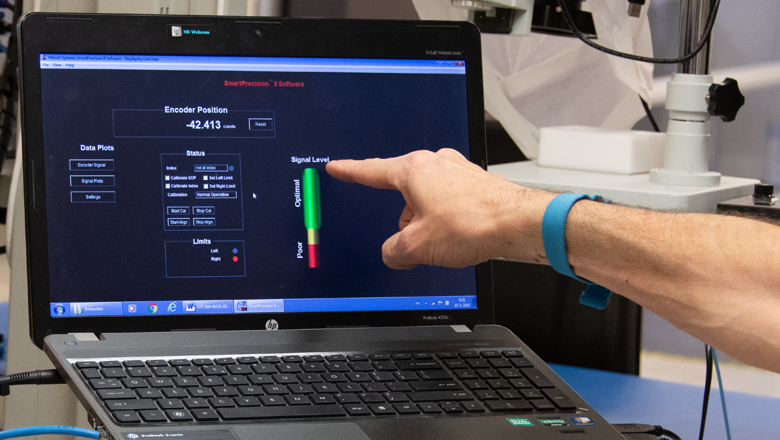
“If we know all the risks, we'll never be surprised by them.” - Hermen Kobus, Operations Director at Sentech
In 5 phases from challenge to sensor solution
Based on APQP, we go through 5 phases in a project. By following these phases, we identify risks in a timely manner and make them manageable. This way, you will receive your sensor solution at the agreed quality, price, and lead time.
Phase 0: Mapping the Problem Question
As an engineer, you come into contact with us because you need a specific sensor solution. Perhaps you already have a possible solution in mind. But is this the best solution for your problem?
By asking critical questions and probing further, our Account Team will work with you to determine what you truly need.
The importance of asking further questions
Asking critical questions and probing further are important for making risks clear. Like when the customer asks for a waterproof sensor. Waterproof has varying degrees: from rain-tight (IP X3) to pressure-tight (IP X8).
By asking further in this situation, we will know what the customer means by waterproof. The choice in this also influences the price.
Kobus gives an example where price plays a big role: “The customer says, ‘I want a pressure sensor,’ but it turns out they need a pressure switch. That might sound like a small difference. In terms of cost, there's a big difference, because a sensor can be more expensive than a switch.”.
If we deliver a product that meets all specifications but doesn't fit your application, we haven't done our job correctly.
Discuss your challenge
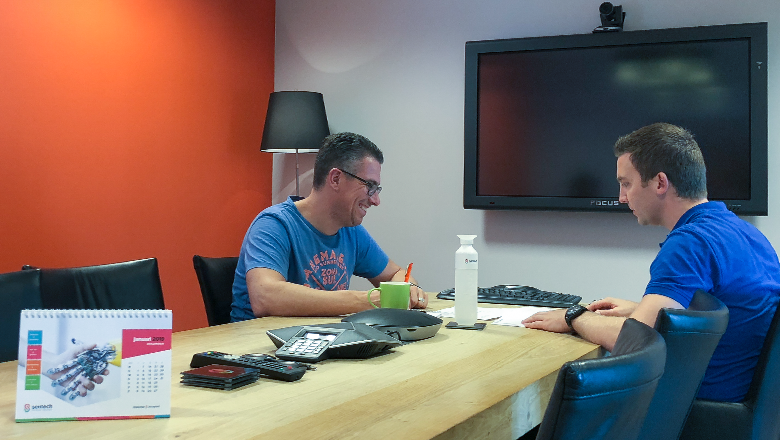
Phase 0 concludes with an open-up meeting with the full project team: Sales, R&D&E (Research & Development and Engineering), Supply Chain, Quality, Finance, and Production. Here, we pitch the problem statement, and the sensor experts propose a solution. We document this in the Product Initiation Document (PID).
Phase 1: Feasibility and Offering
Sales transfers responsibility to RD&E. In this phase, our Project and Production Engineers investigate the feasibility and capacity of a project.
Capacity
Capacity is central to whether we can and want to make it. The Operations Director gives an example: “Are we going to make 100,000 products, with an assembly time of 20 minutes per piece? That has implications for our capacity. Maybe we need extra personnel for that.”.
Technical and financial feasibility
We also investigate the technical feasibility. The client requests certain specifications. Can we make that? Is that technically feasible? For financial feasibility, our sensor experts, together with the Account Team, examine whether we can produce the product for the discussed price.
Phase 2: Product Design and Development
Once we receive the assignment, we can provide the draft project plan. During this phase, the lead time becomes concrete: we will make it clear when which project results will be delivered, tailored to your needs. Project results range from documents and drawing packages to samples or prototypes.
Prototype
With a prototype, we show you, the (R&D) Engineer, a functionally working product. The prototype is not yet made with the final means. For example, if the final product is to be injection molded.
“This is too expensive to do for just one piece. In that case, we'll 3D-print the housing. Therefore, the material and color may differ. It gives the customer an impression of how the product will turn out in the meantime. He can do tests with it: is this what I want,” Kobus explains.
Design risk management
We address design risks with the Design Failure Mode Effects Analysis (DFMEA). We prioritize risks based on the Risk Priority Number (RPN). We always address the highest RPNs to reduce risks.
Kobus provides an example: “The component is so sensitive to vibrations that we expect it to break down in that machine when vibrations occur. If the risk is too high, we will devise an action to reduce that risk. The description of this will be included in the Control Plan.”.
Critical to quality
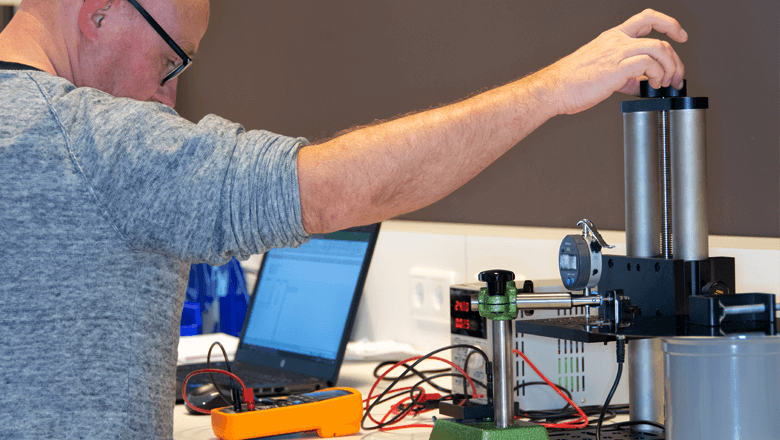
This phase focuses on product design. This involves drawings and the software that needs to be included. Apart from drawings, you also discuss critical dimensions. “Like with the development of a load pin. The customer uses this pin in a gearbox. Gears will slide over the pin, so the fit has a certain dimensional tolerance. The pin also must not deflect too much. Here, we describe the critical dimensions, or what is ‘critical to quality’,” adds the Operations Director.
Phase 3: Process Design and Development
Now, the process of producing and assembling the series begins. We will carefully monitor the quality, as established in the previous phases. Details that are ‘critical to quality’ will receive extra attention in this process.
Process risk management
All process-related risks are captured in the Process Failure Mode Effects Analysis (PFMEA). Such as what can go wrong when components arrive at our facility in relation to the agreements with our suppliers.
Kobus sketches an example: “We took the risk of doing business with a supplier who has a delivery time of between three and five weeks. However, we need to deliver 200 sensor solutions to our end customer every two weeks. Then, in the Process FMEA, it may emerge that we need to build up a larger stock of products from that supplier. That way, we have a buffer if the supplier delivers late.”
Measurement system analysis
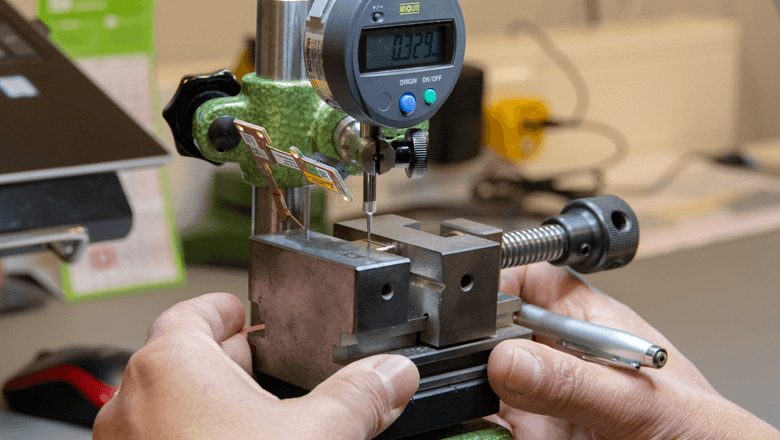
With Measurement System Analysis (MSA), we map out the reliability and reproducibility of our measurement systems. We control the variation of our measurement systems, so that the quality of your final product is consistent with every measurement. Even when multiple Assembly Engineers read data from the same measurement system.
“We make products here where the time of day we measure matters. It's colder in the morning than in the afternoon. So, it's sometimes important that assembly takes place at a constant temperature,’ according to Kobus.
Deployment to Production
For a successful transfer of Engineering to Production, we will create a work instruction for your sensor solution. In addition, the Project Engineer will teach the Assembly and Test Engineers how to assemble and test the product.
Phase 4: Product and Process Validation
Now that the people are trained, we begin the validation phase by producing a small series, for example, 20 units. With care, we ensure that your final product meets the desired quality requirements. We also test feasibility to determine the exact lead time and price.
Feasibility in time
If you need to produce 100 sensor solutions per week, you want to know if that's feasible in terms of time. The Operations Director explains: “We time exactly how long it takes us. This way, we know how many units we can produce per week and that the costs from the last calculation are covered.”.
Quality control
In Statistical Process Control (SPC), we establish quality limits: how much can quality deviate? With a control chart, we monitor quality requirements that are important for your product.
Kobus adds, “For example, if the length of a product is important, we determine how much that length can deviate. We check this with a control chart and test tool. Anything outside the norm is rejected.”.
Lessons learned meeting
We'll conclude Phase 4 with a ‘lessons learned meeting’. All involved team members will come together for this, and you as an (R&D) Engineer will also attend. We'll discuss what went well, what didn't go so well, and what we need to do differently next time.
“It happens that we've done a vibration test in phase 4, but in hindsight, it would have been better to do it in phase 2,” Kobus gives as an example. “This is how we continuously improve our work processes.”
Start series production
Now we know in detail how to create your sensor solution and what we need to consider. There is also now certainty about the lead time and price. Based on this information, we will prepare the quote for series production.
After we receive your order, the Production department will start series assembly of your sensor solution.
Supply chain control
Quality and selecting the right supplier go hand in hand. Kobus adds: “A supplier delivers quality products to me, with an agreed ppm level of 6,000. That means 6,000 parts per million are allowed to be defective. Our customer requires 30 ppm for their end product. In that case, I would rather do business with a supplier who can deliver 30 ppm, even if that supplier is slightly more expensive.”.
The tension between Sales and Engineering
The interests of Sales and Engineering sometimes diverge in a project. Sales wants to offer flexibility to the customer, while Engineering adheres to processes to maintain quality.
When a customer requests faster product delivery, Sales puts pressure on Engineering to make it happen. Because Engineering is responsible for quality, they strictly follow the process. These process steps take time, which sometimes conflicts with Sales' interests.
Through this area of tension, the teams find a middle ground between flexibility and lead time. This allows them to efficiently develop the sensor assemblies, with attention to quality and costs.
Integrate your sensor solution successfully!
During a sensor integration project, you constantly weigh three interests: cost, quality, and delivery time. It can be challenging to make the right choices in this regard. What are the risks and consequences of my choice? Is the technology I have in mind the right solution for my application?
Scroll through our free e-book for the answers to these questions. You'll also read practical examples of common sensor issues and solutions.
Immerse yourself in the world of successful sensor integration Download the e-book directly.
Research by Rabobank Australia shows that three-quarters of Australian farmers are hesitant to use sensor technology. Rabobank calls these “barriers holding back the agricultural sector in Australia from investing.” This stands in stark contrast to Dutch farmers.
Sentech is an independent sensor supplier that contributes to precision agriculture and livestock farming with cost-effective sensor solutions.
Australia: unclear costs and benefits of sensor technology
The Rabobank study shows that 23% of Australian farmers use sensor technology. Rabobank analyst Wesley Lefroy even says: “Of those, fewer than 40% report that their profits have improved thanks to the sensors. For many non-users, the profitability of such an investment is unclear.”
According to Rob Pieter, account manager Agrotechnology at Sentech, Australian farmers underestimate the possibilities of sensor technology. “That's understandable. Because for any technology, if it's not applied correctly, it won't meet expectations. And I think that's what's happening in Australia,” Pieters explains.
Sensor integration in agricultural engineering enables precision agriculture.
Precision agriculture is widely applied and still developing in the Netherlands. Since 2015, a public-private research program called ‘On to Precision Agriculture 2.0’.
The program describes its goal as follows: “to conduct research on strategic themes within precision agriculture with more than 20 partners over the next four years, in order to accelerate its implementation and reap its benefits for growers, supply chains, and society. The partners within the research program are end-users, supplying companies, supply chain parties, and knowledge institutions.”
Dutch farmers can't do without sensors
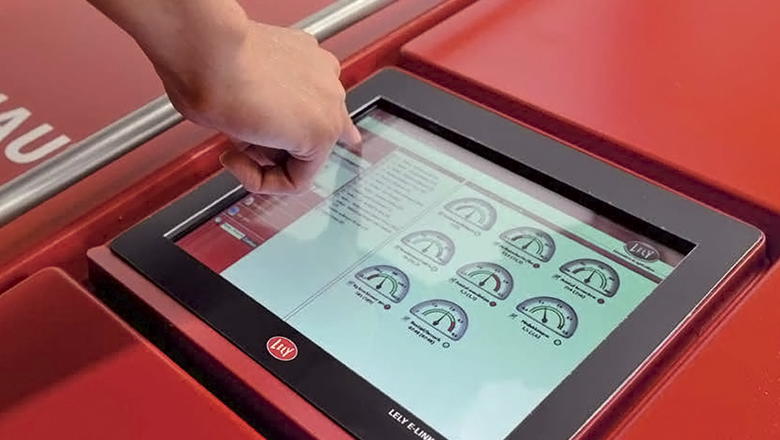
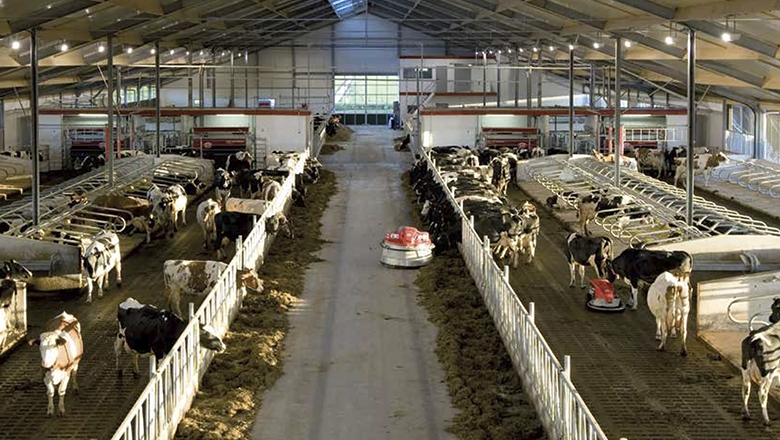
Pieters applauds this development. Pieters: “30 years ago, Dutch farmers scoffed at agrotechnology. But now, almost everything is automated or managed here, from milking cows to feeding them, and from fertilizing land to harvesting. This is only possible through the use of the right sensor for a specific purpose. They can’t do without it nowadays. It has improved their yields so much that they can compete well on high quality and yields.”
What are the benefits of using sensors in the agricultural sector?
Dutch farmers use sensors in agrotechnology for analysis and production purposes. The Precision Agriculture 2.0 program shows examples of sensor use for researching soil, climate, crops, diseases, pests, and weeds. Farmers then use the information for their cultivation planning, soil improvement, fertilization, and weed control.
Translating technical sensor specifications into customer benefits
The big advantage of precision agriculture with smart sensors is that farmers can increase crop yields and improve product quality.
Pieters: “You have to cater to the specific crops and the techniques that increase yield for those crops. It's important to translate technical specifications into benefits for the farmer. And perhaps manufacturers should offer calculation tools so farmers can determine if sensor technology is profitable for them.”
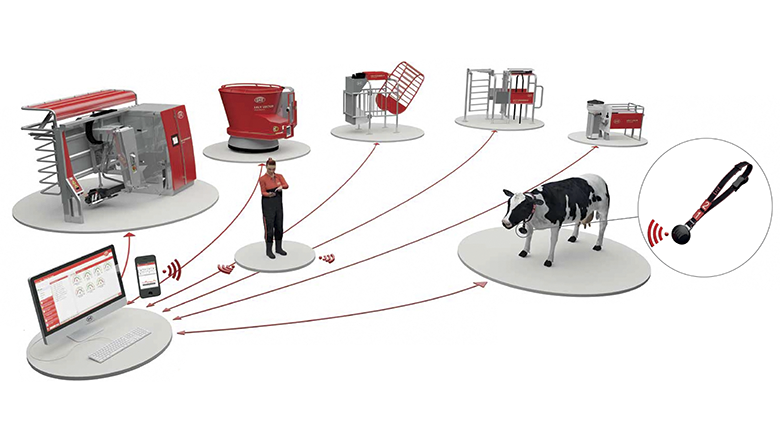
Livestock farming also benefits from sensor technology
In another Rabobank publication, the Dutch bank describes the benefits of using sensors in livestock farming. According to the authors, sensor integration in farming contributes to productivity, cost reduction, and improved working conditions. Precision livestock farming leads not only to better results. It also ensures healthier animals, more sustainable operations, and more efficient production.
Independent sensor supplier
Sentech contributes to precision agriculture and livestock farming with custom sensor solutions. The sensor supplier operates independently of sensor manufacturers. According to Pieters, Sentech collaborates with manufacturers on innovations that further assist machinery manufacturers and farmers.
Pieters: “It is up to developers, like Sentech, to help manufacturers of Agrotechnical products with sensor knowledge for their sensor selection. Furthermore, we provide a business case for every sensor development. This way, we help manufacturers inform farmers more clearly about the costs and benefits of sensor technology.”
Convinced of returns
Pieters is convinced that Australian farmers will also increasingly embrace sensor technology. It turns out that it can significantly help farmers in their agrotechnology and can indeed yield returns.
Hall sensors in the Agrifac field sprayers ensure more yield of the farmland.
What started as a bold step in a single-family home has grown into a leading technology company in sensor integration. On October 11, 2025, Sentech will celebrate its 25th anniversary. A milestone that not only makes us proud but also grateful, because it began with one decision that truly made a difference for customers. And we continue to do so today.
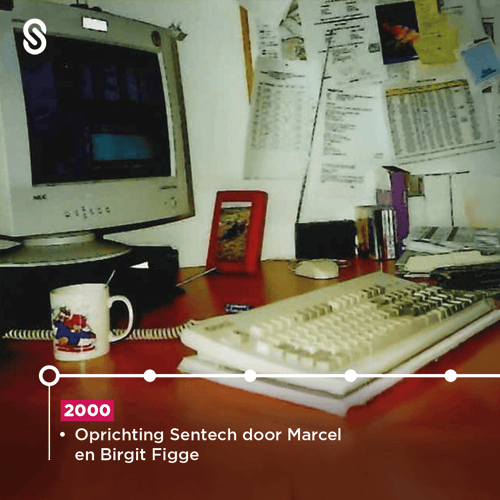
In 2000, Marcel worked for a sensor supplier that sold two product lines to a competitor. The competitor immediately declared the products obsolete and replaced them with their own sensors. Customers had to adapt their machines, which led to great frustration. Marcel thought: this needs to be different; customers shouldn't have to suffer for this. He arranged direct delivery from the original manufacturers and let customers know they could come to him for their trusted sensors. Together with his wife Birgit, he started Sentech, from their home.
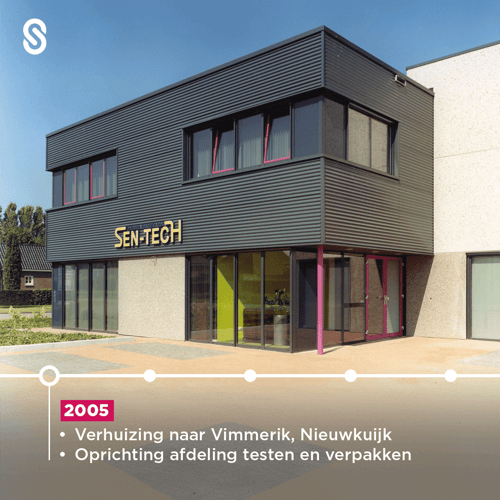
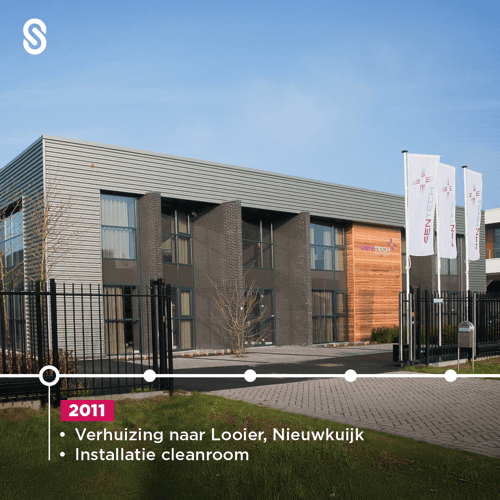
This building made way for an office building in ‘s-Hertogenbosch in 2001. In the following years, there were four more moves, to different locations in Nieuwkuijk.
Sensor integration as a specialization
Soon, the demand arose for more than just delivering sensors. Customers wanted customizations: a different connector, better integration into their machine, advice on integration. This is where Sentech's DNA was formed: we solve sensor challenges that cannot be solved with a standard sensor. With our knowledge of sensor technology and the application, we develop a suitable solution, often plug-and-play, that precisely meets the customer's requirements. We have since grown into a one-stop-shop, even taking responsibility for the entire supply chain. This way, we unburden our customers from start to finish.
From certification to more complex sensor solutions
Our perception of quality underwent significant development. In 2001, we obtained ISO 9001 certification. In 2008, we followed this with IATF 16949 certification, a stringent standard for the automotive sector. Thanks to this standard, we can also solve the most complex sensor challenges.
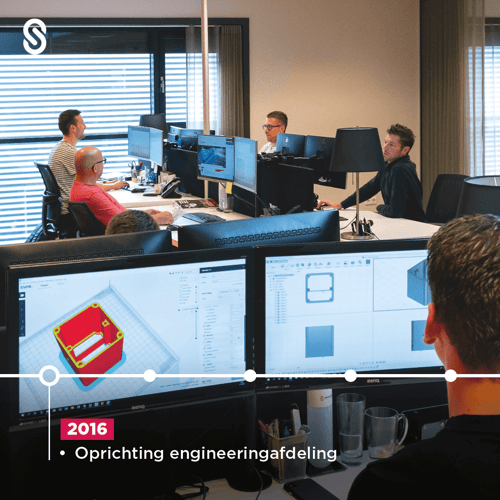
Our approach grew with technological advancements. In 2016, Sentech established its own Engineering department, allowing us to develop proprietary sensor solutions that are not yet on the market. This includes chip integration or applying radar technology in agricultural applications.
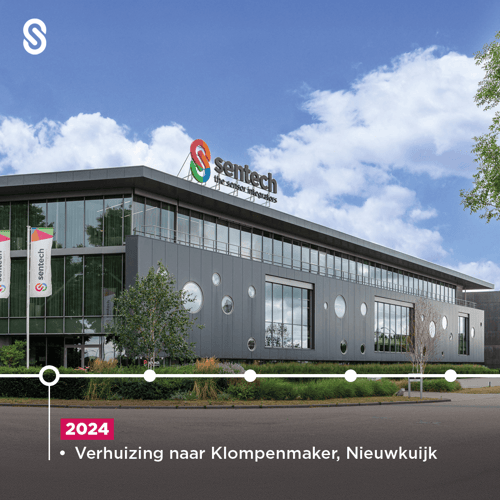
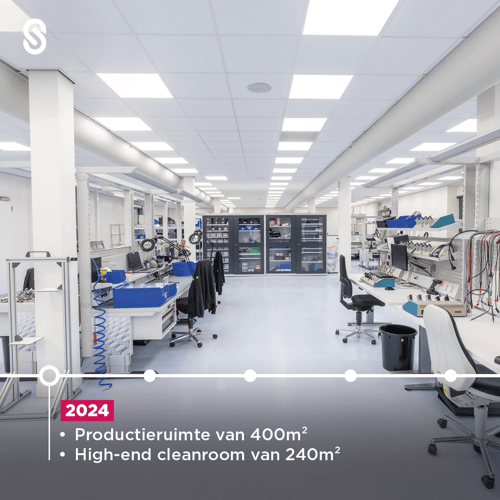
In early 2024, we moved into our new premises at Klompenmaker in Nieuwkuijk, right off the A59. A great step, as it significantly increased our space: 400 m² of production space and a high-end 240 m² cleanroom.
On to the future
After 25 years, our passion for technology is as strong as it was on day one. And just like then, we believe in building long-term relationships. With clients, partners, and colleagues.
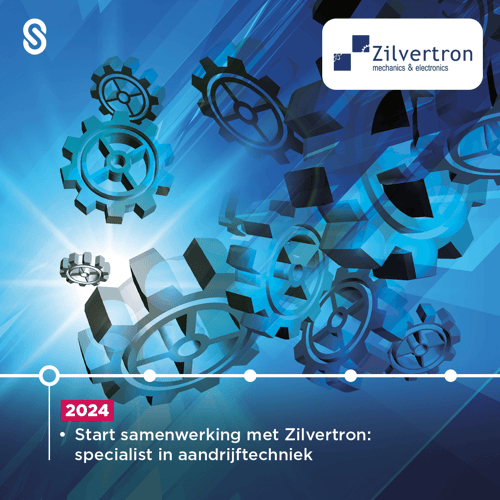
We are broadening our foundation now. At Sentech, we are working on a larger plan where we will integrate motion and control solutions alongside sensors. We are doing this together with our sister company Zilvertron, with whom we are joining forces to offer customers even more complete solutions.
Without the trust, commitment, and collaboration of everyone around us, our growth would not have been possible. We are truly grateful for that. Here's to the next 25 years of smart innovations, strong collaborations, and technology that makes a difference.
Timeline: View Sentech's Milestones
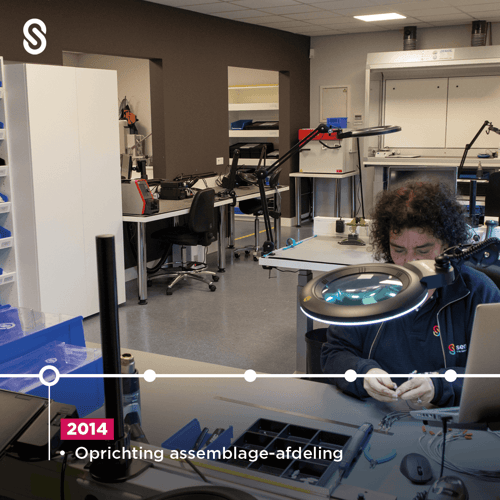
Elias van Wijk has started as CEO of Sentech. With his international experience and strong focus on growth, we are ready for a new chapter in our development.
Elias brings a proven track record in achieving growth and leading technological organizations both domestically and internationally. His background in successful mergers and acquisitions aligns well with our ambitions.
Elias van Wijk is looking forward to his new role and sees plenty of opportunities to further strengthen Sentech: “Together with the team, I want to set the course towards a leading position in integrated sensor solutions in Northwestern Europe. Customer value, technological progress, and sustainable relationships will be central to this. I am convinced that with this focus, we can make a long-term impact.”
Part of the Techwell Group
With this change, we are also taking steps at the group level. Sentech is part of the Techwell Group, which also includes Zilvertron. Within this group, we focus on integrated sensor, motion, and control solutions for OEMs in sectors such as medical & robotics, defense & heavy vehicles, semicon, agrotechnology & aquahorticulture, and intralogistics. Elias van Wijk is also appointed as CEO of the Techwell Group.
It's not surprising that acoustic sensors are increasingly being used for measurement tasks. Everything around us produces vibrations and can therefore be measured acoustically. They are versatile and still in the early stages of their development.
At Sentech, we've been closely following the developments around acoustic sensors for years. Below are the main highlights from our analysis.
Why acoustic wave sensors?
Acoustic wave sensors are incredibly versatile sensors whose commercial potential is just beginning to be realized. They are cost-effective, robust, sensitive, and intrinsically reliable. Additionally, they can be applied passively and wirelessly. Wireless sensors are useful for monitoring parameters on moving objects, such as tire pressure in cars or torque on axles (for predictive maintenance).
Sensors that do not require a power supply are essential for remote monitoring of chemical vapors, moisture, and temperature. Other applications include measuring force, acceleration, shock, angular velocity, viscosity, displacement, and flow. The sensors also have an acoustic-electric sensitivity, enabling the detection of pH levels, ionic contaminants, and electric fields.
Acoustic surface wave sensors have generally proven to be the most sensitive due to their high energy density at the surface. For liquid sensing, a special class of shear-horizontal acoustic surface wave sensors, called ‘Love wave sensors,’ has proven to be the most sensitive. Much work remains to be done in the development of these sensors for future applications.
9 types of measurements with acoustic sensors
Acoustic sensors can measure various physical quantities by detecting sound waves or vibrations. Here are 9 examples of what they can measure:
- Distance
Acoustic sensors measure the time it takes for a sound wave to return after reflecting off an object. This is similar to echolocation. - Strength
They measure the force exerted on a surface by analyzing how sound waves propagate through the material. - Displacement
Vibrations or displacements of an object can be measured by changes in sound waves traveling through the object. - Temperature
Acoustic sensors detect temperature changes by measuring the speed of sound waves in different materials. - Fluid levels
By measuring the time it takes for sound to travel from the sensor to the liquid surface and back, they can determine the liquid level in tanks or pipes. - Shocks and acceleration
They detect the speed and direction of shocks or accelerations by looking at how sound waves react to movement. - Humidity
Acoustic sensors measure changes in air humidity by observing the influence of water vapor on the sound signal. - Chemicals
Some sensors can detect chemicals and contaminants by analyzing how sound waves interact with molecules in the air or on surfaces. - Viscosity
Acoustic sensors measure the viscosity of liquids by observing how sound waves change in response to the fluid.
A Century of Innovation
The history of acoustic wave technology spans over 60 years, with its largest application being in the telecommunications industry. This industry uses approximately 3 billion acoustic wave filters annually, primarily in mobile phones and base stations. These filters, typically Surface Acoustic Wave (SAW) devices, are crucial in the radio frequency and intermediate frequency sections of transceiver electronics. Recently, there has been a growing interest in using acoustic wave sensors in various other sectors, such as the automotive industry, the medical sector, and industrial applications.
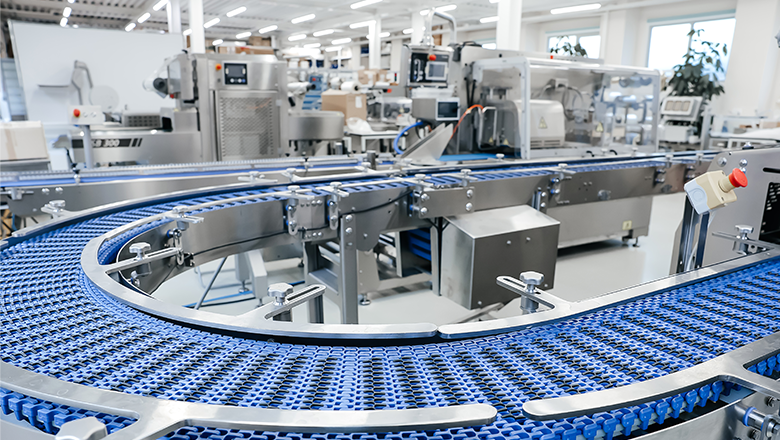
Acoustic sensors are suitable for predictive maintenance. They can, for example, detect abnormal noises from conveyor belts, which may indicate wear. In this way, they reduce the chance of unexpected failures.
The operation of acoustic wave sensors
Acoustic wave sensors use a mechanical or acoustic wave as the detection mechanism. When an acoustic wave propagates through or on the surface of a material, changes in the propagation path affect the wave's velocity and/or amplitude. These velocity changes are detected by measuring and correlating the sensor's frequency or phase characteristics with the measured physical quantity.
From piezoelectric substrate to sensor
The production of these sensors begins with the careful polishing and cleaning of a piezoelectric substrate, such as quartz, lithium tantalate, or lithium niobate. These materials are chosen for their specific properties, including cost, temperature dependence, and propagation speed. The manufacturing process involves depositing a metal layer, typically aluminum, and using photolithographic techniques to form an interdigital transducer (IDT).
Bulk waves versus surface waves
Acoustic wave sensors are distinguished by their propagation modes, such as bulk wave and surface wave. The most commonly used bulk acoustic wave (BAW) devices are the thickness-shear mode (TSM) resonator and the shear-horizontal acoustic plate mode (SH-APM) sensor. Surface wave devices such as the surface acoustic wave (SAW) sensor and the shear-horizontal surface acoustic wave (SH-SAW) sensor are also popular. The choice of device depends on the specific application and required sensitivity.
From the automotive to the medical sector: the versatility of acoustic sensors
Acoustic wave sensors are applied in a wide range of sectors. In the automotive industry, they are used for torque and tire pressure sensors. In the medical sector, they are found as chemical sensors. They can also be used in industrial and commercial applications as vapor, humidity, temperature, and mass sensors. Thanks to their sharp price, robustness, high sensitivity, and reliability, these sensors are rapidly gaining popularity. Furthermore, some sensors can be read out passively and wirelessly, offering additional advantages in certain applications.
The future of acoustic wave sensors
Recent developments in acoustic wave technology include the creation of higher frequency and sensitivity sensors, utilizing advanced materials and micro-fabrication techniques. These innovations open doors to new applications and improvements in sensor performance. The focus is on increasing sensitivity, reducing costs, and broadening the scope of applications.
Acoustic wave sensors are on the verge of a new wave of technological innovations and applications. With their versatility, cost-effectiveness, robustness, and high sensitivity, they offer promising opportunities for diverse industries. Whether it's monitoring tire pressure in moving vehicles, detecting chemical vapors remotely, or measuring force and acceleration, acoustic wave sensors will greatly advance the way we understand our environment.
Stay ahead in sensor innovation
In a world where technology is developing at lightning speed, it's difficult to stay up-to-date. Do you want to stay informed about the latest developments in sensor technology? Our newsletter will give you a head start.
Via our monthly newsletter receive your technology blogs, news, trends, and background stories in your inbox. Sign up now and discover what sensor technology holds for the future!
After many years of successful collaboration, sensor specialist Sentech and drive technology expert Zilvertron are making their business relationship official on May 1, 2024. Together, they will continue to build on their shared goal: to offer customers a total solution.
Synergy is the keyword in the strategic collaboration between Sentech and Zilvertron: both strongly believe in the 1+1=3 principle of their collaboration. Together, they can serve their customers more broadly in motion solutions, and that is precisely the question Marco Leeggangers, Sentech's Chief Business Development Officer, increasingly hears from the market: ’But then you don't want to collaborate with just anyone. It has to be a company with the same vision.' That's why the search for suitable partners began a few years ago. Smile Invest stepped in as a financially strong partner and offers significant added value with its expertise in (international) growth for Sentech's ambitions.
Same standards and values
Now Zilvertron is joining, a specialized supplier of drive technology with engineering capabilities, who, like Sentech, puts the customer first. And, like Sentech, goes the extra mile in serving its customers, for example, when a new product is introduced at their facility. Leeggangers: ‘We sit at the table with our clients and brainstorm solutions with them. We are not a distributor who pushes a box to the customer, but we integrate the necessary technology ourselves with our own engineering department for seamless implementation. Zilvertron has the same way of working. That's why this is such a good match.’
It's not just the visions that meet: the expertise of Sentech and Zilvertron, sensors and drive technology respectively, are both needed for a good motion solution. In their new form, they will offer their customers totally integrated motion solutions.
No big changes
With both Sentech and Zilvertron, the customer has always come first. From this perspective, the optimal details of this collaboration naturally fall into place, explains René Jansen, director at Zilvertron: ‘No new contracts, so no new logos, names, or contact persons, no hassle. But even more possibilities.’ The companies will retain their own identities and will form a group as of May 1st through the acquisition of all Zilvertron shares.
Future plans
So, no major changes on the horizon for the newly-techs for now. But when it comes to the long-term vision, there are indeed big dreams: together, they want to continue growing into a total technology provider. A journey that, if it's up to them, will take them abroad.
ASML turns 40 in 2024! Reason enough for Bits&Chips to release an ASML special. Since Sentech has been supplying sensor solutions to ASML since its inception, a contribution from us (written in co-creation with ASML) is of course essential.
For various sensor challenges, Mario Creemers, Component Engineer/Manager relies on Sentech, a supplier to ASML since its inception in 2000. “They are innovative and solution-oriented. For sensor-based assemblies, I've come to consider them a co-creator.”
Over the years, Sentech has delivered many sensor solutions to ASML. Account Manager Peter Verstappen: “We have built sensor assemblies for all systems, from the PAS 5500 to the latest EXE EUV machine.”.
Read the full article here: https://hubs.ly/Q02d9q3m0
If you want to work according to high quality standards, ISO 9001 is sometimes not sufficient. That is why the automotive industry developed IATF 16949. With this quality standard, you develop a reliable and durable end product.
Automotive companies like to work with manufacturers that comply with IATF standards. For example, in 2009, the collaboration with DAF prompted Sentech to obtain an IATF certificate.
Certification
In 2021, IATF introduced changes to the standard. As a result, Sentech decided to continue working according to the standard, but not renew the certification.
Therefore, after twelve years, our IATF certification will expire on July 9, 2021. If customers require IATF certification again, we will discuss the possibility of recertifying.
Maintain quality with high quality standards
The core tools and processes – originating from IATF certification – have been interwoven for twelve years our method. In 5 phases, we identify risks in a timely manner and make them manageable. This is how we guarantee the quality of the end product. After not renewing the certification, we will continue to work according to these high quality standards.
Continuously developing and optimizing our processes, as well as developing our employees, remains an important theme. We do this in addition to our ISO 9001 certification, which remains in effect.
What does working according to IATF 16949 standards look like?
For industries like automotive, ISO 9001 is not sufficient. They go a step further and work with IATF 16949.
This high-quality standard also ensures a reliable and durable end product in your market. In addition, you can fully adapt the process to your quality needs.
Discover what IATF means and how you can applied on your project.
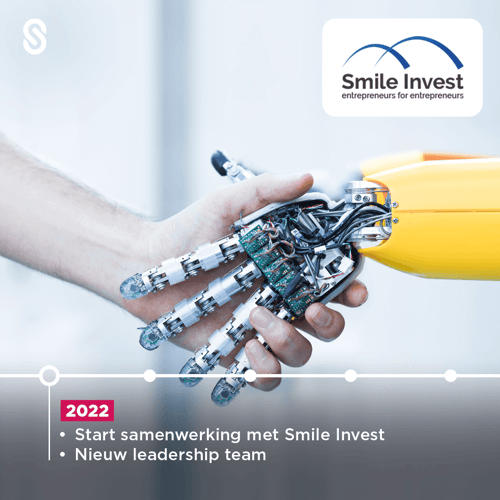
On March 25, 2022, Smile Invest will acquire a majority stake in Sentech. In order to achieve its growth ambitions and long-term objectives, Sentech held exploratory discussions with several financial partners last year. Following a careful selection and due diligence process, the decision was made to collaborate with Smile Invest.
Sentech was founded in 2000 by Marcel Figge and now has more than 60 employees. Sentech's sensor solutions are used worldwide in applications within the semiconductor industry, automotive, healthcare, and agromarkets. Due to the rise of innovations such as autonomous vehicles, the Internet of Things, and artificial intelligence, the sensor market is expected to continue to grow strongly in the coming years.
Commercial Director Marco Leeggangers and Operations Director Hermen Kobus will take on the day-to-day management of Sentech as a two-person executive team. Founder Marcel Figge will continue to focus on long-term strategic projects. Marcel Figge: “With Smile Invest, we’re bringing on board a partner that not only has the necessary network, capital, and technical expertise, but also aligns with our vision of creating long-term value for our customers in a transparent manner. Smile’s entry into the shareholder structure comes at a time when we are ready to take the next major step. With these new resources and expertise, we will invest in building a solid footprint outside the Netherlands and further professionalizing our operational facilities.”
Marco Leeggangers and Hermen Kobus add: “In recent years, we have been actively involved as managers in building the foundation. Now, in our new roles, we can set the direction ourselves to become a leading supplier of integrated sensor solutions in Northwestern Europe, and to make Sentech an even stronger company. This feels like a logical step for us, but it remains a new chapter, which is why we are pleased to bring in an experienced partner like Smile Invest who will help us navigate the next phase.”
Ad Notenboom and Bart Cauberghe, partners at Smile Invest: “For us, Sentech is the prime example of a Dutch high-tech gem with a unique market position. The professionalism of the organization, the quality of its solutions, and its high customer satisfaction are at a level typically seen in companies that are a few years ahead. Sentech's technically innovative profile, combined with its strong growth ambitions, aligns perfectly with our investment focus. We will support Sentech in achieving these ambitions and believe the company is perfectly equipped for both organic and inorganic growth of its activities.”
Over Smile Invest
Smile Invest (Smart Money for Innovation Leaders) is a European evergreen investment company with €350 million in capital under management, funded by 40 entrepreneurial families with a long-term focus on innovative growth companies. Smile Invest focuses on companies within three investment themes: digitalization, health, and sustainability. From offices in The Hague and Leuven, the team supports ambitious entrepreneurs and managers in achieving their growth plans.
Sentech recently added Celesco’s new SG1 draw wire encoder to its product line. This encoder has a maximum range of 3 m and, thanks to its robust and reliable industrial pulley system, offers a repeatability of ± 0.05%.
In practice, this high repeatability may be even more important than the specified ± 0.35% accuracy. Robotics and/or mechanical engineering are a breeze for this draw-wire encoder.
The heart of this sensor is the measuring element. This consists of a 10 kOhm potentiometer, specially designed for its industrial application, which is guaranteed for over 250,000 full measuring cycles.
With a maximum supply voltage of 30 V, this encoder, which functions as a voltage divider, provides an easy-to-process analog output signal. With an allowable temperature range of -18 °C to +70 °C, this sensor exceeds the temperature requirements for its application in mechanical engineering, instrument construction, and robotics.
Freely configurable
A special feature of the SG1 series is that this draw-wire encoder is freely configurable. This allows the sensor to meet the demands of its use in series production for OEM applications. For example, when making the electrical connection, you can choose between an M12 connector, cable (with a variety of connectors), or even a solder tab.
Furthermore, various mounting brackets, industrial potentiometers, and output signals can be chosen from. When using a good electrical connection (plug), the sealed polycarbonate housing provides protection up to IP67.
Variohm EuroSensor has recently introduced its newest pressure sensor. This versatile pressure sensor has a pressure range of up to an incredible 4000 Bar. It is exceptionally well-suited for on- and off-road automotive and industrial applications. Sentech particularly relies on the sensor manufacturer for sensor applications involving pressure measurement.
In its half-century of existence, Variohm has grown into a leading sensor supplier for various industries. The originally British company serves automotive, aviation, agricultural, medical, and industrial companies and OEMs, among others.
A-brand excels in sensor applications for pressure measurement
Account Manager Rob Pieters: “We need partners who are open to customer-specific applications. Variohm stands for quality and delivers custom solutions upon request. When we develop a sensor solution for pressure measurement, I always look at Variohm.”
Sentech has been working with Variohm for over 10 years.
What is a pressure transducer?
The SMO3100 pressure sensor is a pressure transducer, or a pressure transducer. In the sensor housing, a medium exerts pressure on an extremely thin and pressure-sensitive material located on the sensor chip. There, the pressure is converted into an analog electrical signal.
Benefits of SMO3100 Pressure Sensor up to 4000 bar
The newest SMO3100 series Variohm's pressure transducers are specially developed for automotive applications. According to Pieters, the E1 automotive certification is partly due to their robust stainless steel construction. The pressure transducer is based on the proven technology of the EPT3100 sensor.
“The sensor's EMC and RFI protection is excellent, so electromagnetic radiation and radio waves cannot interfere with the pressure measurement. The sensor housing is made entirely of stainless steel, without silicone oil and O-ring seals. This prevents leakage and protects the sensor against overpressure,” said the account manager.
“Moreover, the sensor has an extremely fast response time, is extremely accurate and reliable,” he adds.
The pressure sensor has a range of 600 mbar to 4000 bar and is suitable for almost all liquids and gases, as long as the medium does not corrode the stainless steel housing.
Properties:
- Wide pressure range: 600 mbar to 4000 bar
- Fast response time
- High measurement accuracy
- E1 automotive certified
- Long lifespan, up to over 10 million print cycles
- Robust stainless steel design prevents leakage
- Excellent EMC and RFI protection
- Suitable for measuring absolute pressure, relative pressure, or vacuum pressure.
Versatile application possibilities Variohm pressure transducer
Pieters finds the SMO3100 sensor series suitable for pressure measurement in diverse automotive applications. “You can use the sensor for pressure measurement of all types of liquids and gas mixtures in vehicles. This can include passenger cars, but also trucks, buses, excavators, cranes, agricultural vehicles. Basically, anything with wheels,” he explains.
He even states that the pressure sensor can be used for all extreme conditions. “For example, I'm thinking of applications in the process and food industries, and in aerospace.”
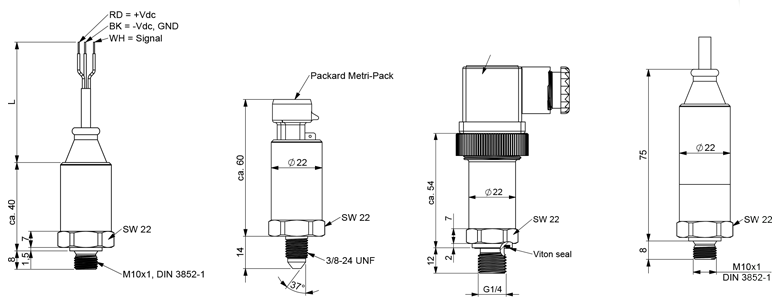
Inspiration for sensor applications for Sentech customers
Sentech closely follows the product news from its sensor partners. “Innovations and product improvements offer us inspiration for smart sensor applications with our customers,” explains Pieters.
”For pressure measurement issues, we draw on our knowledge and that of all our sensor suppliers. At Variohm, it's great that we can fine-tune the sensors to customer needs,” Pieters concludes.
Sensor knowledge is readily available
Sentech works closely with high-quality sensor suppliers, such as Variohm. Benefit from our diverse sensor expertise and the excellent agreements we have with our sensor partners.
Flamco did this by applying smart pressure sensors with an EMC filter in its Flexcon PA.
As a result, CV technicians experience less Unplanned breakdown visits!
Wearing face masks does not lead to more risk-taking behavior, and one-way traffic appears to be effective. Using a Social Distancing Sensor (SDS) also works when properly instructed. This is evident from a recent experimental behavioral study with real-time tracing by the Smart Distance Lab. Technology company Sentech is therefore launching the Social Distancing Sensor (SDS) on the market.
In the Smart Distance Lab, an initiative of the University of Amsterdam, cameras and sensors were used to measure how much distance people kept from each other. Researchers compared different interventions.
Sensor
The use of the Social Distancing Sensor leads to fewer contacts than when visitors do not wear a sensor. This tag provides direct feedback on behavior. The study also shows that this intervention must be clearly and consistently explained to visitors. People should also be able to try it out for a bit.
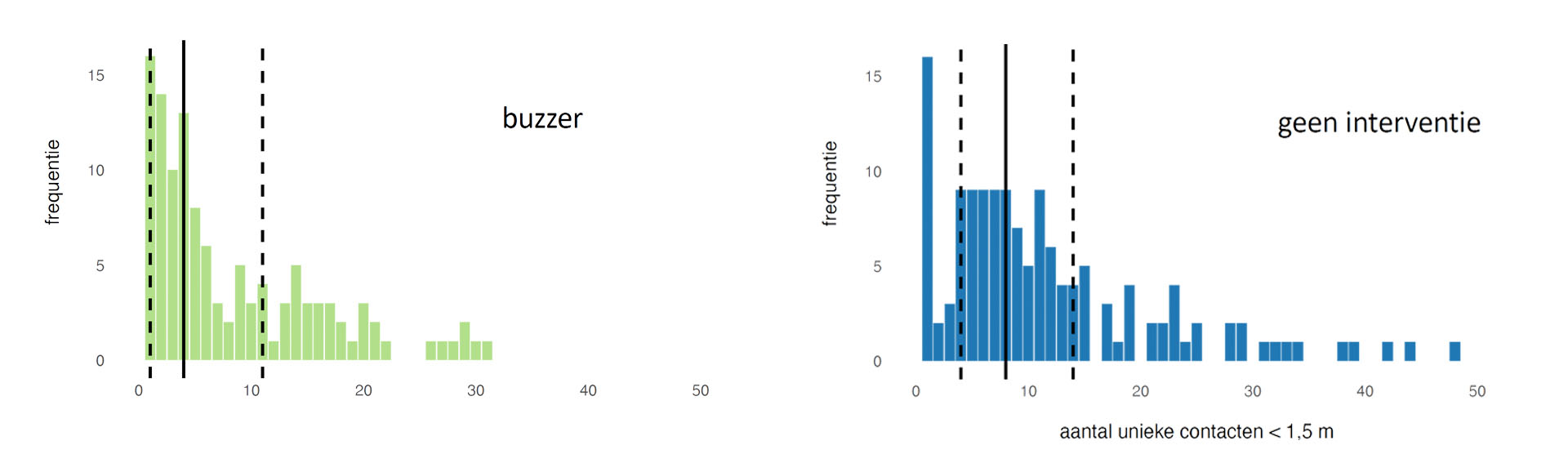
For example, the Social Distancing Sensor gives employees a warning signal if they come within 1.5 meters of a colleague with such a tag. There is a choice of different types of signals: vibration, sound, and/or light. The SDS not only makes office environments safer. Event and production locations, warehouses, and construction sites also benefit from such a solution.
Face masks and direction of travel
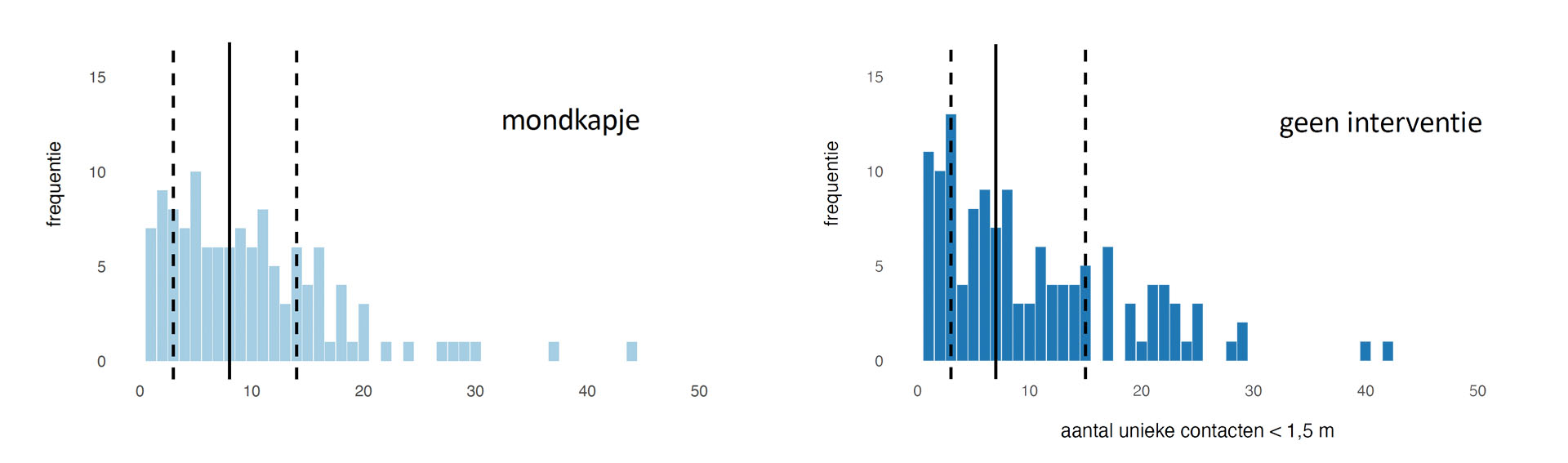
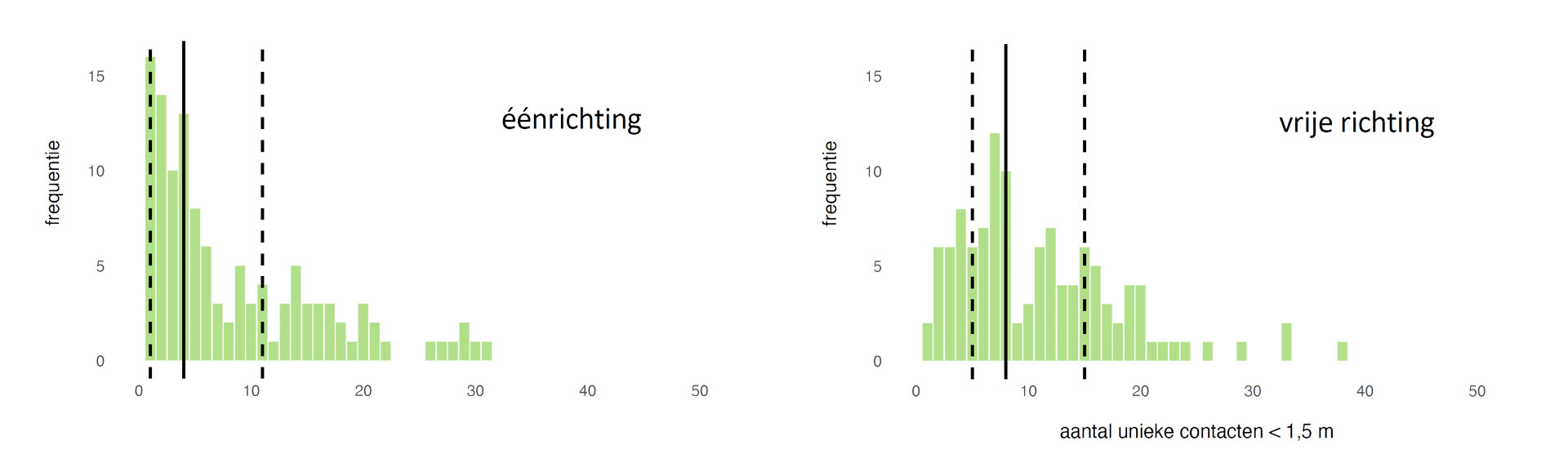
Wearing face masks does not lead to additional contacts. Visitors wearing face masks felt more protected than visitors without face masks. In addition, a one-way route leads to fewer contacts than a free-direction route. The distribution of the number of contacts that a visitor might be infected with is more favorable.
Reliability
Incidentally, there are other systems that alert users to maintain a distance of 1.5 meters from one another. The CoronaMelder app even notifies you if you’ve been near an infected person. The app uses Bluetooth to track proximity, which isn’t 100% reliable. “Whether you have a phone in your pocket also makes a difference,” Ron Roozendaal told NOS earlier. He is the Chief Information Officer at the Ministry of Health.
The CoronaMelder is now issuing around 10,000 notifications per day, even at distances greater than 1.5 meters. How reliable is the measurement then? The need for a system that is accurate is growing with the increasing number of Corona infections.
The ultra-wideband (UWB) technology is used in the Social Distancing Sensor. You can put it in your pocket or wear it around your neck, and the distance measurement is fully maintained. The measurements are much more accurate and reliable than, for example, Bluetooth. Sensor specialist Rob Pieters from Sentech: “Measurements are taken twice per second at the speed of light, with an accuracy of centimeters. You know immediately if you are too close to someone.”
Sentech is further developing its sensor software in collaboration with Focus Technologies. This will soon allow for measurements of how long people have been in contact with each other, when those contacts occurred, and where. Such time-based measurements are interesting for source and contact tracing. “For example, the GGD (Municipal Health Service) in Breda has already purchased sensors. They have many employees who work under high pressure, and maintaining a minimum distance of 1.5 meters is difficult in those situations,” says Pieters.
Best way to organize an event
“Larger events can be safe if carefully planned,” according to researchers at the Smart Distance Lab. The 1.5-meter rule needs a time duration specification. “With the specification ‘more than 20 seconds,’ we measure no contact in a corner with good airflow. This is important in communication from politicians to citizens.”
Based on the initial results, the research recommendation is that you best organize an event by applying one-way directional guidance. “You can also use a sensor that informs visitors whether they are succeeding in keeping their distance,” says the Smart Distance Lab. It is crucial to clearly explain to visitors how the Social Distancing Sensor works. They need to know what is expected of them when it activates.
“It would be fantastic if we could then link a reward to that; that the visitor with the fewest violations receives something (editor's note: a drink, an entrance ticket). We know that rewards work much better than punishments. By linking it to behavior in such a way, we can encourage social distancing,” the researchers conclude.
Frank Wijnveld, Crowd Management Expert at the Event Safety Institute, emphasizes this. He does so in this video: