

The integration of radar presents technical and regulatory challenges. What should be considered?
Legislation and regulations
When integrating a radar sensor, it's important to pay close attention to the frequency band in which it operates. Because radar is an electromagnetic RF signal, it can cause interference with other signals, such as the 5G Wi-Fi band. Radar is therefore subject to all sorts of restrictions, which often differ per country or region.
In England, for example, radar sensors are not allowed to operate in the 24 GHz band because it is reserved for the police, who use it for speed enforcement. And in the US, 60 GHz is permitted, but only if the signals travel vertically, as otherwise it could interfere with data communication. Therefore, it is allowed on a spray boom because the signal is directed at the ground. However, it is not allowed if such a construction can fold its arms and the signal is transmitted horizontally. System builders who want to sell their products worldwide will therefore have to comply with all regulations.
Recognize reflections
Beyond legislation and regulations, integrating radar sensors is not always technically straightforward. Unlike the sound waves of an ultrasonic sensor, the RF radio signal from a radar has high penetration power. This allows a radar sensor to see through objects and detect objects behind them, which is often very useful, but it also means it receives multiple reflections. Furthermore, some materials are permeable to radar, resulting in a weak reflection. The challenge lies in selecting the correct reflection(s) from all these signals. A skilled radar specialist can help OEMs with proper target selection.
Need help with radar integration?
Integrating radar is challenging: from regulations to recognizing reflections. Those who do it well will get the most out of the sensor and avoid surprises in practice.
Our radar specialists know exactly what to look for and can guide you through every step of the integration. Contact us and discover how we can efficiently and reliably integrate radar into your application together.
Ultrasound is a great choice in many applications, but there are situations where radar offers real added value. Whether for distance measurements, object detection, or level determination, radar is reliable and versatile.
The technology works in almost all weather conditions, has a large measuring range, and consumes little energy. This makes radar a smart choice for mechanical engineers looking for sustainable and efficient sensor solutions. Below you can read why radar is increasingly being used in the agricultural sector.
When you want to measure under certain weather conditions and pollution
One of the biggest advantages of radar is its robustness in various weather conditions. Rain, snow, and fog have little impact on its performance. Dirt also has hardly any effect because radar signals have a high penetration power; they simply see through it. This means that such a sensor can be placed behind a protective cover, if necessary. For example, if a robot is equipped with a radar sensor to orient itself in a stable, a user can more easily wipe away accumulated dirt.
2. If you want to see through crops (or other objects)
The penetrating power of radar offers significant advantages. For example, a radar sensor can measure through obstacles such as crops, making it suitable for measuring the distance to the ground, for instance. This is only possible with radar. An additional advantage in this case is that a radar sensor can also register speeds. This makes it possible to accurately monitor movements and anticipate them.
3. If you want to measure long distances
Radar has an enormously large range. Radar signals can easily cover kilometers. Everyone knows the radar systems with which, for example, airplanes or boats can be detected at great distances, but smaller radar solutions also cover large distances.
In addition, radar is suitable for measuring short distances. This has everything to do with the speed of radar signals: at the speed of light, the radar receives a reflected signal. It's so fast that the system has to react extremely quickly to track the signals. This means you have to compromise a bit on accuracy at very short distances. But with a precision of 2 to 3 millimeters, radar is often suitable even then.
4. If you consider longevity important
A radar sensor has no moving parts. Because of this, it is not susceptible to wear and tear and lasts a long time.
5. If you want a battery that lasts for years
The absence of moving parts also leads to low power consumption. This means a battery-powered radar system in, for example, a feed silo can easily last ten years.
Integrate radar: where are you?
Radar offers many benefits, but its integration requires attention. Consider technical choices, sensor placement, and regulations you must comply with. Those who go through these steps thoroughly will get the most out of the technology.
Discover in this blog what to consider and how to smoothly implement radar in your agro-application. Read on and make your project a success.
In the defense sector, the field is not a forgiving environment. From sand and dust to rain and extreme heat, only robust sensor technologies like lidar, radar, and high-quality encoders provide accurate and reliable measurements, enabling vehicles and drones to perform their tasks safely and dependably.
Lidar, radar, and encoders each offer unique advantages depending on the application, from autonomous navigation and distance measurements to angle and position measurement. Below, we discuss the features and applications of these technologies in defense applications.
Lidar: Measuring Distances for Autonomous Movement
Lidar uses laser pulses to measure distances to objects. The technology creates a 3D point cloud of the environment, enabling autonomous navigation. Lidar systems are widely used in autonomous aerial, maritime, and ground vehicles, such as mine detection robots.
Lidar is very accurate and performs well in varying light and weather conditions. There are rotating variants with a 360-degree view and compact solid-state lidars without moving parts, making them more resistant to wear and tear.
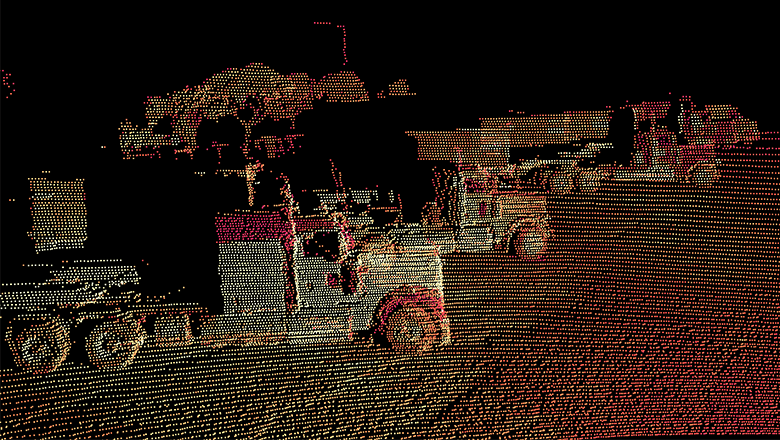
A 3D point cloud says more than a thousand words. This is the output of lidar.
Radar: measuring distances and levels
Radar sensors measure distance, speed, and level using radio waves. Thanks to the high penetration power of radar signals, radars can see through plastics. This makes the modules easy to install and usable in harsh and rough conditions. Weather influences and contamination do not affect the measurement results.
Radar sensors are very well suited for defense applications and the specific challenges of that sector. They are used not only for speed and distance measurements, but also for level measurements in silos and tanks, for example.
Encoders: position and angle measurement
Encoders measure the position, speed, and direction of a moving object. They are available in various technologies. For position and angle measurements, inductive and capacitive encoders are most suitable. They measure contactlessly, are insensitive to contamination, and meet the EMC requirements of the defense market.
Inductive encoders work with electromagnetic induction and are particularly robust. Capacitive variants measure with high resolution and are easily shielded within a housing – ideal for harsh environments.
The radar sensor measures distances, movements, and speed. By reflecting a high-frequency signal off an object, the sensor calculates the distance to the object. The transmitted signal is reflected by, among other things, buildings and liquids. This makes this distance sensor suitable for applications such as liquid level measurements, distance measurements in traffic, and object detection.
Unlike distance sensors such as ultrasonic and laser, radar can measure through materials like plastic. This allows for the invisible integration of the radar sensor into your application. Furthermore, this robust technology is insensitive to wind and moisture.
How do radar sensors work?
Radar works based on time of flight: the sensor measures how long a signal has been traveling. The integrated antenna of the radar sensor transmits a high-frequency signal (62 GHz), which is the transmission signal. A lower frequency (10 MHz) is also modulated within this signal. When the signal is reflected by an object, the sensor receives the signal back. The sensor measures the phase shift between the two frequencies. The time difference between transmission and reception determines the distance between the object and the sensor.
Frequencies create opportunities
Every frequency has unique properties. Depending on the frequency's height, you will have a different type of reflection or none at all. For example, with a 5 GHz radar, you can very effectively detect rain clouds at very large distances. That frequency reflects very well off moisture crystals. If you use a 60 GHz radar, for instance, it will not recognize rain clouds and will go right through them. However, an airplane or another object will reflect the signal.
Unlike radio signals from broadcast stations, radar sensor signals are reflected by buildings and liquids. This is because radar frequencies are higher. The higher the frequency, the less impenetrable a wall becomes, for example.
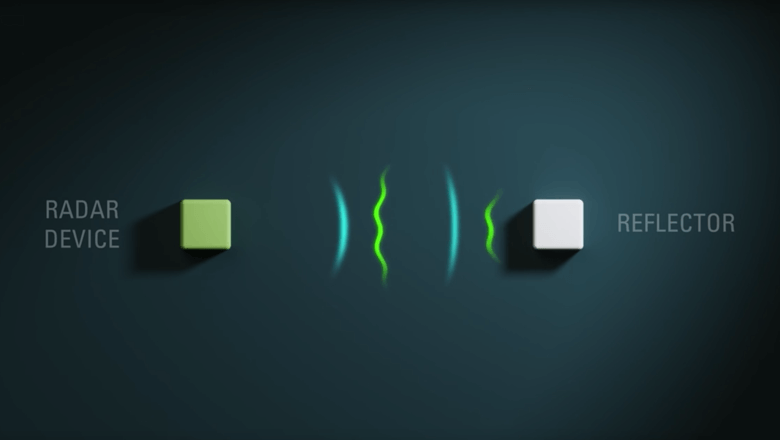
Radar is an abbreviation for Radio Detection and Ranging. This means finding and measuring (objects) using radio signals.
The alternative to ultrasound and laser
Besides radar, you can also measure distances using ultrasound and lasers. Each technology has its own advantages and disadvantages. For example, ultrasound sound signals cannot measure through materials like plastic and crops. Light signals from lasers are also hindered by these materials. Additionally, sound is sensitive to displacement by wind.
Unlike sound and light signals, radar signals can measure through most materials. Only metal objects cause the signal to be dampened. Thanks to these properties, radar is suitable for agricultural machinery, for measuring the distance to the ground, without crops affecting the measurement results.
Applications
You will find radar in both indoor and outdoor applications. The radar sensor is used for distance measurement, both at long ranges and at heights. Because every frequency has different properties, radar is suitable for a wide range of applications.
Liquid level gauge
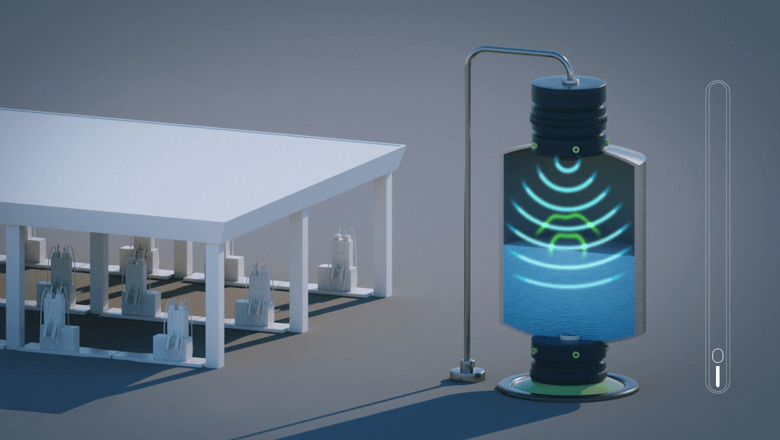
At the correct frequency, radar can measure the liquid level in a tank. The transmitted signal travels through the air to the liquid surface, which reflects the signal back. The sensor ensures reliable measurement, even under harsh conditions such as vapor and high temperatures.
Distance Measurement in Traffic
Radar is also used for distance measurements in traffic, such as adaptive cruise control in cars. Because the technology is reflected by metal at almost all frequencies, radar ensures a safe traffic situation.
Distance Measurement for Agricultural Machinery
In the agricultural sector, we also see radar making a return. For example, in the Agrifac spray booms. Here, radar sensors measure two distances: the distance between the spray boom and the ground, and the distance between the spray boom and the crop. The sensor also measures plant density.
5 benefits of the radar sensor
The properties of radar determine whether this sensor is a solution for your application. Here are 5 reasons to choose radar.
- Seamlessly integrate
Because radio signals can pass through plastic, the sensor can easily be hidden behind a plastic plate. This way, the technology does not detract from the design of your application. - Robust
Because radar is so easy to conceal behind materials, the sensor is not visible. This makes it robust and prevents vandalism. Furthermore, this integration protects the sensor from environmental factors such as moisture and dirt. - Suitable for demanding conditions
Compared to ultrasonic and laser sensors, radar sensors are less sensitive to rain, snow, heat, dust, steam, and dirt. Furthermore, measurements are reliable in strong winds because the transmitted signal does not blow away. - Many materials are measurable
Each frequency level has a different reflection and penetration on materials. If you want to measure a material or not, you can adjust the frequency accordingly. - Secure technology
The radar used by Sentech operates on a one-chip radar. This is a radar built on an Integrated Circuit (IC), or chip. Because of this small chip, you can transmit with minimal power. This makes this technology very safe for people and animals.
Challenges in radar integration
The radar's measurement range is 180 degrees. If the measurement range is too large for your application, it can lead to unreliable measurements. Sometimes you want to measure directly in front of the sensor and focus the transmission signal. In these cases, you place a dome over the radar sensor. Due to the time-of-flight difference between the different plastics, the transmission signal is focused to one point, similar to a directional antenna.
More measuring with sensor fusion
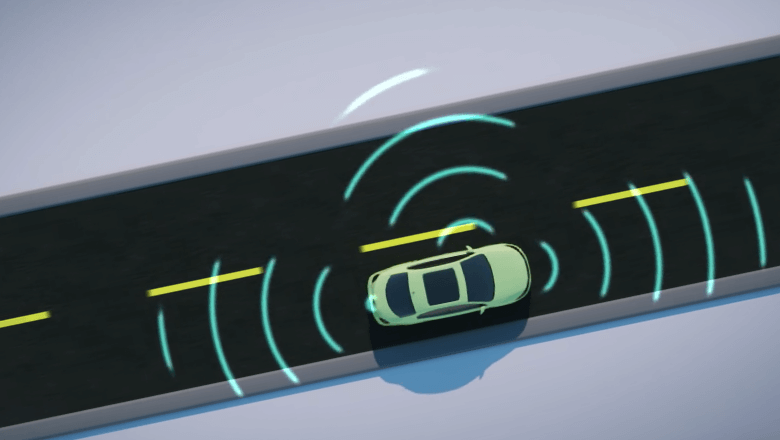
Combining multiple sensor technologies in one application. That's sensor fusion. This utilizes the benefits of both sensor types. Furthermore, the technologies eliminate each other's disadvantages.
This is how radar and lidar are combined to allow vehicles to drive autonomously, such as AGVs. Using two sensor types is necessary to ensure the safety of autonomous driving.
How do you integrate radar into your application?
If your application requires a distance sensor, the radar sensor can be an option. This robust technology can be invisibly integrated into your design. Moreover, the measurement results are reliable even in conditions such as wind, rain, dust, and high temperatures.
Whether it's liquid level measurement, distance measurement, or object detection, there's a good chance radar will fit your application.
The question is not if, but when fully autonomous driving will arrive on public roads. The latest Teslas can already do it, and Automated Guided Vehicles (AGVs) are commonplace. The vehicles of the future will combine advanced technologies. Here, you can read about which sensor technologies these are and what their advantages and disadvantages are.
A pilotless airplane or a driverless bus is possible in the foreseeable future. Only legal and psychological objections stand in our way; just as the steam locomotive caused controversy and challenges in the 19th century.
“Cameras and various types of sensors in fused sensor applications are the eyes and ears of the future drivers of our cars,” predicts business development manager Marco Leeggangers.
The evolution of autonomous movement
Autonomous driving was one of the main themes at the IAA Frankfurt this year. The automotive industry is working on technologies that enable completely autonomous movement in public spaces.
The automotive world uses a Scale level from 0 to 5. Level 5 for a fully automated car ride, while you read a book or watch a movie.
According to Leeggangers, all new car models must be automated at level 2 from 2018 onwards to receive a 4- or 5-star safety rating. “The car will then be equipped with Advanced Driver Assistance Systems (ADAS). Such as Automatic Emergency Breaking, Lane Assistance, and Road Edge Detection.”
Tesla has made the leap from ADAS to autonomous in its latest models. The latest version of Tesla's Autopilot is already balancing on the border of level 4 and 5.
Business applications: AGVs
Businesses have long been using autonomously guided vehicles (AGVs) for distribution applications in particular. In many distribution centers, automatic forklifts operate, and order picking is done by robots.
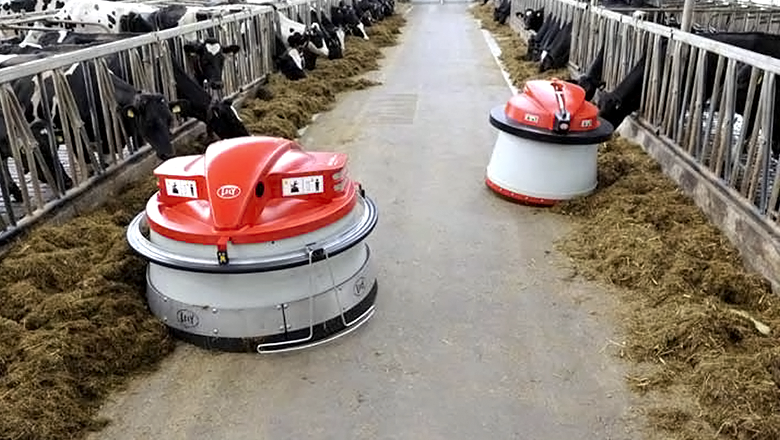
The Netherlands leads in innovation in Agricultural and horticultural automation met UAV's (drones) and AGV's (robots for cleaning stables, feeding livestock, and performing logistical tasks in greenhouses).
Why do we want self-driving vehicles?
Idlers: “In my eyes, this is a logical consequence of technological evolution. Actually, autonomous driving fits with the digital revolution because large amounts of sensor data need to be processed to react independently to the environment. Moreover, the self-driving car is part of the Internet of Things (IoT).”
The benefits of autonomous vehicles are numerous:
- Positive impact on traffic safety. Advanced computers can perform human tasks more efficiently, better, and safer.
- Better utilization of road capacity. Self-driving vehicles drive at shorter distances from each other. This allows them to utilize road capacity more efficiently, reducing and even preventing traffic jams.
- Improved car-sharing opportunities. The use of the self-driving car can be planned so that we can share it. The car for commuting can be available for someone else during the day. Autonomous driving will boost the predicted sharing economy.
- Sustainability: AGVs perform their tasks more efficiently than humans and save raw materials and energy in various industries.
- Productivity: An AGV never gets tired, can handle heavier tasks, and operates flawlessly.
- Cost savings: AGVs enable the full automation of distribution processes. Mobile robots also help reduce costs in agriculture and horticulture.
Detection challenges for distance measurement and positioning
To enable a vehicle to drive autonomously, it needs a comprehensive view of its surroundings. There are four detection challenges for dynamically generating an environmental model.
- 1. Determining the clear passing space on the road surface.
- Determining the geographical route via the navigable space.
- 3. Detecting moving objects (other road users and moving obstacles).
- 4. Recognizing and interpreting road signage, such as traffic signs, traffic lights, road markings, and other visual cues.
Sensor technology has advanced so much nowadays that there are solutions for all detection challenges.
Detection tools for autonomous vehicles
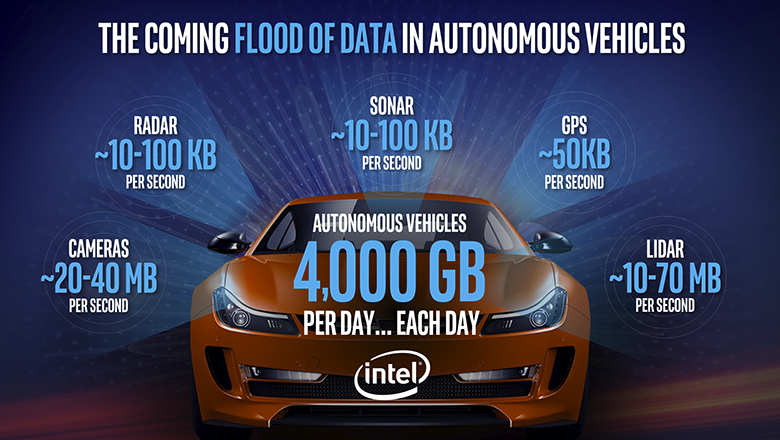
For autonomous driving and advanced driver-assistance systems, primarily radar, lidar, and sonar sensors applied. Combined with cameras and GPS, a vehicle thus dynamically scans its environment. Smart software processes the large amount of data, allowing it to always know its position relative to objects.
These techniques are possible because processors have become increasingly powerful and smaller.
Sensor technology development
Leeggangers indicates that Sentech plays a role in the development and R&D of sensor technology for AGVs. “For example, we already use radar, lidar, and ultrasonics in distance sensors and orientation sensors. As an independent sensor integrator, we are now working on integrating radar and lidar into compact ‘fused’ sensor applications.”
According to the Business Development Manager, sensor fusion leads to smarter and better customer applications, specifically in the area of autonomous movement.
Pros and cons of sensor techniques
The most promising sensor technologies for self-driving vehicles are lidar and radar. Lidar scans the environment with light (laser or infrared), while radar does so with radio waves. “The development of lidar and radar is progressing very rapidly. This is because processor chips are getting smaller and the technology has become more affordable,” according to Leeggangers.
Lidar has significant advantages in remote sensing. One of these is its high resolution, which is necessary for accurately detecting stationary and moving objects. On the other hand, weather conditions like fog and rain have a greater negative impact on accuracy. “Lidar is suitable for observing moving objects in the immediate vicinity of a vehicle,” explains Leeggangers.
Radar can see further, but as the distance increases, accuracy decreases. Therefore, according to him, radar is more suitable for remotely detecting moving objects in front of the vehicle.
The future of self-driving vehicles
“What's special is that the technological visions of car manufacturers differ. One prefers lidar, another prefers radar. The car manufacturers have a sensor-based system as a common starting point. We see a future with advanced fusion sensors in integrated sensor applications,” says Leeggangers.
He also sees new players on the autonomous driving market with a different technological approach, such as Google and Intel. Google has developed its own 3D technology, based on route information and 3D maps.
Intel, the processor manufacturer, has entered the autonomous driving market with the acquisition of Mobileye. The technology concern expects its first self-driving car on public roads in 2021. Intel uses the most advanced visual technology (cameras and software) in vehicles for environmental perception.
However, Leeggangers expects sensors to remain critical links in autonomous driving technology. “You will always need redundant sensor systems to supplement camera or GPS systems. No matter how advanced, anything can break. Redundancy will therefore become increasingly important as the fleet evolves toward full autonomy and driverless traffic.”
More about the development of lidar and radar
Sentech is focusing heavily on the further development of lidar and radar sensors, with an emphasis on sensor fusion. These are the most suitable sensor solutions for autonomous movement in public spaces and business environments.
Sensor fusion is the ultimate form of integration and enables next-generation automotive applications.