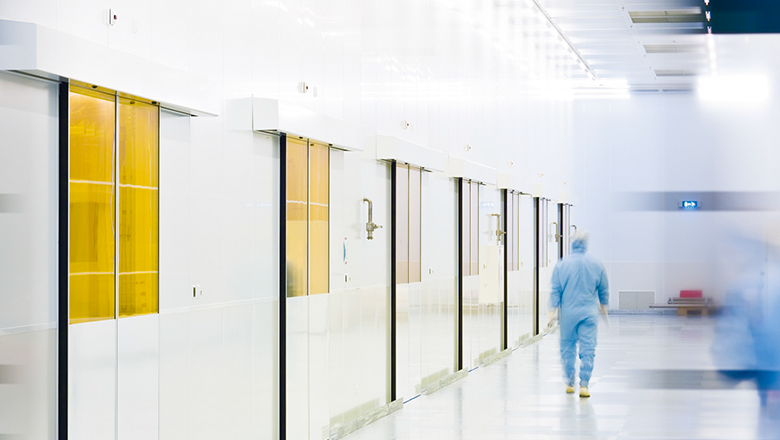
Brainport Eindhoven, a melting pot of high-tech companies, is home to a large number of Sentech's clients. These include OEMs within the semiconductor market and their specialized suppliers.
As their R&D partner, Sentech develops and supplies sensor integrations, often complete sensor assemblies: assies. In mid-2013, one of the module builders approached Sentech for a new OEM development.
As an R&D partner, Sentech has taken on this development. With its solution-oriented sensor and application knowledge, Sentech has already elevated many machines and precision technologies to a higher level.
The balance between the high demands of the semiconductor market and cost is a challenge.
The semiconductor industry revolves around precision mechanics and mechatronics. High-tech machines are used in cleanrooms to deposit extremely thin layers of material onto a substrate (wafer). Sentech develops high-quality sensor technology in the form of fully integrated sensor assemblies for, among others, ASML machines and various ASML suppliers.
These sensor solutions control and monitor transport processes to, within, and out of process areas, among other things. This yields valuable information with which the semiconductor industry can improve its machines and subsystems. Precision work at the nanometer level results in high quality requirements for all components of these systems.
This is contrasted by the need to keep costs acceptable, according to Peter Verstappen, account manager at Sentech. “Almost anything or a lot is possible, but that comes at a cost. Sentech feels right at home in that balance between technical and commercial feasibility. We find it challenging to develop the most optimal sensor solutions within an acceptable budget.”
Sentech's starting points are the client's problem statement and challenge.
Sentech regularly receives requests from semiconductor OEMs and their suppliers to be their R&D support. Verstappen: “We brainstorm with them about the sensor challenges in their designs. You mainly have to think about detecting, controlling, and measuring the transport process of wafers in and out of the process chambers.”
In the process rooms, the surface treatment of the wafer takes place. This requires extreme precision, but because the process occurs on such a small scale, it is not visible to the naked eye. Sensors are needed for positioning, controlling, and measuring the wafers.
Verstappen: “It starts with a functional requirements package for the process and function of a machine or system. We then translate that into mechatronics. Sentech then investigates which sensor technology is most suitable for control, steering, and measurement. It's about finding the sweet spot.”
Which sensor technology is best suited for this challenge? “Only then do we think about the form of a sensor. The integrated costs naturally play an important role in this.”
Semicon – sensors for transport, positioning, detection, and measurement
In the manufacturing processes of semiconductor machines, we distinguish several processes that are controlled, regulated, and measured by sensors. The first process is the feeding of semi-finished products into the machine. Sensors are needed to reliably select, detect, and then transport the products to the machine.
In the next step, surface treatment takes place in a process chamber. The temperature, any vacuum present, and any process gases will determine the sensor technology required there. In the final process step, the end product is moved from the process chamber to the appropriate location for further processing.
Verstappen: “In this case, selecting and developing the right sensor technology for the process space was the biggest challenge. The closer you get to the primary processing operation, the higher the temperature becomes. Normally, sensors and their internal electronics can withstand temperatures up to around 70°C. For this OEM's process space, we had to use sensors that can withstand temperatures up to 140°C.”
The process chamber currently contains temperature-resistant inductive proximity switches. “We also had to take into account special light wavelengths that cause most materials to age and degrade significantly. Sentech's extensive experience makes them knowledgeable in this area. For this application, we sought the best fit on the market in relation to the functional requirements and integration costs. We always try to find standard off-the-shelf sensor products for the assemblies, as development is not an end in itself.”
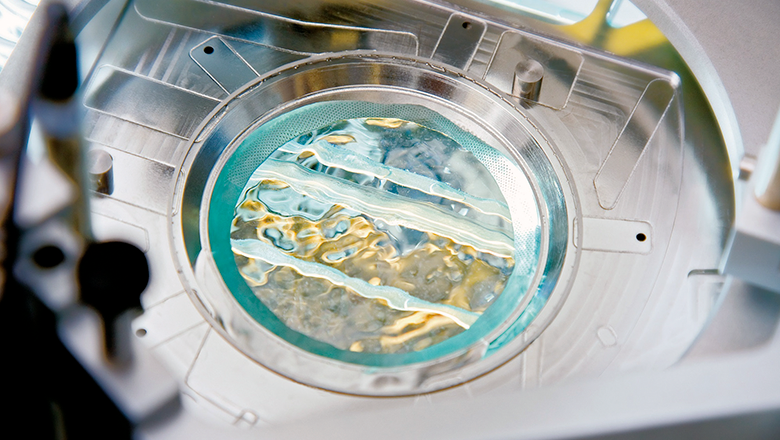
What is a wish and what is a requirement are crucial questions to ask to arrive at the most suitable solution. “For this client, sensor integration of standard components that were immediately deployable was the outcome for most positions. At a number of locations, we adapted the sensor's design to environmental requirements or dimensions. This led to a temperature-resistant proximity switch, including cabling and connector, and a temperature sensor in a special housing.”
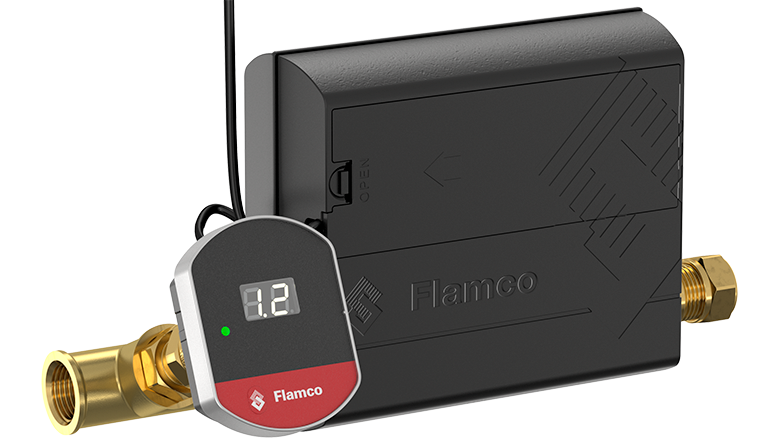
In total, seven different sensor technologies were used for this client, including: optical and inductive sensor technology, temperature sensors, O₂ sensors, optical encoders, fiber optic sensors, and non-contact radiation sensors (pyrometers).
R&D partner for semiconductors: working on sensor integration
Sentech works for many players in the Dutch semiconductor market. These are mainly concentrated in the three technology regions, where, not entirely by coincidence, the Technical Universities are also located.
Verstappen: “With this module builder, we started OEM development in 2013. After a relatively quiet intervening year, we were asked in mid-2015 to support the next development steps. Sentech now supplies a variety of sensors and assemblies used in these machines. As their R&D partner, we organize meetings with the involved engineers and system architects at essential moments. We do this to prevent email ping-pong and to avoid leaving interpretations to chance.”
Sentech takes the initiative in sensor development. “Our customers tell us that we are truly unique in this. The meetings contribute to the focus on technological and financial feasibility. And that's how we maintain momentum.”
For this client, there was still much to gain after the initial design, as not all sensor functions were yet delivered as completely validated sensor assemblies. “An assembly has many advantages: it ensures higher reliability because Sentech can test and perfect the complete assembly. Working with assemblies makes modular construction and assembly of the machines possible, which, in addition to guaranteeing quality, also results in a faster turnaround time,” explains the account manager.
Added value for high-tech manufacturers
In complex high-tech development processes, Sentech's added value truly comes into its own. Verstappen: “The more complex the technological challenge, the more necessary a sensor expert is. Sentech shines in such development processes. Where the large sensor manufacturers have to drop out, we can provide the best solutions at acceptable costs. We love technically complex questions and challenges.”
Furthermore, Sentech is very transparent with its clients and presents clear alternatives. “But we are not just a reliable R&D partner. The reliability and quality of our production, testing, and distribution processes are just as high.”
What Verstappen says is confirmed by Sentech's variety of quality certificates from quality institutes.
Here's how to implement sensor technology
Integrating successful sensor technology presents challenges. How do you prepare for environmental factors you are not yet aware of? And what sensor trends can you expect in the future as an engineer?
In our free e-book, you'll find answers to these, including practical examples of common sensor issues and solutions.