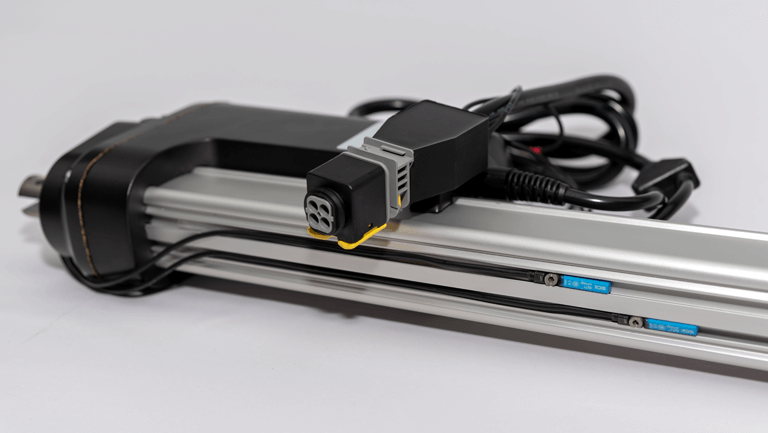
Through the integration of magnetic sensors, LINAK linear actuators are now easily adjustable. This allows end-users to adapt the stroke length of standard actuators to their application without programming the settings. Especially in markets with unique applications, the demand for diverse stroke lengths is high. Sensor integration thus provides a universal solution.
Sentech developed a ‘magnetic sensor assembly’ that allows the end user to set the stroke length of the linear actuator themselves. Discover how we integrated this sensor solution together.
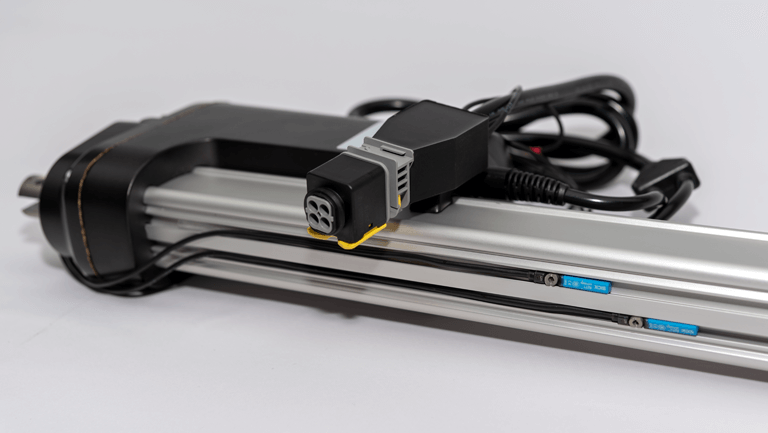
Through the integration of magnetic sensors, LINAK linear actuators are now easily adjustable. This allows end-users to adapt the stroke length of standard actuators to their application without programming the settings. Especially in markets with unique applications, the demand for diverse stroke lengths is high. Sensor integration thus provides a universal solution.
Sentech developed a ‘magnetic sensor assembly’ that allows the end user to set the stroke length of the linear actuator themselves. Discover how we integrated this sensor solution together.
How do you integrate a magnetic sensor into a linear actuator?
With its linear actuators LINAK for smooth push and pull movements. These actuators are found in a wide range of applications: from agricultural vehicles to adjustable furniture and industrial automation.
They were looking for a way to integrate a magnetic sensor onto their linear actuator. This allows the end-user to set the stroke length themselves, without a software adjustment. Many of LINAK's customers create custom products, which means the stroke length needs to be adapted to the application.
Henk Lafeber, Account Manager at LINAK, explains: “Every application is different in size, which means the stroke length needs differ. This requires settings. How do we solve this without pre-programming? In many markets, it's difficult to determine in advance what exact lengths are needed. We want a universal product that can be adjusted during actuator implementation.”
Collaborating for sustainable sensor integration
Lafeber explains that a link already existed between LINAK and Sentech: “In the past, we met during networking events. We ourselves were considering a sensor as a possible solution, so it was a logical step to enlist Sentech's help.”
LINAK already had an idea of how to solve this and created a prototype themselves. With this concrete idea, they approached Sentech.
“Our prototype was a good start, but it didn't meet all the requirements yet. Sentech asked critical questions: Does the product need to be waterproof or water-resistant? What IP ratings are needed? What currents flow through the wires?’ We hadn’t thought extensively about those aspects ourselves,” says the Account Manager of LINAK.
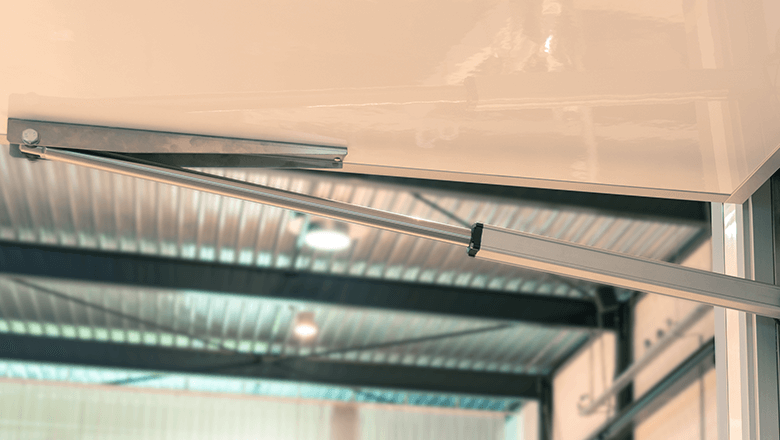
Integration of magnetic sensors on the actuator spindle. The end-user can now easily set the actuator's stroke length themselves.
Logical technology choice: magnetic sensor
The technology choice for this application is not surprising. In the past, when designing the actuator, future needs have already been taken into account. For example, the spindle nut is equipped with a magnet.
“As soon as the magnet reaches the sensor, there is a switching moment. The motor then no longer receives a steering signal, causing the actuator to remain in that position,” explains Wolters.
Important quality requirements for the sensor solution
Then the following challenges crossed the project. How do we ensure that the magnetic sensor can be easily integrated by the end-user along with the actuator? And that it is also waterproof?
Based on the quality requirements, Wolters was looking for a connector: “Ultimately, we proposed a future-proof connector that meets the specifications. The prototype LINAK had made had six or seven wires. We reduced this to four wires. The design also included double crimps, which are disastrous if you want to make a product waterproof. Using the prototype as a basis, we devised a solution that meets all requirements.”
The end product, the ‘magnetic sensor assembly’, had to be easy to integrate onto the actuator. The solution is designed so that end-users can connect the actuator and the sensor assembly themselves.
Listening to end-user needs
Halfway through the ride, an additional question arose. Besides an assembly with one sensor, LINAK also wanted an assembly with two sensors. Lafeber: “When we went into the field with the actuator with one sensor, we discovered that there was also a need for actuators with two sensors. With one sensor, you can only set the outgoing movement. If the user also wants to set the incoming movement, a second sensor is needed.”
The LINAK Account Manager continues his story: “This is particularly valuable for applications in the market segment for trailers. They don't build in series, but build something different each time. This means that a different stroke length actuator is needed for each build. Now the builder can adjust the actuator on the trailer themselves.”
Creative engineering process
A waterproof housing had already been developed for the ‘magnetic sensor assembly’ with one sensor. The mold for making the overmold was also already available.
“Thanks to the creativity and flexibility of our Engineers, we found an efficient solution for this. With an insert, we could also make the housing for the assembly with two sensors using the same mold. This was more cost-effective than making a second mold. We also simplified the product. That's why it's good to always have a Project Engineer thinking along,” explains Wolters.
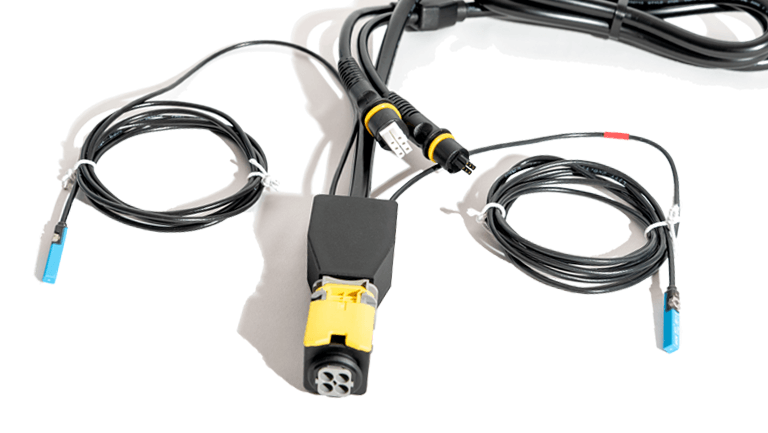
‘Magnetic sensor assembly’ with two magnetic sensors. The second sensor allows for the adjustment of both the outgoing and incoming movement of the actuator.
Monitoring quality with project management
With this sensor integration project, we also followed our work processes. This way, we can be sure that the sensor assembly will have the same quality level in the future as the first assembly.
“The process from the development assignment to the first series production took 5 months. Such a lead time is necessary to go through all process steps of our way of working. We identify risks and ensure quality,” Wolters explains.
Lafeber: “In one year, we went from a complicated solution to a simple one. That's where Sentech's greatest added value lies. Ultimately, we have a good product. A product with which we can help customers in diverse markets: from agricultural vehicles to market stalls and yachts.”
Innovative sensor solution: adaptable standard product
To supply countless applications with a linear actuator with the correct stroke length, only two types of magnetic sensor assemblies are now needed. The actuators are standard LINAK products. With this innovative sensor solution, the customer can now adjust the drives themselves.
“We supply two different motors that differ in installation size and maximum stroke length. The customer's installation size determines the choice of motor. The vehicle manufacturer or user then adjusts the stroke length themselves. This way, I can serve a large group of customers with a standard product,” says Lafeber.
Adjust stroke length at any time
Even after integration, the end-user can easily adjust the stroke length. For example, with an actuator in a mower, so the farmer can set the mowing height themselves.
Setting the stroke length is self-explanatory. If the user wants a different stroke length, they simply move the sensors in the actuator. Lafeber: “The assemblies with sensors are also sold separately, so end-users can integrate them into their actuator later on as well.”
This is how you integrate successful sensor technology
Integrating successful sensor technology presents challenges. How do you prepare for environmental factors you are not yet aware of? And what sensor trends can you expect in the future as an engineer?
In our free e-book, you'll find answers to these, including practical examples of common sensor issues and solutions.