

A smart pressure sensor with an EMC filter in Flamco's Flexcon PA proved to be the solution to a major problem for heating engineers: unplanned service calls without any actual defects.
Two years ago, Flamco wanted to predict the lifespan of expansion vessels in heating systems using a smart pressure sensor application. However, market research revealed that heating technicians had no need for this. They did, however, appear to be looking for ways to reduce unplanned service visits, which were eroding already fragile profit margins.
In an open innovation process, Flamco and the independent sensor supplier Sentech have developed a revolutionary product centered around a smart and extremely accurate pressure sensor: the Flexcon Pressurization Assistant with an automatic refilling unit. The pressure sensor is neither a high-pressure sensor nor a low-pressure sensor.
The advanced pressure monitor is now on the shelves of wholesalers and in the service vans of heating engineers.
Red expansion vessel next to the central heating boiler, usually from Flamco
Most consumers don't realize they have Flamco products in their homes. There's a good chance the red expansion vessel near your central heating boiler is made by Flamco. Flamco develops and manufactures installation products and fittings.
According to Flamco, there's a Flamco expansion vessel in every mechanic's van. It was installers who gave Flamco a revolutionary idea for accurate monitoring of pressure in a heating system.
Flamco introduced the idea as the Flexcon Pressurisation Assistant at the world's largest installation trade fair, ISH 2017 in Frankfurt. Starring a smart pressure sensor from Sentech.
R&D for the installation industry
With its own R&D department, Flamco is working on the world of tomorrow. Its innovations focus on sustainability, efficiency, and connectivity. A sustainable example is the Ontgasser Vacumat Eco, which prevents damage and malfunctions in a heating system.
From the brain of Flamco's R&D department also comes the Flexcon PA. A cost-saving innovation that the installation industry, according to Flamco, has been eagerly awaiting.
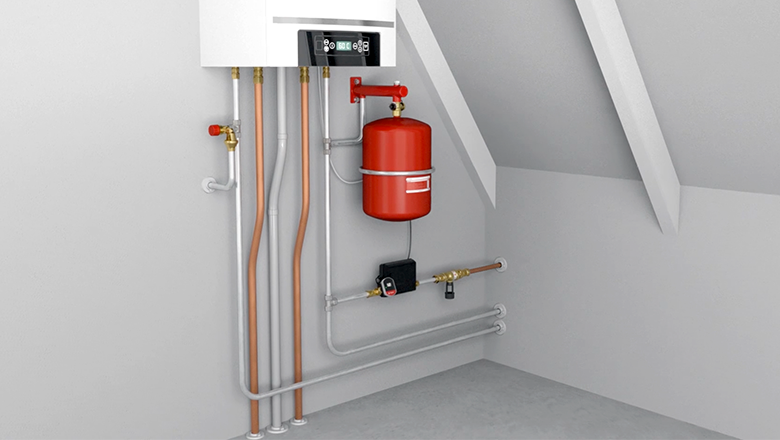
Pressure sensor application for expansion tanks
Spiritual fathers Herman Reezigt, R&D team leader, and Erik Hoenderkamp, product developer, talk about sensor development and collaboration with Sentech.
Flamco looked for a way to predict the lifespan of expansion vessels. An expansion vessel compensates for dynamic volume in the heating system with an air cushion. However, the air cushion disappears over the lifespan, and the vessel's membrane wears out.
Reezigt: “An expansion vessel lasts an average of 7 to 10 years. A Flamco vessel lasts even 15 years. With our open attitude towards suppliers and installers, we thought they would benefit from predicting the lifespan of the expansion vessel. With a pressure sensor application, we could warn when an expansion vessel needs replacing.”
Installation industry asks for a solution to unnecessary service calls
When Flamco tested the market, the installation sector turned out to be less eager for such an automatic warning, according to Reezigt. Reezigt: “Most installers replace an expansion vessel every five years, so well within its technical lifespan. We did receive valuable feedback, which allowed us to take a different direction with the same sensor technology.”
According to Reezigt, two out of three unplanned maintenance visits are due to pressure loss in the central heating system. Reezigt states, “Installers and service technicians usually work on the basis of service contracts, in which they are not paid per malfunction. In most cases, a malfunction simply involves refilling the system. Therefore, installers were looking for a solution to reduce unnecessary visits and automatically refill systems.”
Accurate pressure sensor monitors heating system pressure
As product developer, Hoenderkamp coordinated the development in-house. Hoenderkamp: “The Flexcon PA has become an extremely handy tool that very accurately measures the pressure in the system. We have linked an automatic refilling device to this. We supply this optionally with the sensor.”
The sensor's measurement data is used for a mobile app that customers download from the Apple App Store and Google Play Store. “During the initial setup, the device even screens the entire heating system. It learns the installation based on subtle pressure differences during the heating cycle. From this, it calculates the ‘hardness of the installation,’ in other words, the specific behavior,” according to the product developer.
The sensor then uses that number as a reference number throughout its entire lifespan. Hoenderkamp: “The pressure sensor must always remain stable and reliable. It only measures subtle pressure differences. But the device is so smart that it can measure and predict a lot based on that.”
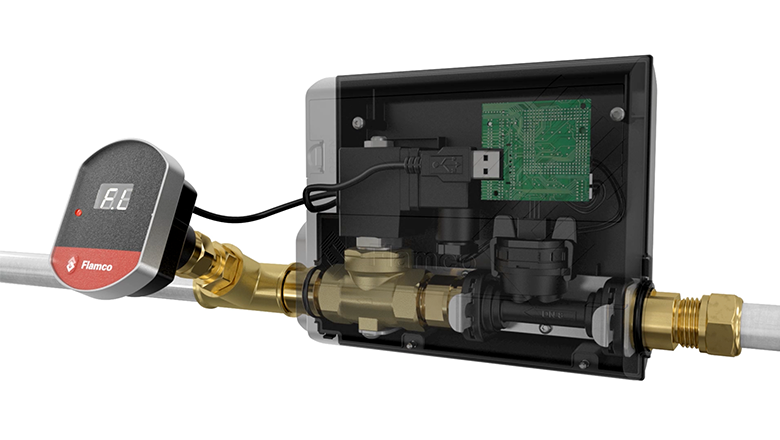
Preventive e-assistant for central heating system installers
The Flexcon PA enables installers to monitor pressure in a heating system long-term and intervene preventively in a timely manner. The data from the app offers technicians a wealth of information.
The app shows, among other things:
- or the expansion vessel is about to fail
- or the safety valve emits water
- whether there is a leak in the system
- if the installation needs to be refilled
The automatic refill unit makes it completely easy for installers and customers. According to Reezigt, installers can organize central heating maintenance much more efficiently with the Flexcon PA.
Product development around sensor technology
Reezigt and Hoenderkamp didn't initially know exactly what requirements to set for the product or which sensor specifications that would lead to. Sentech's help came at the right time.
Hoenderkamp met an account manager from Sentech at a trade show. An appointment at Sentech for a presentation soon followed. Reezigt: “Before we got in touch with Sentech, we thought: how difficult can it be? During that presentation, things came up that we had never thought about. That's when you realize we simply lack that knowledge.” According to Hoenderkamp, Sentech, as an independent sensor supplier, has become “a real knowledge partner” that has guided Flamco.
Hoenderkamp continues: “We developed the housing, interface, electronics, and software around the pressure sensor. The Flexcon PA had to be ready for production for ISH 2017.”
“During this open innovation process, Sentech and Flamco have grown much closer,” says Reezigt. “We saw that Sentech is a company that really knows what it's doing. Despite our position in the market, we are still quite small. You need a flexible yet decisive partner in that case,” according to Reezigt.
Sensor Challenge: Lifespan, Reliability, and Price
Sentech creates a sketch of the sensor solution after the initial contact with Flamco. That sketch was perfected by Hoenderkamp. The main challenges for sensor development were:
- a very narrow constant measurement resolution
- the reliability over a lifespan of at least 15 years
- and the cost
Reezigt: “The wholesaler buys our products and sees our broad program as a major logistical advantage. This allows them to optimally serve installers and construction companies. However, the lowest possible price is a crucial condition for the marketability of the Flexcon PA. Furthermore, the regular adjustment of the scope was a challenge. A partner really needs to be able to handle that!”
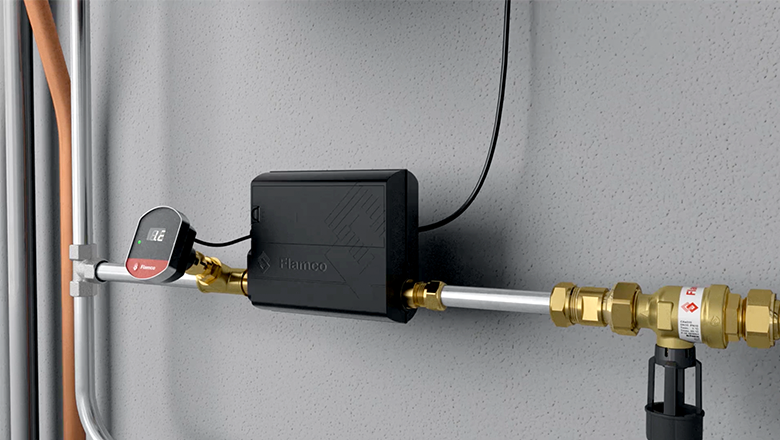
Custom sensors from the automotive sector
There was no clear picture yet of what Flamco was looking for. Based on the objectives, I thought about the direction for sensor development. What do I need and where can I get something that fits the concept? When you think about it, you automatically arrive at the automotive industry. There are large volumes, reliable products, and they are ISO TS-certified companies. They understand what quality is.
All specs, all pros and cons were laid out. Over the course of the ride, more and more fell away. I finally ended up in China with a company that makes sensors for automotive coolant systems. Pressure measurement in such a system is almost comparable to a heating system.
Knowledge partner sensor technology
Reezigt: “We have found a reliable knowledge partner in Sentech. Sentech is very flexible. It's nice to notice that Sentech is fully committed. Director Marcel Figge's enthusiasm is also contagious.”
Hoenderkamp adds: “Keeping agreements is very important in such a development. You shouldn't have any surprises leading up to a deadline. The product simply had to be available for the ISH. We had confidence the whole way through that it would turn out fine.”
You can come up with something beautiful, but in the end, you have to be able to sell the product on the market. Moreover, communicating via Bluetooth with an app requires a lot of integration expertise. Despite the high demands, we were still able to create a solid business case.
Fine-tune Electromagnetic Compatibility with an EMC filter
During development, Sentech and Flamco refined the sensor specifications to a Proof of Concept. You still encounter a number of challenges, such as adjusting the EMC sensitivity of the sensor.
Electromagnetic radiation interference caused too much fluctuation in the measurement of subtle pressure differences. We succeeded in minimizing the electromagnetic interference with a redesign of the sensor circuit and additional software filtering. The demo version then passed the test flawlessly.
On to the next sensor development
The Flexcon PA is now on wholesalers“ shelves and making its way to installers and their customers. Reezigt: ”It is suitable for heating systems up to 45 kW. You find these in homes and small offices. However, there is increasing demand for larger systems in bigger buildings."
There are plans for further development towards application in larger installations, but also in hybrid heating systems. “In that regard, there is still much in store for our collaboration with Sentech,” Reezigt concludes.
Innovate to prevent
Flamco started an open innovation process and came up with the best solution with Sentech. Are you also looking for good sensor tools to improve maintenance and service provision? Or are you experiencing a lot of unplanned breakdown visits?
Prevent these directly and explain to us Your challenge Fore!
With a Sentech vacuum sensor, Delmic's SECOM 2.0 is conquering the international microscopy world. This is the only device in the world that enables fluorescence and electron microscopy in one integrated setup. The unique microscope is compatible with all types of SEM electron microscopes.
Sentech has developed a vacuum-compatible optical encoder solution for sample positioning in the vacuum chamber. The independent sensor integrator supplies the solution as a sensor assembly, allowing Delmic to easily integrate it into the SECOM 2.0.
Combination of fluorescence and electron microscopy
At Delmic, 13 people work on the development and manufacturing of high-quality microscopy technology. Its product range offers SPARC solutions for materials research, and SECOM solutions for biomedical research, among others.
“Delmic combines fluorescence and electron microscopy in the SECOM system,” begins Andries Effting, CTO and co-founder of Delmic. The correlative light and electron microscope (CLEM) can be integrated as a module into almost any scanning electron microscope (SEM).
The physicist is building on research from TU Delft and AMOLF with his colleague Sander den Hoedt. In 2011, that research resulted in the SECOM 1.0 prototype.
“It took us about 2 years to bring a suitable microscope to market from the prototype. The SECOM 2.0 looks very different from the prototype, but the concept has remained the same,” according to Effting.
With the high-tech microscopy technologies in Delmic's system, scientists are conducting groundbreaking biomedical research.
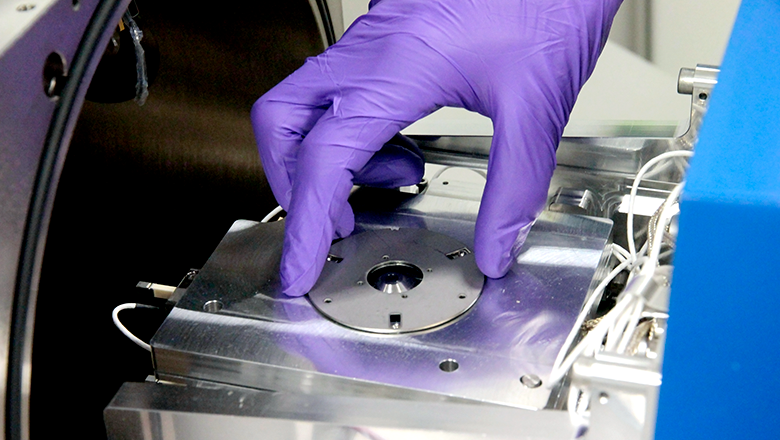
Fluorescence microscopy
Fluorescence microscopy, invented in the 1970s, is an optical method for investigating cell function. Researchers add chemical markers to a specimen, which bind to specific proteins.
In the image produced by the microscope, the marked proteins light up in various colors. Proteins are responsible for all processes in living cells. With fluorescence microscopy, scientists gain insight into processes that lead to disease.
Electron Microscopy – TEM and SEM
A electron microscope shoots a beam of electrons toward the specimen to be examined. Accelerated electrons have a much smaller wavelength than photons (light), allowing for a resolution that can be 2000 times higher than an optical microscope.
A transmission electron microscope (TEM) shoots an electron beam through the specimen, creating a kind of slide projection. The method allows for magnifications up to one million times: 0.1 nanometers.
A scanning electron microscope (SEM) focuses electrons towards the material and captures the backscattered electrons point by point to create an image. SEM enables magnifications up to 100,000 times and very sharp 3D images.
Benefits of CLEM for medical science.
According to Effting, Delmic's CLEM has several advantages over standalone systems:
- Ease of use
The researcher no longer needs to make two recordings with separate devices and then process them in software. - New research opportunities
Short-shelf-life preparations can be investigated. The actual uptake of a preparation takes only 1 minute. - Technical quality of the recordings
The recordings offer incredible levels of detail that are not possible with other devices. - Time saving
When research time is a factor, the system offers enormous time savings. Short machine time, for example, allows for rapid population studies.
Featured Benefit: Open Source Software
Effting jokingly calls his company “a photo company.” This explains Delmic's choice to offer its customers open-source software for image processing. “The software just has to be good,” he believes.
“Excellent software ensures a better product experience. We see our software as the instrument's calling card. Competitors leave gaps there. When our customers discover a bug or problem, we simply fix it. They don't have to wait for releases and updates, and they don't pay license fees, but they do pay for the actual support provided. Open source offers transparency to the user. The code is simply online,” according to the CTO.
Integration into almost all SEM types
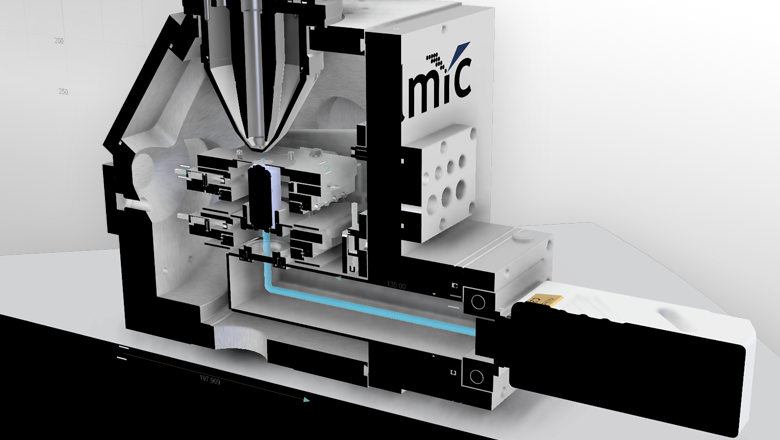
“We provide the optical microscope and software,” Effting explains. “There are plenty of companies that supply excellent SEMs. Our system fits on the SEMs of the five major suppliers, such as ZEISS, Tescan, Hitachi, Fei, and JEOL.”
The SECOM stage replaces the SEM stage. Effting continues: “For this, we developed microscope-specific interfaces. We optimized the software for each SEM type. Our customers can order the SECOM as an option from the SEM supplier, or directly from Delmic.”
Groundbreaking bioscience research
Delmic's CLEM microscopes are now finding their way to various universities and research institutions around the world.
Dr. Ben Giepmans The microscope is used, for example, in diabetes research by his cell biology research group at the University of Groningen.
He and his scientists are focusing on the Islets of Langerhans in the pancreas. They are thus investigating the triggers and new treatment methods for type 1 diabetes.
The Francis Crick Institute, under the leadership of microbiologist Lucy Collinson, uses SECOM for cancer research, among other applications.
Vacuum sensor development for the vacuum space
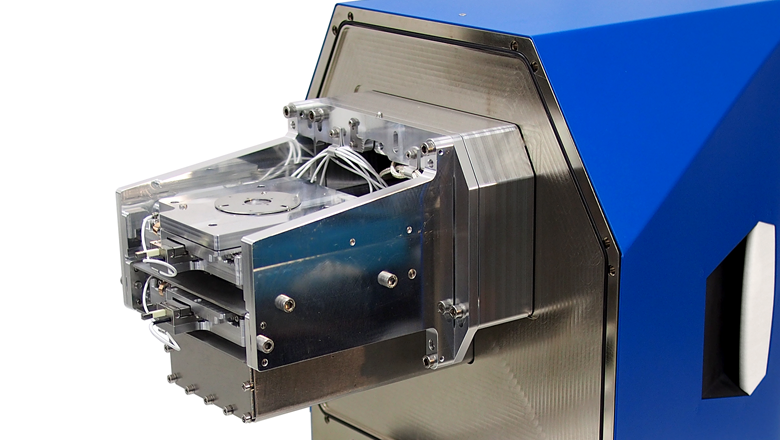
The SECOM 2.0 owes its extreme accuracy and high resolution to a unique optical vacuum sensor. Sentech supplies the customized MicroE optical sensors in a fully tested and calibrated assembly.
Delmic receives three sensor assemblies per CLEM system, one for each axis of movement, which can be quickly and easily assembled.
Encoder sensor MicroE for precise positioning
Delmic was looking for a reliable sensor solution for accurately positioning the sample in the vacuum chamber. Sentech came onto Delmic's radar after a Google search.
This led to a joint search for a suitable sensor solution based on the accuracy requirements and the circumstances of the internship.
Peter Verstappen, account manager at Sentech, explains the development process. “The challenges were: accuracy, vacuum conditions, and the limited installation volume. We're talking about nanometers and an extremely precise focal point for the optical microscope.”
Accurate position sensor – material usage and low energy consumption
The vacuum limited the search spectrum for the position sensor in terms of material usage and energy consumption. In a vacuum, outgassing occurs with various materials such as plastics, which ‘contaminates’ the sample and environment.
Another problem is the lack of air cooling. Therefore, a sensor was needed that generates as little heat as possible.
“We put the entire MicroE line, along with a position sensor, through testing, as well as a number of competitors. Based on the specifications, the 90% was immediately ruled out,” said Verstappen.
Effting reacts: “We quickly agreed on the application of a MicroE optical encoder. It was pleasant to be able to talk about our wishes and the specifications in an easy way.”
How an optical encoder works
The optical sensors determine their position on the motion axis using a read head and a very fine ruler, on which a pattern of lines is placed with a period of 20 µm.
The linear optical encoder does not contain an LED as a light source, but a VCSEL-controlled element that requires much less energy. The absence of a lens also contributes to the most compact possible position sensor.
“We adjusted the ruler according to the accuracy requirements,” said Verstappen. The light source shines on a pattern of reflective and non-reflective stripes, creating ‘nodes’ in the reflection pattern.
These are coinciding crests and troughs of the specific wavelength and are captured by the sensor receiver. Similar to the principle of light passing through a diffraction grating. This way, a displacement can be made visible per period in a movement.
Incremental measuring system with interpolation
The incremental measuring system converts movement into counting pulses. The movement is accurately controlled with respect to a fixed unique point on the ruler: the index.
Verstappen on accuracy: “The sensor interpolates the intrinsic period of 20 micrometers to steps of 1.2 nanometers, or a multiple thereof. We needed the highest accuracy for the z-axis movement.”
He continues: “For cost and handling reasons, we have decided to use the optical nanosensor for each axis.”
High-quality materials in optical sensor assembly
Sentech and Delmic have paid a lot of attention to the quality of the other components, in addition to the specific sensor. Effting wanted to avoid discussions with various suppliers about sensor components.
“We offer a high-tech system. Then you shouldn't skimp on costs with cheap connectors and cabling, for example. You don't want hassle about liability afterwards.”
Semiconductor industry experience
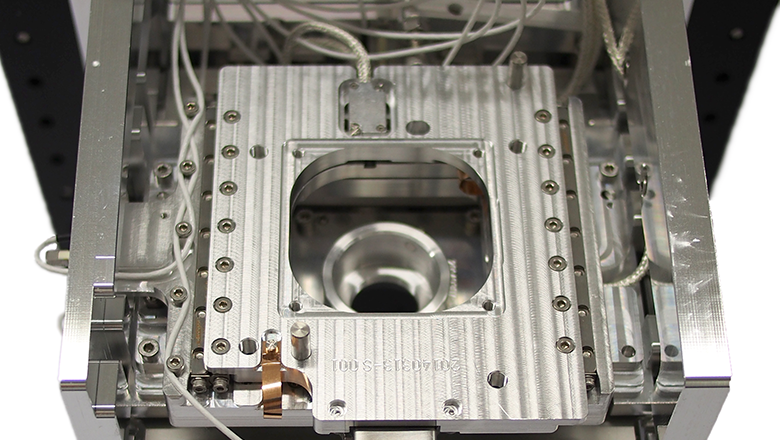
Sentech utilized its experience in the semiconductor industry. “That's why we chose the standards and high quality from the semiconductor industry and advised Delmic to solder the connections rather than screw them,” explains Verstappen.
The semiconductor experience also led to the logical choice of producing and packaging the sensor assembly in Sentech's cleanroom.
“Sentech makes it incredibly easy for us because we know that the complete sensor application has been tested. In our assembly facility, we just need to take the sensors out of the packaging, and we can assemble them directly and quickly,” says the satisfied Delmic founder.
Conquering the world with reliable sensors
According to Effting, satisfaction with Sentech doesn't just stem from the pleasant collaboration in an open development environment. “The SECOM 2.0 has been on the market since 2013. To date, all sensors have been working flawlessly. The promised specifications and performance have been delivered.”
The SECOM platform has proven its worth and is slowly but surely conquering the microscopy world.
Your outcome too?
For reliable sample positioning in a vacuum environment, a vacuum-resistant optical encoder was the solution for Delmic. Are you also looking for a reliable sensor solution for your positioning and control challenges?
Let us Your challenge and we'll help you!