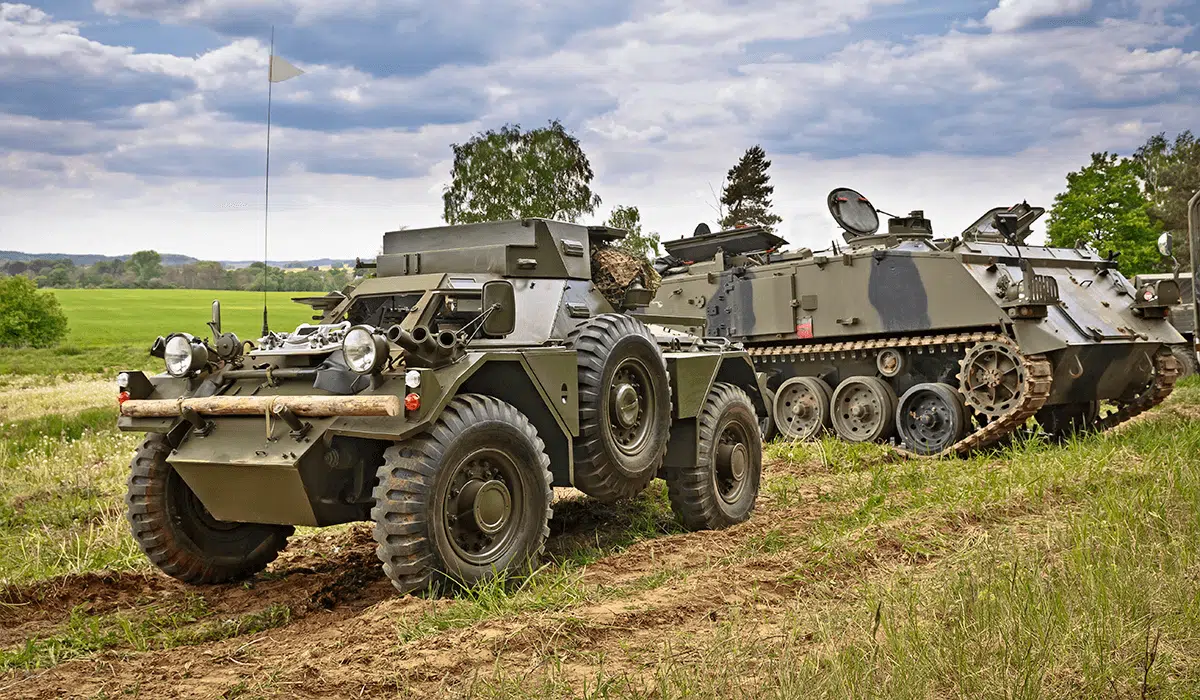
In the defense sector, the field is not a forgiving environment. From sand and dust to rain and extreme heat, only robust sensor technologies like lidar, radar, and high-quality encoders provide accurate and reliable measurements, enabling vehicles and drones to perform their tasks safely and dependably.
Lidar, radar, and encoders each offer unique advantages depending on the application, from autonomous navigation and distance measurements to angle and position measurement. Below, we discuss the features and applications of these technologies in defense applications.
Lidar: Measuring Distances for Autonomous Movement
Lidar uses laser pulses to measure distances to objects. The technology creates a 3D point cloud of the environment, enabling autonomous navigation. Lidar systems are widely used in autonomous aerial, maritime, and ground vehicles, such as mine detection robots.
Lidar is very accurate and performs well in varying light and weather conditions. There are rotating variants with a 360-degree view and compact solid-state lidars without moving parts, making them more resistant to wear and tear.
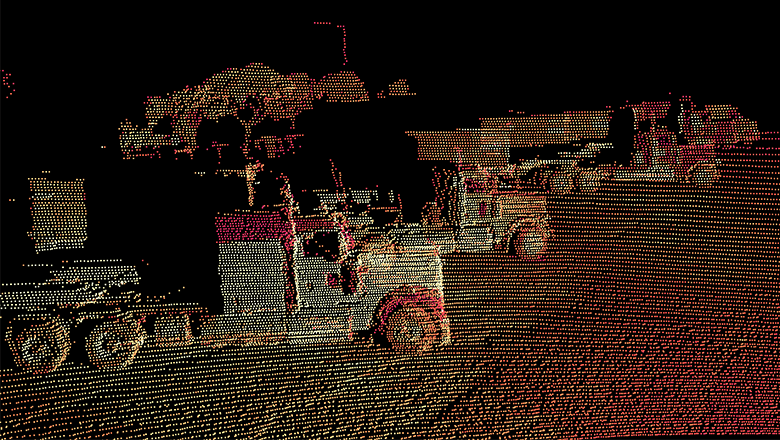
A 3D point cloud says more than a thousand words. This is the output of lidar.
Radar: measuring distances and levels
Radar sensors measure distance, speed, and level using radio waves. Thanks to the high penetration power of radar signals, radars can see through plastics. This makes the modules easy to install and usable in harsh and rough conditions. Weather influences and contamination do not affect the measurement results.
Radar sensors are very well suited for defense applications and the specific challenges of that sector. They are used not only for speed and distance measurements, but also for level measurements in silos and tanks, for example.
Encoders: position and angle measurement
Encoders measure the position, speed, and direction of a moving object. They are available in various technologies. For position and angle measurements, inductive and capacitive encoders are most suitable. They measure contactlessly, are insensitive to contamination, and meet the EMC requirements of the defense market.
Inductive encoders work with electromagnetic induction and are particularly robust. Capacitive variants measure with high resolution and are easily shielded within a housing – ideal for harsh environments.