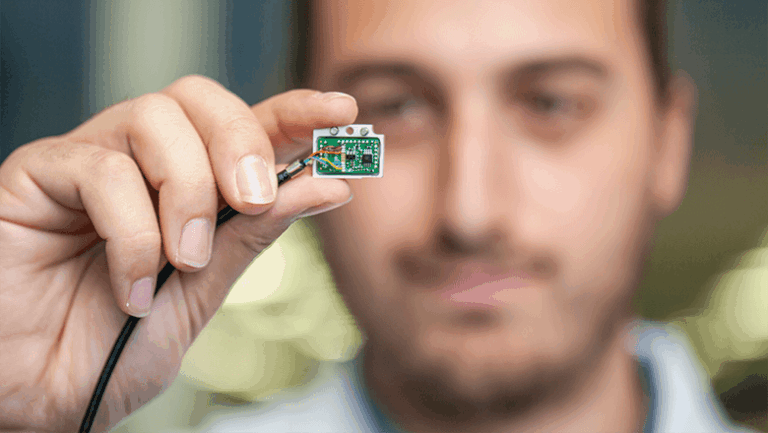
Sensor fusion is the ultimate form of sensor integration. Moore's Law enables the combination of diverse sensor types at the chip level within a single sensor module. While sensor manufacturers focus on perfecting their sensor technologies, Sentech independently works on the integrated sensors of the future. Read why sensor fusion enables next-generation applications.
Business development manager Marco Leeggangers responds enthusiastically to the latest sensor technologies. “Old and new techniques at the chip level are emerging. With new sensor techniques, the sensor manufacturer focuses on the further development of one technology. We see many opportunities for the integration of different sensors into one compact sensor application.”
What is sensor fusion?
When you google a Explanation of sensor fusion, the impression arises that it concerns sensor data. The term is also often equated with ‘multisensory data fusion’. Or the combining of data from different types of sensors in one system.
Leeggangers believes that is too limited a definition. “It's not just about data. True sensor fusion is combining sensor technologies in one integrated sensor module or application.” According to him, this offers many advantages. It also makes new applications possible because “more difficult detections” are feasible. In the following, you will read how fusion elevates autonomous movement to a higher level.
Diverse types of sensors examined
According to Leeggangers, Sentech regularly receives requests from startups and research centers to bring promising high-tech sensors to market. “We see various types of sensors and promising sensor technologies come through. Sentech focuses on innovation in sensor integration, not on mass production of sensors.”
Ultrasonic sensors
An ultrasonic sensor works with sound that is imperceptible to the human ear. This type of sensor is used in all sorts of detection applications. For example, for person detection, quality control, and for medical purposes.
A major advantage of ultrasonic sensor technology is the simplicity of processing detection signals. This technology is also relatively inexpensive. However, sound detection also has limitations, for example, the need for a controlled environment. The speed of sound is influenced by all sorts of factors.
Lidar and radar sensors
Lidar and radar sensors measure according to the same principle: ‘time of flight (TOF)’. The reflection of an emitted signal is received and processed by a receiver. By measuring the time between transmission and reception, the position, size, and speed of an object can be measured. Lidar works with light pulses (laser or infrared) and radar with radio waves.
Since both signals travel at the speed of light, detection is lightning fast. According to Leeggangers, sensor manufacturers are currently investing heavily in the further development of these sensor technologies, particularly to enable autonomous driving. Think of UAVs (unmanned aerial vehicles and drones) and AGVs (Automated Guided Vehicles).
Which method is preferred is a continuous discussion among users, manufacturers, and independent experts.
Leveraging the advantages of lidar and radar
“Innosent, a manufacturer of radar sensor technology, will particularly emphasize the advantages of radar. And Lidar expert Leddartech will underscore the benefits of Solid State Lidar,” explains the business developer.
Lidar scanning has more limitations in extreme weather conditions (such as snow, fog, and rain) than radar. On the other hand, radar is less capable of accurately determining the size and shape of objects. Furthermore, the resolution becomes less accurate as distances increase. Radar also requires more software filtering to remove interference.
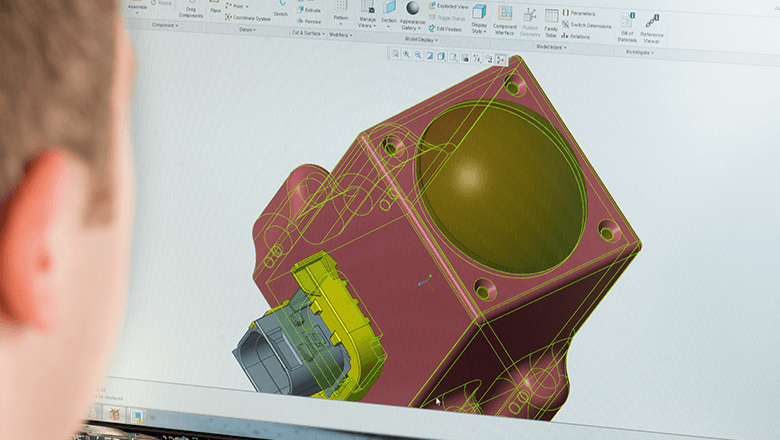
“At Sentech, we integrate Solid State Lidar technology. The latest generation is much smaller, more robust, and more reliable due to the absence of moving parts. And radar has become significantly cheaper because it's now possible at the chip level,” says Leeggangers.
Suitable for autonomous movement
In the automotive industry, ultrasound, lidar, and radar are used separately for various autonomous driving functions. Such as lane assistance, parking assistance, cruise control, anti-collision systems, and so on.
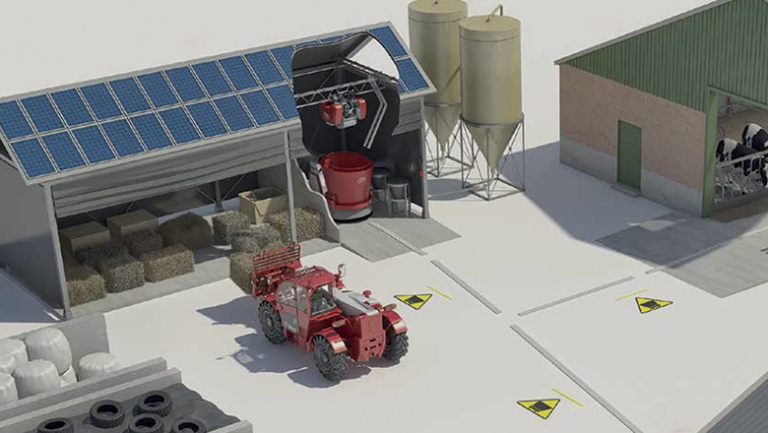
The Netherlands is at the forefront of AGVs and UAVs in the Agriculture and horticulture. With drones, farmers keep an eye on their land. Robots clean stables, milk cows, and feed livestock for farmers.
Sensor fusion for next-generation applications
Sentech uses sensor fusion as the ultimate integration tool to enable next-generation applications. According to Leeggangers, there are no bad sensors. “However, a sensor is sometimes used incorrectly, which leads the user to see it as a bad sensor,” he says.
“We look at the customer's application, think about what they want to achieve with their application. Based on that, we select the best sensor technology and integrate it. That increasingly leads us into the field of sensor fusion. The combination of two sensor techniques yields new information. That information makes the customer's application smarter and better,” explains the product developer.
Chip-level development
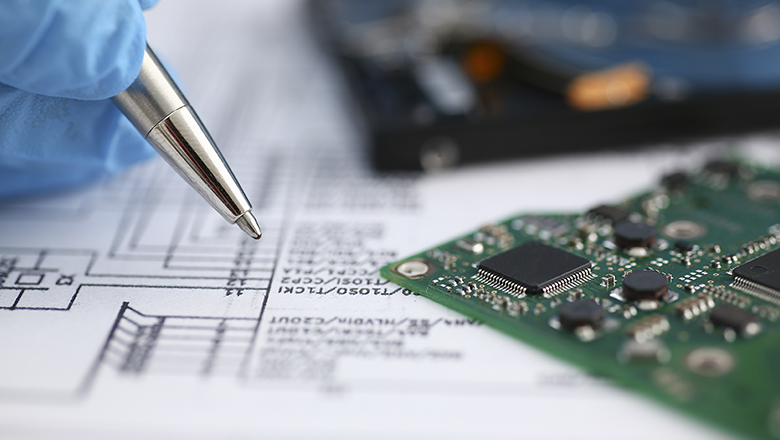
Transmitters, receivers, and printed circuit boards are getting smaller. “That is also necessary to enable innovative integrations,” says Leeggangers. Weight, installation space, and power are limiting factors that require small-scale sensor development.
This is where Moore's Law also applies. The number of transistors in an integrated circuit doubles every two years. And according to Leeggangers, this offers opportunities for sensor fusion. Radar and lidar sensors with chip-sized transmitters and receivers are already available.
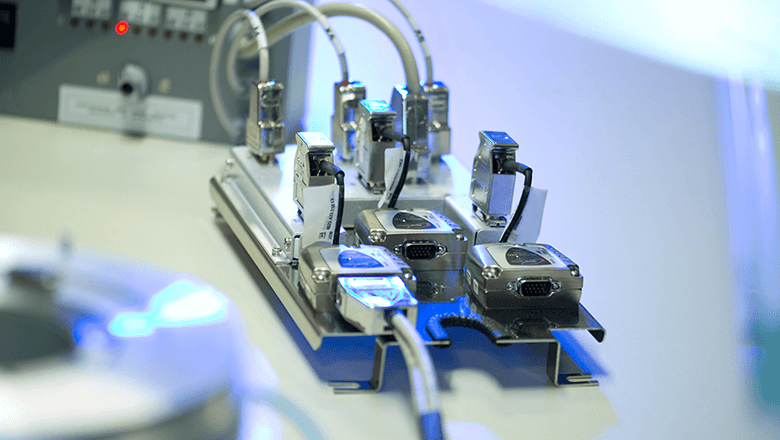
More complex detections possible with fusion sensor
As a sensor integrator, Sentech operates independently of sensor manufacturers. “There isn't one all-encompassing technology that can accurately detect everything yet. By combining sensor techniques, we want to enable more complex detections,” says Leeggangers.
“To allow a vehicle to move fully autonomously on the road or in a business environment, you must be able to detect and process all variables in the environment. Our primary focus is now on Agrotechnology.”
For example, Sentech works closely with Lely to enable advanced barn automation. “With sensor fusion, we are driving efficiency on farms, but also animal welfare and reducing environmental impact,” he concludes.
Fully automated herd management is still a long way off. However, feeding and manure robots are already bustling around many livestock farms, determining their position with sensors. According to Leeggangers, the next step is communication between fusion sensors in machines, vehicles, on the livestock, in the barn, and in the pasture.
Combination of high-tech sensors ultimate for integration
Sensor fusion therefore appears to be the ultimate integration technology. If you also (frequently) experience detection limitations and sensor challenges, then this technique is promising.