The radar sensor measures distances, movements, and speed. By reflecting a high-frequency signal off an object, the sensor calculates the distance to the object. The transmitted signal is reflected by, among other things, buildings and liquids. This makes this distance sensor suitable for applications such as liquid level measurements, distance measurements in traffic, and object detection.
Unlike distance sensors such as ultrasonic and laser, radar can measure through materials like plastic. This allows for the invisible integration of the radar sensor into your application. Furthermore, this robust technology is insensitive to wind and moisture.
How do radar sensors work?
Radar works based on time of flight: the sensor measures how long a signal has been traveling. The integrated antenna of the radar sensor transmits a high-frequency signal (62 GHz), which is the transmission signal. A lower frequency (10 MHz) is also modulated within this signal. When the signal is reflected by an object, the sensor receives the signal back. The sensor measures the phase shift between the two frequencies. The time difference between transmission and reception determines the distance between the object and the sensor.
Frequencies create opportunities
Every frequency has unique properties. Depending on the frequency's height, you will have a different type of reflection or none at all. For example, with a 5 GHz radar, you can very effectively detect rain clouds at very large distances. That frequency reflects very well off moisture crystals. If you use a 60 GHz radar, for instance, it will not recognize rain clouds and will go right through them. However, an airplane or another object will reflect the signal.
Unlike radio signals from broadcast stations, radar sensor signals are reflected by buildings and liquids. This is because radar frequencies are higher. The higher the frequency, the less impenetrable a wall becomes, for example.
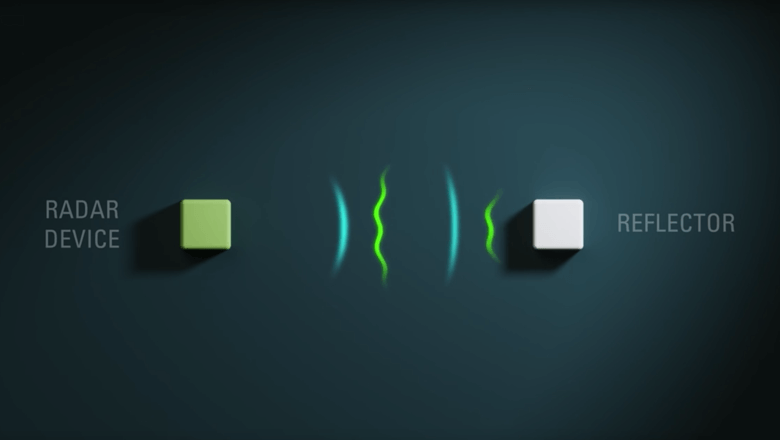
Radar is an abbreviation for Radio Detection and Ranging. This means finding and measuring (objects) using radio signals.
The alternative to ultrasound and laser
Besides radar, you can also measure distances using ultrasound and lasers. Each technology has its own advantages and disadvantages. For example, ultrasound sound signals cannot measure through materials like plastic and crops. Light signals from lasers are also hindered by these materials. Additionally, sound is sensitive to displacement by wind.
Unlike sound and light signals, radar signals can measure through most materials. Only metal objects cause the signal to be dampened. Thanks to these properties, radar is suitable for agricultural machinery, for measuring the distance to the ground, without crops affecting the measurement results.
Applications
You will find radar in both indoor and outdoor applications. The radar sensor is used for distance measurement, both at long ranges and at heights. Because every frequency has different properties, radar is suitable for a wide range of applications.
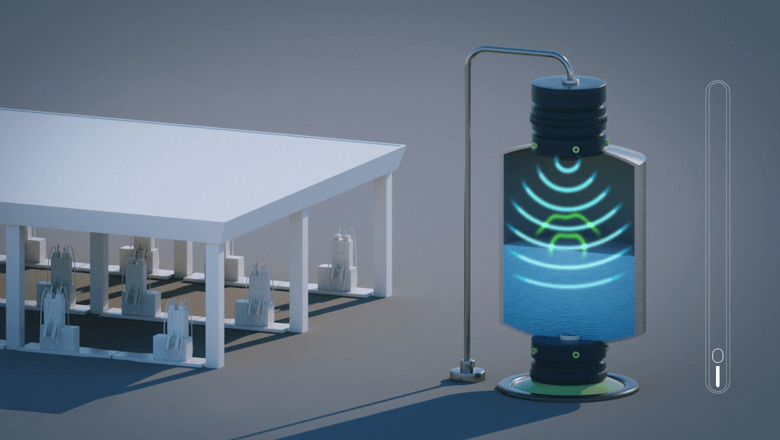
Liquid level gauge
At the correct frequency, radar can measure the liquid level in a tank. The transmitted signal travels through the air to the liquid surface, which reflects the signal back. The sensor ensures reliable measurement, even under harsh conditions such as vapor and high temperatures.
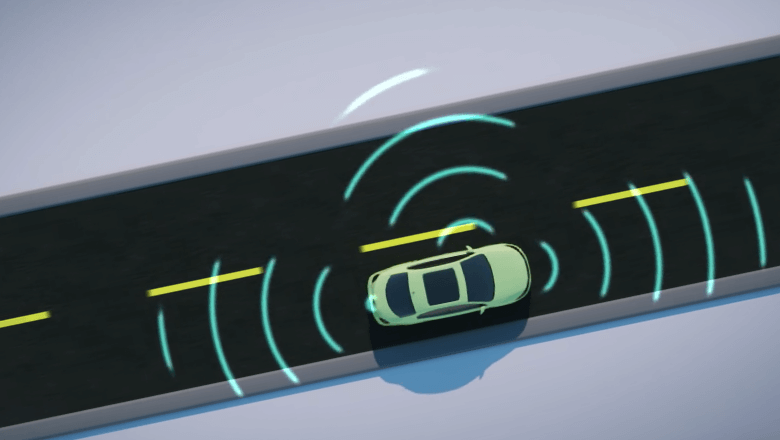
Distance Measurement in Traffic
Radar is also used for distance measurements in traffic, such as adaptive cruise control in cars. Because the technology is reflected by metal at almost all frequencies, radar ensures a safe traffic situation.
Distance Measurement for Agricultural Machinery
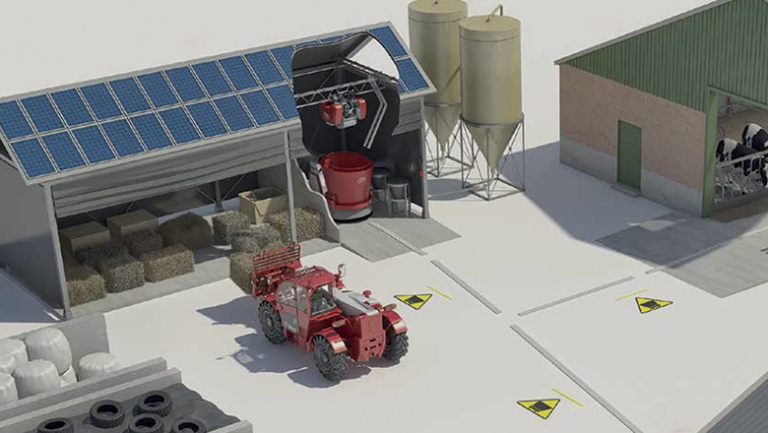
In the agricultural sector, we also see radar making a return. For example, in the Agrifac spray booms. Here, radar sensors measure two distances: the distance between the spray boom and the ground, and the distance between the spray boom and the crop. The sensor also measures plant density.
5 benefits of the radar sensor
The properties of radar determine whether this sensor is a solution for your application. Here are 5 reasons to choose radar.
- Seamlessly integrate
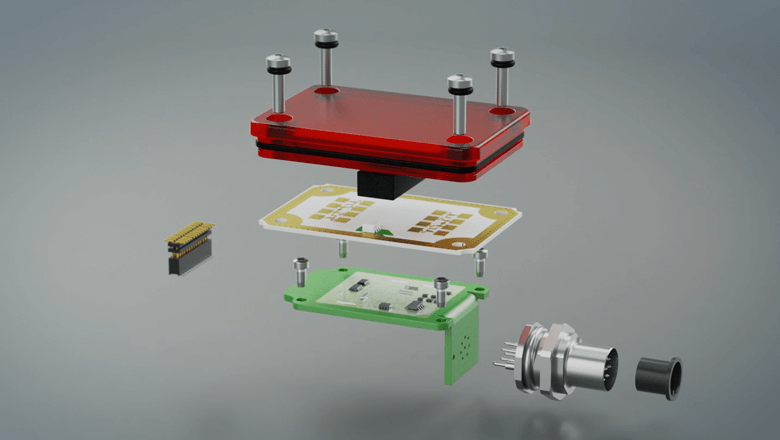
Because radio signals can pass through plastic, the sensor can easily be hidden behind a plastic plate. This way, the technology does not detract from the design of your application. - Robust
Because radar is so easy to conceal behind materials, the sensor is not visible. This makes it robust and prevents vandalism. Furthermore, this integration protects the sensor from environmental factors such as moisture and dirt. - Suitable for demanding conditions
Compared to ultrasonic and laser sensors, radar sensors are less sensitive to rain, snow, heat, dust, steam, and dirt. Furthermore, measurements are reliable in strong winds because the transmitted signal does not blow away. - Many materials are measurable
Each frequency level has a different reflection and penetration on materials. If you want to measure a material or not, you can adjust the frequency accordingly. - Secure technology
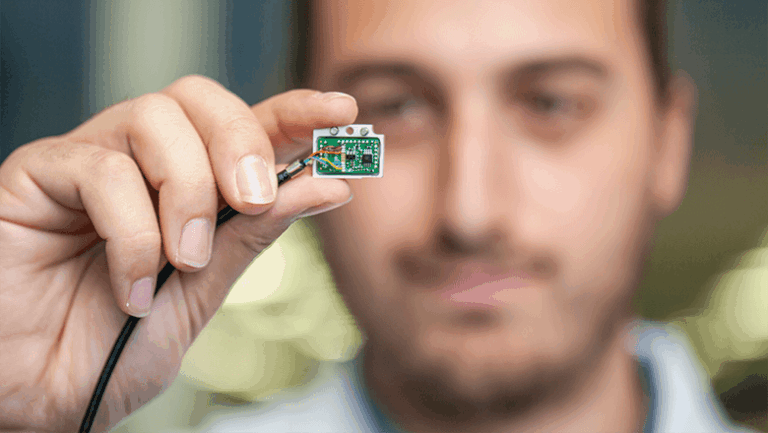
The radar used by Sentech operates on a one-chip radar. This is a radar built on an Integrated Circuit (IC), or chip. Because of this small chip, you can transmit with minimal power. This makes this technology very safe for people and animals.
Challenges in radar integration
The radar's measurement range is 180 degrees. If the measurement range is too large for your application, it can lead to unreliable measurements. Sometimes you want to measure directly in front of the sensor and focus the transmission signal. In these cases, you place a dome over the radar sensor. Due to the time-of-flight difference between the different plastics, the transmission signal is focused to one point, similar to a directional antenna.
More measuring with sensor fusion
Combining multiple sensor technologies in one application. That's sensor fusion. This utilizes the benefits of both sensor types. Furthermore, the technologies eliminate each other's disadvantages.
This is how radar and lidar are combined to allow vehicles to drive autonomously, such as AGVs. Using two sensor types is necessary to ensure the safety of autonomous driving.
How do you integrate radar into your application?
If your application requires a distance sensor, the radar sensor can be an option. This robust technology can be invisibly integrated into your design. Moreover, the measurement results are reliable even in conditions such as wind, rain, dust, and high temperatures.
Whether it's liquid level measurement, distance measurement, or object detection, there's a good chance radar will fit your application.