Lidar has matured as an optical sensor technology. Although the principle is simple, it took decades to make the technology accessible to consumer and B2B markets. Thanks to chip technology, it has become an affordable technique for detection and ranging. Manufacturers of lidar technology are making the self-driving car possible. In this article, you will learn all the ins and outs of this versatile sensor technology.
Lidar has its origins in aerospace. Laser technology has long been used in aircraft for altitude measurement relative to the underlying terrain. In addition to car manufacturers, other industries are also embracing the advantages of these sensors for autonomous movement applications. For example, lidar is used in Automated Guided Vehicles (AGVs) and Autonomous Mobile Robots (AMRs).
Ad Mulders, account manager at Sentech, sees a lot of activity in the various markets. “Nowadays, lidar sensors are produced more efficiently and in larger volumes. This makes them more affordable for integration into applications.”
Mulders thinks further ahead. “We focus on integrating lidar and radar into one compact sensor module. With sensor fusion, you leverage the advantages of both detection techniques.”
History of Lidar
Lidar originated shortly after the invention of the laser, in the 1960s. During the Apollo 15 mission, it was used to map the lunar surface in detail. The term was originally a portmanteau of the words LIght and raDAR. It has since evolved into an acronym for LIght Detection And Ranging, or Laser Imaging Detection And Ranging.
Until recently, optical technology was primarily used for atmospheric and meteorological research, and applied in aerospace. As the technology has become increasingly sophisticated and inexpensive, other industries have also embraced it for autonomous motion applications.
Lidar is a remote sensing method that uses light in the form of a pulsed laser to measure variable distances to the Earth. It can be used to make digital representations of physical surfaces and objects.
The principle of lidar is simple. The optical measuring technique is used in two ways. As time-of-flight lidar, to determine the distance to an object; and as Doppler lidar, to determine the speed of objects. The operation is similar to radar, which works with radio waves. Light has a much smaller wavelength, allowing lidar to detect and scan smaller objects.
The emitted light is reflected by the target. The time between transmission and reception is used for distance measurement.
Furthermore, the target changes the properties of the emitted light, depending on its material composition and speed. This provides a lidar instrument with information that can be used, among other things, to determine the composition and speed of the object.
Lidar uses infrared, visible, or ultraviolet light to scan objects. It can detect a wide range of materials and objects. These include metallic and non-metallic objects, aerosols, clouds, chemicals, rain, stones, and even a single molecule.
The wavelengths of the light sources vary depending on the target. The spectrum extends from 10 micrometers (infrared) to approximately 250 nanometers (ultraviolet). The emitted light is reflected by scattering.
Distance measurement with lidar
The time-of-flight principle is used to determine the distance between the lidar instrument and an object. A transmitter emits light pulses. A receiver measures the duration between the transmission and reception of reflected photons.
According to the formula: d = (c × t) / (2 × n). ‘D’ stands for distance in meters, ‘c’ for the speed of light in a vacuum, ’t’ for the duration in seconds, and ‘n’ for the refractive index of air.
Speed determination with lidar
With lidar, it is also possible to determine the speed of a moving object. The instrument uses the Doppler effect. The physical phenomenon arises when a source (or receiver) of waves moves relative to a medium.
For light sources, the following formula applies: v=(T1/T2-1) × c/n. ‘T’ stands for the wave periods.
More information about the target
More recently, there are advanced lidar applications for atmospheric research. The change in the composition of reflected light provides information about the target. These applications measure air pollution, for example, based on the absorption of light by molecules. This type is also known as DIAL (Differential Absorption Lidar).
How does lidar work?
Broadly, lidar can be divided into two detection methods: incoherent or direct energy detection, and coherent detection. Incoherent systems measure changes in wave height (amplitude) in the reflected light. Coherent systems measure differences in wavelength (phase) and are suitable for speed measurement.
Light Pulse Systems
There are two systems for generating light pulses: micro-pulse systems and high-energy systems.
Micropulse systems generate intermittent energy beams. They have emerged thanks to advancements in laser technology combined with the ever-increasing processing power of microprocessors. These systems use significantly less energy, making them safe for humans and animals.
The powerful high-energy systems use much more energy and are primarily used for atmospheric research.
Lidar sensor components
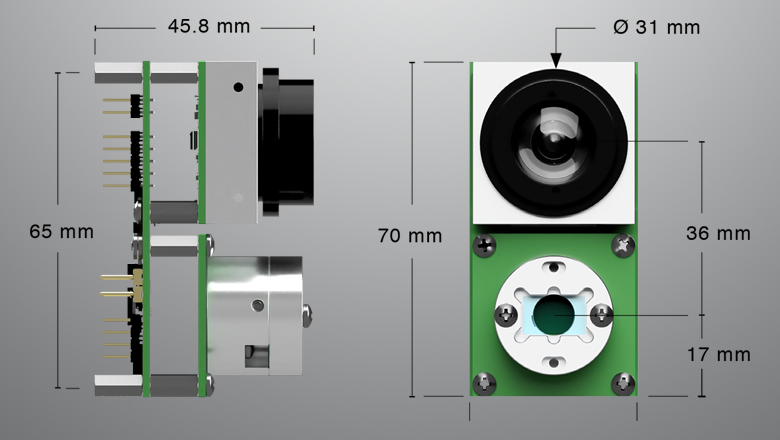
A lidar sensor essentially consists of four parts.
- Light source
This could be a laser, LED, or VCSEL diode, which emits light in pulses. - Scanner in optics
These components guide the light outwards—for instance, via an oscillating mirror and/or (aspherical) lens. A lens bundles the reflected light to a photodetector. - Photodetector in electronics
Depending on the measurement objective, the light is captured by a photodetector, for example, a solid-state photodiode. Electronics process the image data digitally. - Position and navigation system
Mobile lidar systems need a GPS system to determine the exact position and orientation of the sensor.
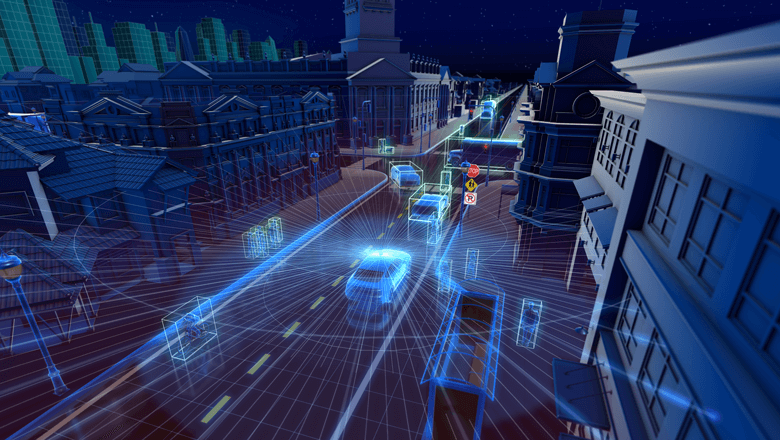
The different lidar systems have a similar output in common. This is a 3D point cloud that can be projected onto a map or a moving image. The sensor thus generates a detailed image of its surroundings, but can also provide additional information about those surroundings.
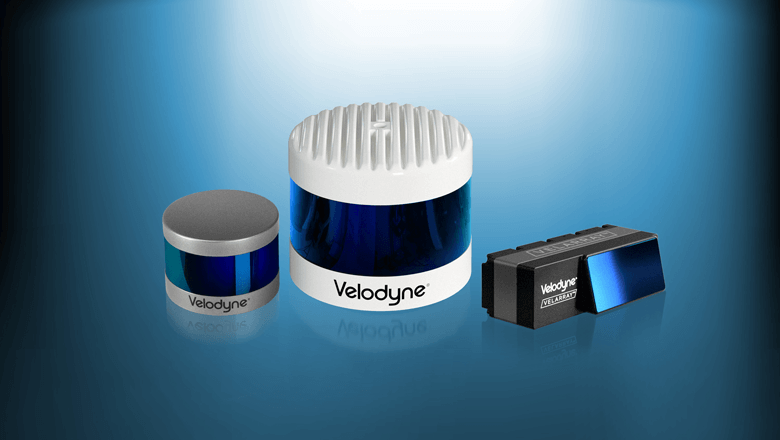
There are also lidar systems that are purely intended for detection and distance measurement. Manufacturers such as Velodyne and Leddartech have perfected and refined this specialty, making them suitable for lidar drones, AGVs, and self-driving cars. More on the collaboration between Sentech and Leddartech later.
Lidar sensor applications
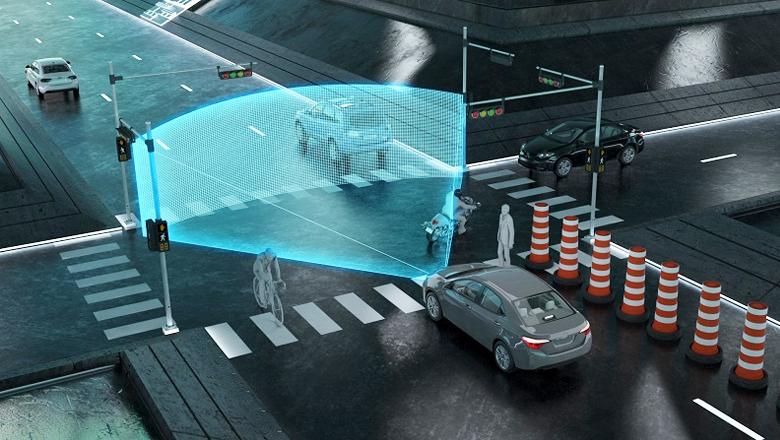
Lidar owes its popularity to the accuracy and high resolution with which scientists have been able to map the world, underwater, on the surface, and in the air. Until recently, it was still an expensive matter and was mainly used for research, and commercially only in aerospace.
Due to cost reduction and technological advancements – especially in miniaturization, reliability, and durability – lidar has also become accessible for a wide range of commercial applications. For example, in autonomous vehicles and robots.
Agriculture: detection and autonomous motion functions
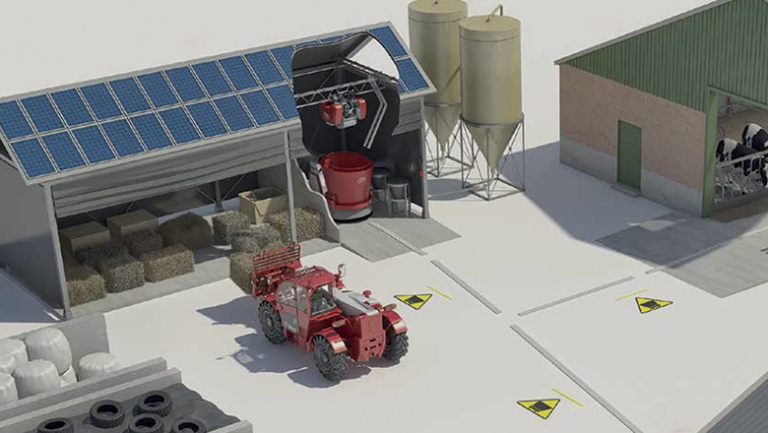
Agriculture can use lidar in various ways. As a measuring instrument in drones to topographically map land and combine the data with crop yields. This way, you can determine which areas require extra attention. Or for autonomously moving vehicles (AGVs) in and around stables and fields, detecting objects and obstacles in their environment.
Biology and conservation
Lidar helps governments, scientists, and non-governmental organizations map and protect natural areas. For example, by measuring tree height, biomass, and biodiversity.
Meteorology and air quality
Meteorological lidar applications first emerged after the invention of the laser. Decades of further development have led to advanced systems that measure a wide spectrum of meteorological conditions. They can, among other things, map clouds, measure wind speeds, study aerosols, and determine air composition.
This helps lidar to study the climate and greenhouse gases, air pollution, fires, humidity, and other air components.
Autonomous driving with lidar
Various car manufacturers, Google, and Intel are currently developing self-driving cars. According to account manager Ad, each manufacturer or developer has its own preference for technological tools.
“This is how Tesla uses radar, while Google combines lidar and radar. Intel, on the other hand, relies entirely on camera technology. What all manufacturers have in common is that they combine visual (camera) images with sensor information.”
“The combination is necessary to ensure safety and reliability under all circumstances. If one technology fails due to a malfunction, the other technology will still detect and intervene to switch to a safe mode,” said the account manager.
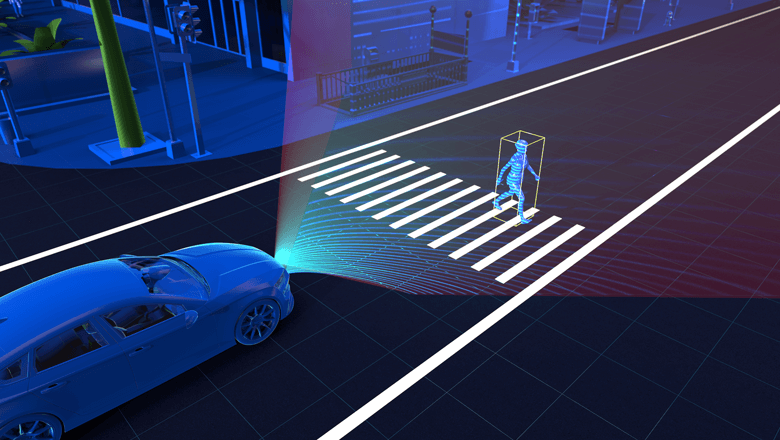
In this industry, lidar is used for object detection and distance measurement around the vehicle. Mulders: “This includes vehicles in the broadest sense of the word. Lidar is also used in self-driving forklifts in warehouses, agricultural machinery, and so on.”
Lidar evolution – smaller and cheaper
The high cost and size of lidar systems were a barrier to commercial application in self-driving vehicles. According to the renowned weekly magazine The Economist a commercial lidar system in 2016 could still cost around $50,000.
This has changed. Various sensor manufacturers, such as Velodyne, Infineon, and LeddarTech, are currently developing and producing smaller and much cheaper lidar sensors. Thanks to advanced and increasingly affordable chip technology.
All sensory components (laser, optics, and processing) can therefore be fabricated at the chip level. Aspheric lenses eliminate the need for moving mirrors to spread the light widely.
Lidar sensor manufacturers
Infineon is working on a miniature system: MEMS lidar, which contains a micro-electro-mechanical (MEMS) mirror. This advanced mini-mirror was invented by the Dutch company Innolucence. A MEMS lidar sensor – with a range of 250 meters and a scanning capacity of 5000 measurement points per second – is expected to cost no more than $250.
Velodyne announced a compact solid-state lidar sensor for autonomous vehicles in early 2021. LeddarTech is at the forefront of solid-state lidar technology and has already launched a compact lidar system on the market: LeddarVU. The complete sensor weighs only 107 grams.
LeddarTech: Leader in Solid-State Lidar
Sentech applies LeddarTech's solid-state lidar in autonomous mobility applications for various clients. “For example, in the field of agri-tech,” says Ad. “We use LeddarTech's sensor technology for agricultural AGVs.”
According to the account manager, the Canadian sensor manufacturer is at the forefront of solid-state lidar. “A major technical advantage is the absence of moving parts. This makes the sensor more robust and suitable for extreme conditions.”
“Another big advantage for us is that this manufacturer supplies modules, allowing us to develop custom sensor applications,” says Mulders.
In a white paper on lidar technology, LeddarTech describes how it approaches detection and ranging in an innovative way.
Sensor fusion – advantages of combining lidar and radar
Radar can detect at greater distances and can see through barriers. “That's why radar is interesting for agricultural vehicles because it can detect the soil through crops,” explains Ad.
In contrast, lidar offers a wider field of view and greater resolution, and can better determine the size and shape of objects.
Mulders: “That's why at Sentech, we work on sensor fusion will combine lidar and radar in one integrated sensor application. This way, we can leverage the advantages of both sensor technologies, so that their individual disadvantages are nullified.”
More about self-driving vehicles
Lidar is in the spotlight as a technology for self-driving vehicles. Sentech is also busy with further development, together with Velodyne, LeddarTech, and other sensor manufacturers.
Do you want to know how sensor technology enables autonomous driving? rapids brings?